Which people gas children in Syria?Israeli arms deals fuel wars and armed conflicts around the world. The occupation state has boosted its profits at the expense of the lives of civilians killed because its deadly weapons often figure in human rights violations and war crimes. Israel sells arms to oppressive regimes in flagrant violation of international laws which call for such regimes to be boycotted.
Israel boosts its profits by arms deals fuelling wars and conflicts
As the year end approaches, it’s become clear that Israeli arms manufactures have concluded more unprecedented deals which mean that three of them are responsible for two per cent of the total arms…www.middleeastmonitor.com
Navigation
Install the app
How to install the app on iOS
Follow along with the video below to see how to install our site as a web app on your home screen.
Note: This feature may not be available in some browsers.
More options
Style variation
You are using an out of date browser. It may not display this or other websites correctly.
You should upgrade or use an alternative browser.
You should upgrade or use an alternative browser.
Who are the Israelis?
- Thread starter P F Tinmore
- Start date
Khaled Abu Toameh: Arabs are “fed up“ with Palestinians’ “bloodlust for Jews” and rejection of peace with Israel
Why Arabs Are Fed up With the Palestinians

P F Tinmore
Diamond Member
- Dec 6, 2009
- 86,389
- 4,876
- 1,815
- Thread starter
- #5,983
Not Palestinians.
P F Tinmore
Diamond Member
- Dec 6, 2009
- 86,389
- 4,876
- 1,815
- Thread starter
- #5,984
Which people gas children in Syria?
DEBUNKED.

rylah
Gold Member
- Jun 10, 2015
- 23,714
- 5,047
- 290
Not Palestinians.
Haven't fought on the side of Assad?
Haven't caused the civil war in Lebanon and Jordan?
Arab supremacists are reactionaries without constructive goals.
Last edited:
DEBUNKED.
You lied.
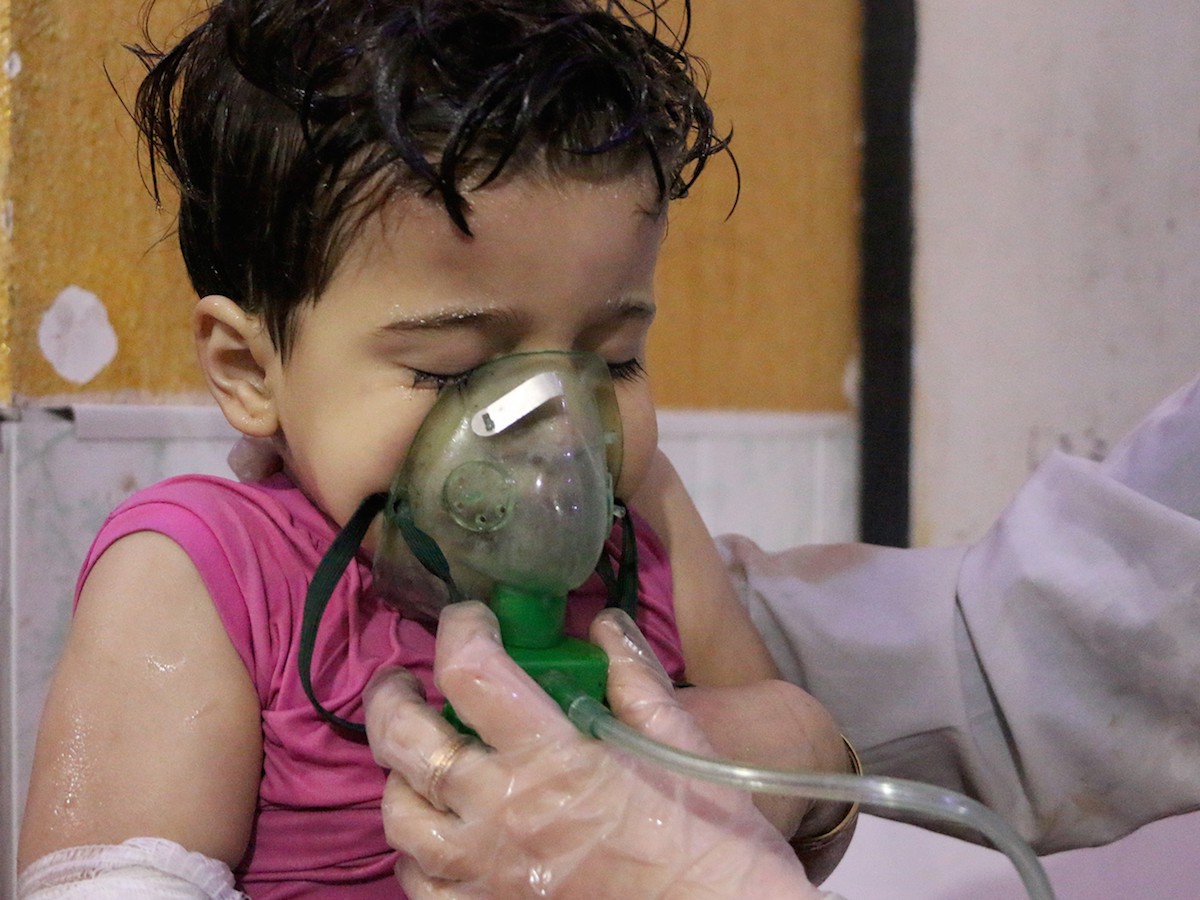
Chemical Warfare Is Suspected in Deaths of Syrian Children
A reported poison gas attack in rebel-held Douma has killed at least 42 people in their homes and injured more than 500.
 www.unicefusa.org
Last edited:
500,000+ dead Arabs killed by Arabs.Not Palestinians.

Toddsterpatriot
Diamond Member

It's horrible! Look at the dozens of dead [human shield] children!!!
(Cough) What about thousands of dead children? (cough)
Off Topic........wow!
Toddsterpatriot
Diamond Member
Israel sells arms to oppressive regimes
Oppresive Muslim regimes?
Hey Doofus: US sells arms to Saudi Arabia.Israeli arms deals fuel wars and armed conflicts around the world. The occupation state has boosted its profits at the expense of the lives of civilians killed because its deadly weapons often figure in human rights violations and war crimes. Israel sells arms to oppressive regimes in flagrant violation of international laws which call for such regimes to be boycotted.Israel boosts its profits by arms deals fuelling wars and conflicts
As the year end approaches, it’s become clear that Israeli arms manufactures have concluded more unprecedented deals which mean that three of them are responsible for two per cent of the total arms…
And, they were almost all European colonists, as stated:
"During the Nineteenth century large suburbs to the north and east have grown up, chiefly for the use of the Jewish colony. These suburbs contain nearly Half the present population..."
And, we have the actual numbers for all of Palestine in 1921 through a more accurate British census where we see that there were more Christians than Jews.
"There are now in the whole of Palestine hardly 700,000 people, a population much less than that of the province of Gallilee alone in the time of Christ.* (*See Sir George Adam Smith "Historical Geography of the Holy Land", Chap. 20.) Of these 235,000 live in the larger towns, 465,000 in the smaller towns and villages. Four-fifths of the whole population are Moslems. A small proportion of these are Bedouin Arabs; the remainder, although they speak Arabic and are termed Arabs, are largely of mixed race. Some 77,000 of the population are Christians, in large majority belonging to the Orthodox Church, and speaking Arabic. The minority are members of the Latin or of the Uniate Greek Catholic Church, or--a small number--are Protestants.
The Jewish element of the population numbers 76,000. Almost all have entered Palestine during the last 40 years. Prior to 1850 there were in the country only a handful of Jews. - See more at: Mandate for Palestine - Interim report of the Mandatory to the League of Nations Balfour Declaration text 30 July 1921
Historian James Parkes: “Through the centuries, the region called Palestine became a national home for the Jews, and for no other definable people.”
rylah
Gold Member
- Jun 10, 2015
- 23,714
- 5,047
- 290
A rare and unusual coin was found in excavations near the Temple Mount
In recent excavations at the Givat Ofal site south of the Temple Mount in Jerusalem, the remains of a magnificent public building from the Second Temple period, which was destroyed in 70 CE, were uncovered.
In the layer of destruction, dozens of Jewish coins from the time of the Great Revolt against the Romans (66-70 CE) were discovered, most of which are made of bronze. An unusual and especially rare is a silver coin worth half a shekel from the third year of the revolt, which was found among the coins - one of the few of its kind found in the excavations of time.
The excavations were conducted by a delegation from the Hebrew University, led by Prof. Uzi Liebner from the Institute of Archaeology, in collaboration with Armstrong College from Oklahoma in the USA and with the assistance of the government company for the development of East Jerusalem, the Antiquities Authority and the Nature and Parks Authority.
During the great revolt against the Romans, the Jews in Jerusalem minted bronze and silver coins. On most of the silver coins, a cup appears on one side, and above it, in the letters of the ancient Hebrew script, the year of the rebellion in which it was minted is indicated, and around the cup is the inscription "Israeli Shekel", "Half Shekel" or "Quarter Shekel", depending on the value. On the other side appears a branch with three pomegranates and around it the inscription "Holy Jerusalem", also in the ancient Hebrew script.
The recently found rare coin was identified by Dr. Yoav Farhi, expedition scientist and curator at the Land of Israel Museum in Tel Aviv. The researchers explain that the minting of the coins during the rebellion, especially those made of silver, was a political statement and an expression of national liberation of the Jewish rebels against the Roman rule, since during the period Roman authority to mint silver coins was vested in the emperor.
Indeed, throughout the Roman period until the Great Revolt, no silver coins were minted by Jews at all, not even in the days of King Herod the Great. According to the researchers, the half shekel coins were also used to pay a tax for the worship expenses in the temple, which was paid annually by every adult male.
The silver coins of the Great Rebellion were the first and last in antiquity to bear the name "Shekel". The next time was on the Israeli shekel coins issued by the Bank of Israel in 1980.
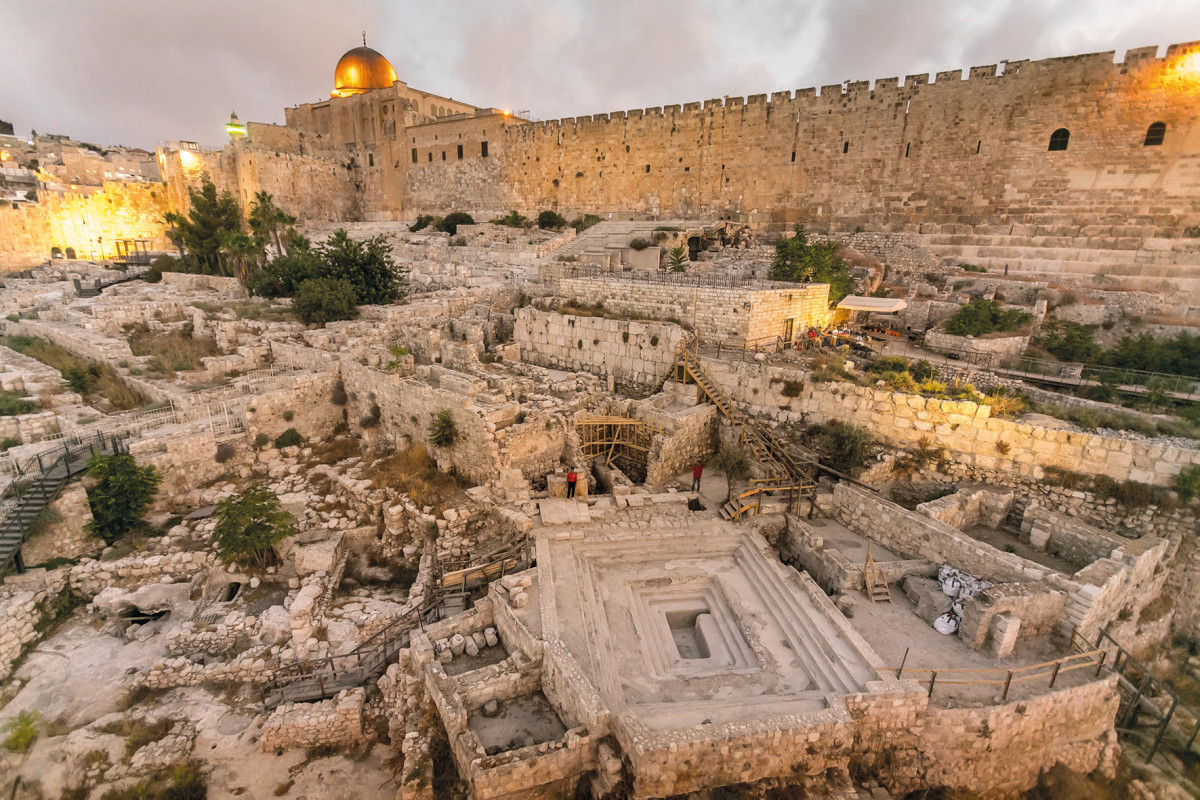
רומא בלב ירושלים: מטבע נדיר ויוצא דופן נמצא בחפירות סמוך להר הבית
מטבע מימי האימפריה הרומית התגלה דרומית להר הבית, בחפירות של האוניברסיטה העבריתwww.maariv.co.il
First Evidence of Maccabees’ Revolt in Judean Desert Unearthed

Evidence of a dramatic moment in the history of the Jewish people was uncovered in the Judean Desert earlier this year: a rare wooden box containing a small hoard of 15 silver coins from the days leading up to the Maccabean Revolt of 167 BCE.
The box was hidden about 2,200 years ago in the Muraba‘at Cave in today’s Darageh Stream Nature Reserve. It was discovered in an excavation there last May. The coins have since been studied it will be shown to the public over Channukah in the Hasmonean Museum in Modi‘in.
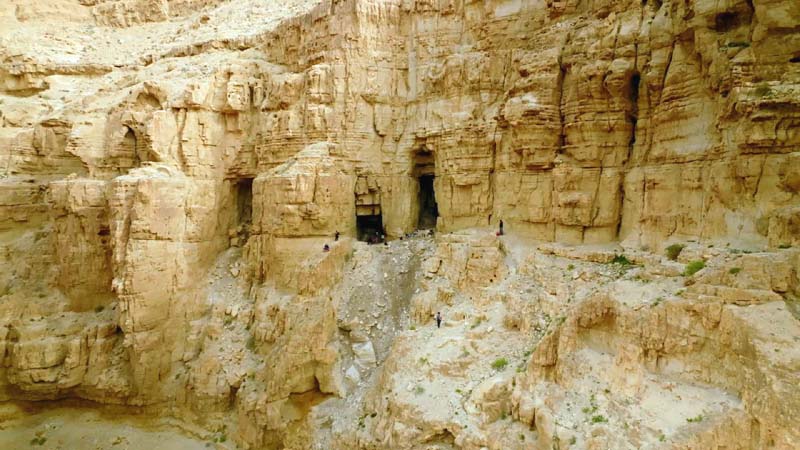
The excavation was carried out in Muraba‘at Cave from March through May 2022, as part of the Judean Desert Excavation and Survey Project of the Israel Antiquities Authority and the Archaeological Office for the Military Administration of Judea and Samaria, in cooperation with the Ministry for Jerusalem and Heritage.
When the lid was removed from the ancient box, the upper part was full of packed earth and small stones. Below, there was a large piece of purple woolen cloth that covered the 15 silver coins with pieces of sheep’s wool.

Read more -

First Evidence of Maccabees’ Revolt in Judean Desert Unearthed
A refugee probably hid the wooden box in the cave, intending to return to collect his money after the revolt.
 www.jewishpress.com
rylah
Gold Member
- Jun 10, 2015
- 23,714
- 5,047
- 290
Prime Minister Netanyahu: Israel's FUTURE and The State of The Middle East
Benjamin Netanyahu sits down with Matt Crouch on TBN's Praise to discuss his new memoir, Bibi: My Story. Listen in as he opens up about Israel's achievements and his future goals as Israeli Prime Minister. Don't miss this exclusive interview!
P F Tinmore
Diamond Member
- Dec 6, 2009
- 86,389
- 4,876
- 1,815
- Thread starter
- #5,995
Well duh.Hey Doofus: US sells arms to Saudi Arabia.

rylah
Gold Member
- Jun 10, 2015
- 23,714
- 5,047
- 290
Temple Mount Updates | The Name of G-d on the Temple Mount Wall
A few marble paving stones on the Temple Mount Plaza reveal to us a secret about why marble, and not limestone, was used to pave the surface of the Azara courtyard in the Holy Temple!
A Temple Mount Moment is the joint project of the Temple Institute and High on the Har. Temple Mount experts and co founders of High on the Har, Dr. Melissa Jane Kronfeld and Rabbi Yehuda Levi present each week fascinating facts and insights about the Temple Mount and the Holy Temple, its past, present and future!
Temple Mount Yeshivah - Daily Halachah
Temple Mount Updates | Shim'on HaTzadik and the day of mount Grizim
Well duh.
Where are your protests against the US, and Great Britain, selling arms to Saudi Arabia?
rylah
Gold Member
- Jun 10, 2015
- 23,714
- 5,047
- 290
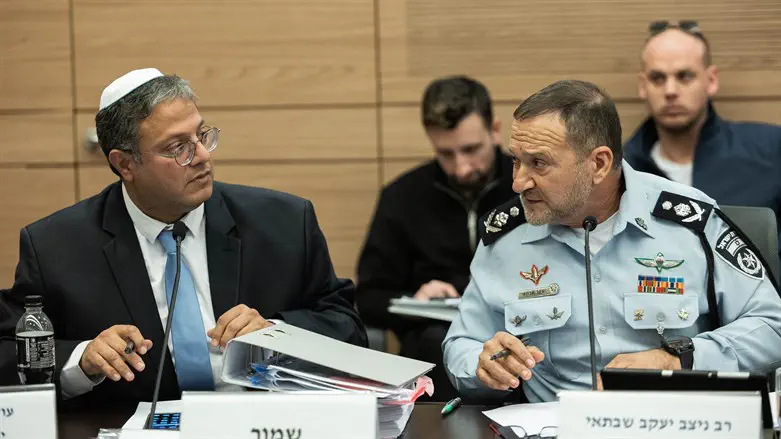
Ben Gvir: The Attorney General's job to is to advise, she cannot give me orders
Designated minister of National Security: The A-G and her predecessors think that the politicians should make a pilgrimage to them and ask for their approval.
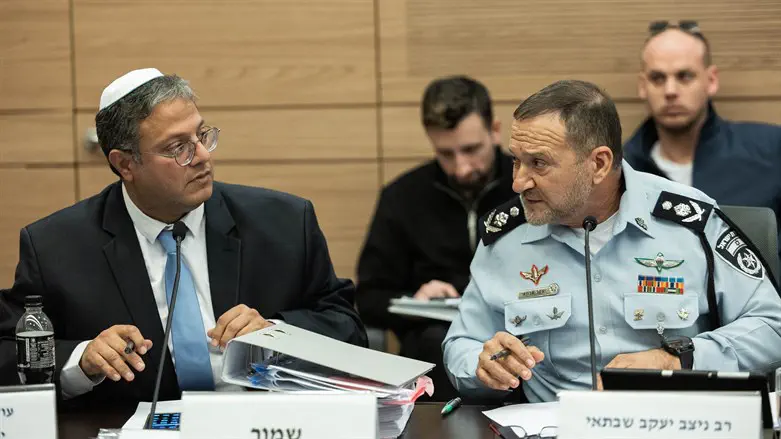
The designated Minister of National Security, Otzma Yehudit chairman Itamar Ben Gvir, gave an interview to Channel 13 News on Wednesday evening, in which he said that the Attorney General cannot give him instructions.
"The Attorney General and her predecessors think that the politicians should make a pilgrimage to them and ask for their highness's approval," he said. "I'm not prepared for that, I'm not subordinate to the Attorney General, she advises. Does she want to advise me? Gladly. Does she want to give me instructions? Not on my watch. I was elected by the public."
"I do not like the fact that the Attorney General sends messages through all kinds of parties," added Ben Gvir, but confirmed Channel 13 News’ revelation that he met with the Deputy Attorney General. "The minister will determine the policy of the ministry, that's how it goes in every democratic country. I hear that there are additional versions, I will read and give my opinion, not ruling anything out."
Read more -
Ben Gvir: The Attorney General's job to is to advise, she cannot give me orders
Designated minister of National Security: The A-G and her predecessors think that the politicians should make a pilgrimage to them and ask for their approval.
 www.israelnationalnews.com
rylah
Gold Member
- Jun 10, 2015
- 23,714
- 5,047
- 290
Terror victim MK demands: End terror on the roads
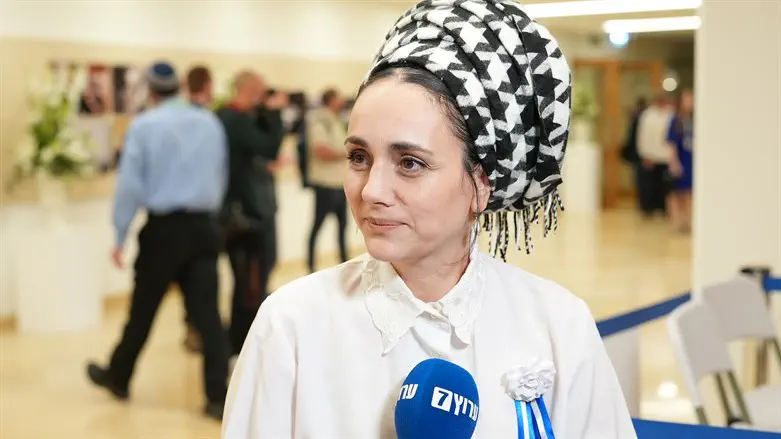
In her speech in the Knesset today (Tuesday), MK Limor Son Har-Melech commented on Arab terrorism on roads in Judea and Samaria and alluded to a stone throwing attack that took place this week on Route 60 in which a pregnant woman was miraculously saved.
Har-Melech's first husband Shuli was murdered in a terror attack in Samaria in 2003. Limor survived but was also wounded in the attack.
"Today we conclude another week of Arab terrorism on the roads, which unfortunately was almost never reported anywhere," Har-Melech began her speech.
Har-Melech detailed the incident for the plenum: "Last Wednesday, Hodaya Marten, a resident of Har Bracha, was driving from her home towards Israel's central region with her friend, who was six months pregnant. A few minutes after they left town, they were ambushed by Arab terrorists on the side of the road, who pelted their car with rocks. It took a miracle for Hodaya to notice the terrorists before the stones hit their car and warn her friend, who managed to move away just in the nick of time before the stone could crush her head."
"The whole vehicle was filled with bits of broken glass. Hodaya's friend was suffered injuries from it to her face. The women returned home traumatized, with memories that they will carry with them in the coming years every time they travel on the road," Har-Malech concluded.
"This ups the count of stone attacks on the roads to 71 over the past week, 12 attempted murders using Molotov cocktails, and close to 10 shooting attacks against soldiers and civilians in Judea and Samaria. This murderous terror has become the routine of life for half a million residents of Judea and Samaria, and every week it claims physical and mental casualties. This wasn't meant to be our lot in life, and we shouldn't have to put up with it. End the silence. Jewish blood is not cheap," Har-Malech demanded.
Terror victim MK demands: End terror on the roads
MK Har-Melech told the Knesset of the ongoing terror on Israel's roads and demanded action to end it.
www.israelnationalnews.com
rylah
Gold Member
- Jun 10, 2015
- 23,714
- 5,047
- 290
The grandmother who left 2000 descendants passed away
Home - Headlinez News
Gender Diversity in European Corporate Boardrooms: A Path Towards Equitable Leadership Table of Contents Gender Diversity in European Corporate Boardrooms:
time.news
Last edited:
Similar threads
- Locked
- Replies
- 5
- Views
- 315


- Replies
- 15
- Views
- 322

- Replies
- 25
- Views
- 477
- Locked
- Replies
- 3
- Views
- 213


New Topics
-

-

-

-
 Please comment on new “ Project Hell Marry trailer ?? Getting great reviews
- Started by Quasar44
- Replies: 0
-
 Jasmine Crockett’s Security Guard Fatally Shot By Dallas SWAT In Standoff – What We Know
- Started by excalibur
- Replies: 2


