'Aliyah News - No'am Leibman | Tzur Israel - Phase Two
What is the real reason that Mosheh Rabbenu did not enter the Land of Israel? | Rabbi Oury Cherki
I want to tell You, I've met several years ago, a rabbi from abroad, and an important community. I asked him, 'do You encourage Your community to immigrate to the land, to do 'Aliyah?'. He says, 'look ahmmm…yes, yes 'Aliyah is important, but it has to be accompanied with a spiritual 'Aliyah'.
Angered me – what does it mean a spiritual 'Aliyah? The 'Aliyah is a spiritual 'Aliyah! And this we see in action, we see the fruits, we see the nation of Israel change, how the nation of Israel grows in glory, how the nation of Israel can also say 'wow!'…well it's..
I want to tell You several things about the Weekly Torah Portion. Don't worry it won't go beyond 2 hours, but really it's going to be much shorter. We all know this, the 'Shlah' portion is the portion of the 'Aliyah to Eretz Yisrael. And we're meeting resistance to the 'Aliyah, there're people who don't want, and not small people, the greatest in Torah, the greatest in Torah in scale of the days of Mosheh Rabbenu, oppose entering the land. This is a very strange thing, and really the classic Jewish literature dealt a lot with the question – what was the cause of this resistance?
And to say the truth – it doesn't matter. What is important is not why they resisted, rather what was the answer given to their arguments. We see in Torah, two speeches attempting to answer the words of those spies, the leaders of Israel who resisted entering the land.
The one in our portion – Calev Ben Yefuneh answers to the words of the spies. And where is Mosheh? Isn't in the portion; In the 'Devarim' portion, Mosheh Rabbenu repeats the story, and he's telling about his response, and regarding the response of Calev, he doesn't speak.
Very strange, then what really happened? Who responded to their words? Did Mosheh respond, or Calev respond? I assume they both responded. Then why are the words of Calev in one portion, and the words of Mosheh in a different portion?
So that we don't compare them!
Meaning, so that we don't do what I'm going to do now.
And the story, now ask, then why nevertheless I allow myself to do what Torah didn't want us to do? Because I've learned, a conclusion I've reached from looking into Rashi – that there's a difference between the first reading in Torah, and the second reading.
For example, the end of 'Noah' portion, Torah says –
"and Terah died in Haran", Terah the father of Avraham,
"and Terah died in Haran. And said HaShem to Avraham "Go forth…".
What do I understand from a shallow reading – Teah died, and then Avraham made 'Aliyah to the land. But Rashi says, if You pay attention, You see according to the number of years, that Terah was alive when Avraham made 'Aliyah to the land.
Then why did Torah tell about the death of Terah beforehand? Rashi says, so that it won't be evident to all, that left his father and made 'Aliyah to Eretz Yisrael.
So what does Rashi do? He destroys the intent of Torah, Torah wanted to hide it, and Rashi reveals! However probably Rashi wants to teach us a very important thing, there's Your first reading in Torah – the first time You meet Avraham Avinu, You're not to know he left his father, because You'll have a bad opinion, and the first impression will remain. But after You reveal who's Avraham Avinu, what great character, what his 'Aliyah to the land did, then You're willing to forgive that he left his father.
Therefore I learn, that when we read in Torah, there're two readings. So, in the first reading we see, there's no comparison between Calev and Mosheh. Now as I pass to the second stage, I want to compare the words of Calev to the words of Mosheh.
Calev, when he sees the nation of Israel afraid of the war, war is a frightening thing, a painful thing, what does Calev do – gives a motivation speech.
"Let us by all means go up, and we shall gain possession of it, for we shall surely overcome it! If HaShem wants us and gave us the dwellers of this land. Their shadow has departed from them!". HaShm is with us, don't be afraid. What does he say? He says – not to be afraid. Folks cheer up – we can.
What does Mosheh say in the portion 'Devarim'?
Mosheh when he hearing the nation is afraid of the war, tells them 'don't worry, HaShem will fight for you', will do you miracles. I know Him for years, I know the Holy Be Blessed can do miracles, will do you miracles. So you have nothing to be afraid about the war.
Exactly the opposite of the discourse of Calev! Calev says that in the land of Israel you behave naturally. Mosheh thinks he is still in the desert!
In the desert there's a place for miracles, in the land of Israel it's without miracles – You have to work Yourself.
What is the response? In the portion of 'Devarim' it's written -
"Not one of those involved, this evil generation, shall see the good land that I swore to give to your fathers". Meaning HaShem says they will not enter the land.
"None except Calev Ben Yefuneh; he shall see it!" What is Calev doing here, we didn't even hear about him? Rather this is to say, Your discourse Mosheh, is not acceptable, what Calev said accepted.
There Mosheh adds another shocking sentence – if there're sensitive people, please go out now. He says –
"Because of you HaShem was incensed with me too, saying: You shall not enter it either. Yehoshu'a Bin Nun, who attends you, he shall enter it. Imbue him with strength, for he shall allot it to Israel".
So what do I understand? That Torah, here Moshesh revealed the true reason for which Mosheh Rabbenu didn't enter the land – because he wanted a miraculous history, HaShem does for you the work. In the land of Israel HaShem doesn't do the work for you, you do the work for HaShem.
And this is what Dvorah said, it's necessary to come to the help of HaShem, not in the help of HaShem, to the help of HaShem. Now this is a very interesting thing, what do we learn from this? We learn that in Eretz Yisrael, it's not only necessary to make an effort, but something even greater – that our efforts bear fruit, our efforts succeed setting motion to history.
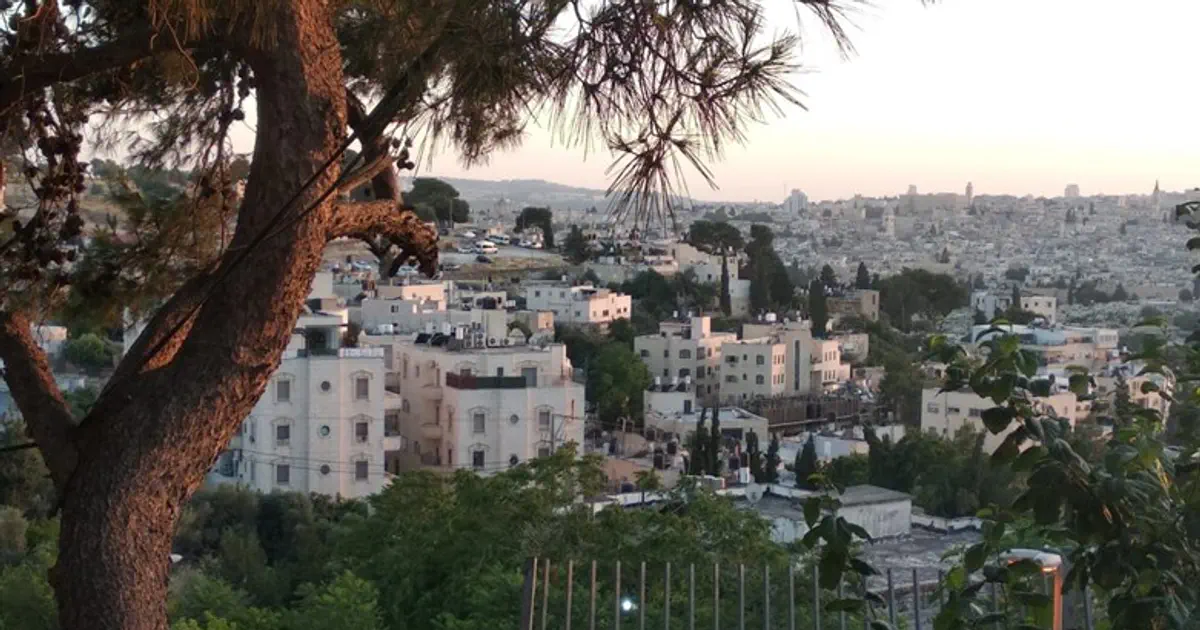
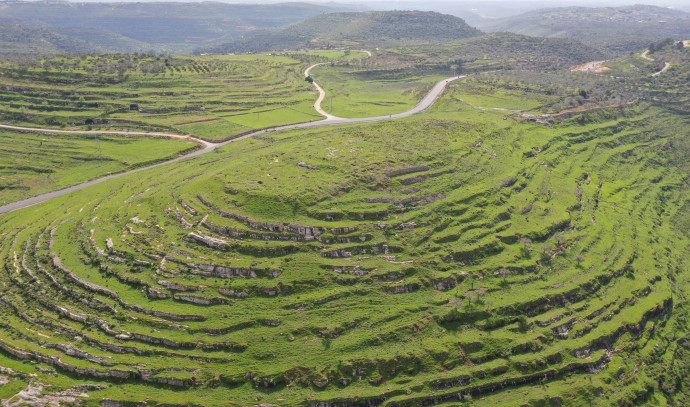
Khirbet Tibnah is located on a hill in the southwest of the Samaria region, east of Shoham near Halamish. The site was populated from the Bronze Age until the beginning of the Ottoman period.
www.jpost.com