A few years ago, while conducting research for a novel I was writing about Lone Star politics, I discovered a short clause in the state's 1845 annexation agreement that's well known to any serious state historian, though far less well known to the average Texan. Buried beneath some highly boring details about how the republic's resources were to be transferred to the federal government in Washington is language stipulating that "[n]ew States, of convenient size, not exceeding four in number, in addition to said State of Texas, and having sufficient population, may hereafter, by the consent of said State, be formed out of the territory thereof, which shall be entitled to admission under the provisions of the federal constitution."
Put plainly, Texas agreed to join the union in 1845 on the condition that it be allowed to split itself into as many as five separate states whenever it wanted to, and contingent only on the approval of its own state legislature. For more than 150 years, this right to divide—unilaterally, which is to say without the approval of the U.S. Congress—has been packed away in the state's legislative attic, like a forgotten family heirloom that only gets dusted off every now and then by some politician who has mistaken it for a beautiful beacon of hope.
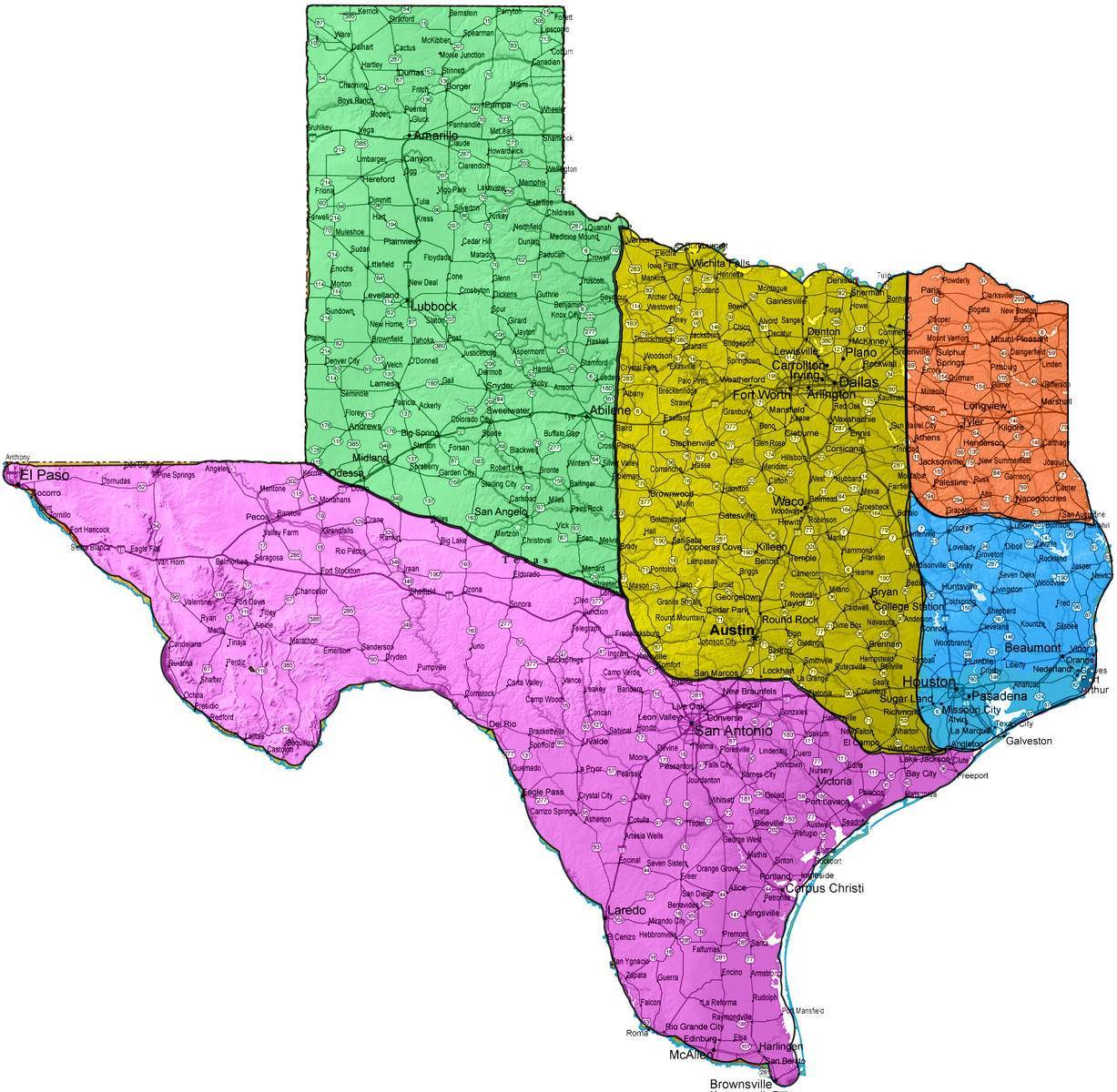
In 1930, a few years before he muscled his way into the White House as Franklin Roosevelt's first vice president, House Minority Leader John Nance Garner led a crusade to divide the one state he represented into five, along regional lines. Together with their progenitor, the new states of North Texas, South Texas, East Texas and West Texas would, in Garner's words, "transfer the balance of political power from New England to the South and secure for the Southern States ... prestige and recognition." At a time when Texas was solidly Democratic, the threat of eight new Democratic senators in Washington would also, in his view, have the added benefit of chipping away significantly at the Republican majority's power.