The big problems is this:
25% of black people are in poverty. 25% of hispanics are in poverty
7% of whites are in poverty.
Why is this? And what is anyone doing about it?
I must ask, why did you post this obvious attempt to derail the thread?
To answer your query. The people you mentioned are primarily responsible for their situation. It is up to them to at least make an attempt to raise their standard of living.
And while we're at it. Well over HALF of the nearly $4 trillion federal budget is spent on social programs that are in theory supposed to lift people out of poverty. THAT is what is being done.
Now, back to the thread. Let your next post be on point.
Er... actually my post is very on point. Oh, you don't want to acknowledge that this whole topic is about opportunities for different groups.
You think in America it's still "everyone can make it" huh?
The problem is, everyone could make it potentially, as long as things are on their side. It's not as easy in the modern era to make it when many companies won't employ those who simply don't have the right education.
Yes, there are lots of programs. Are these programs actually helping people, or are they merely about making it look like the govt is doing something about it?
Let me give a clear example of how the govts' attempt at solving problems is just not working because they didn't think about it.
Food Assistance Programs | Nutrition.gov
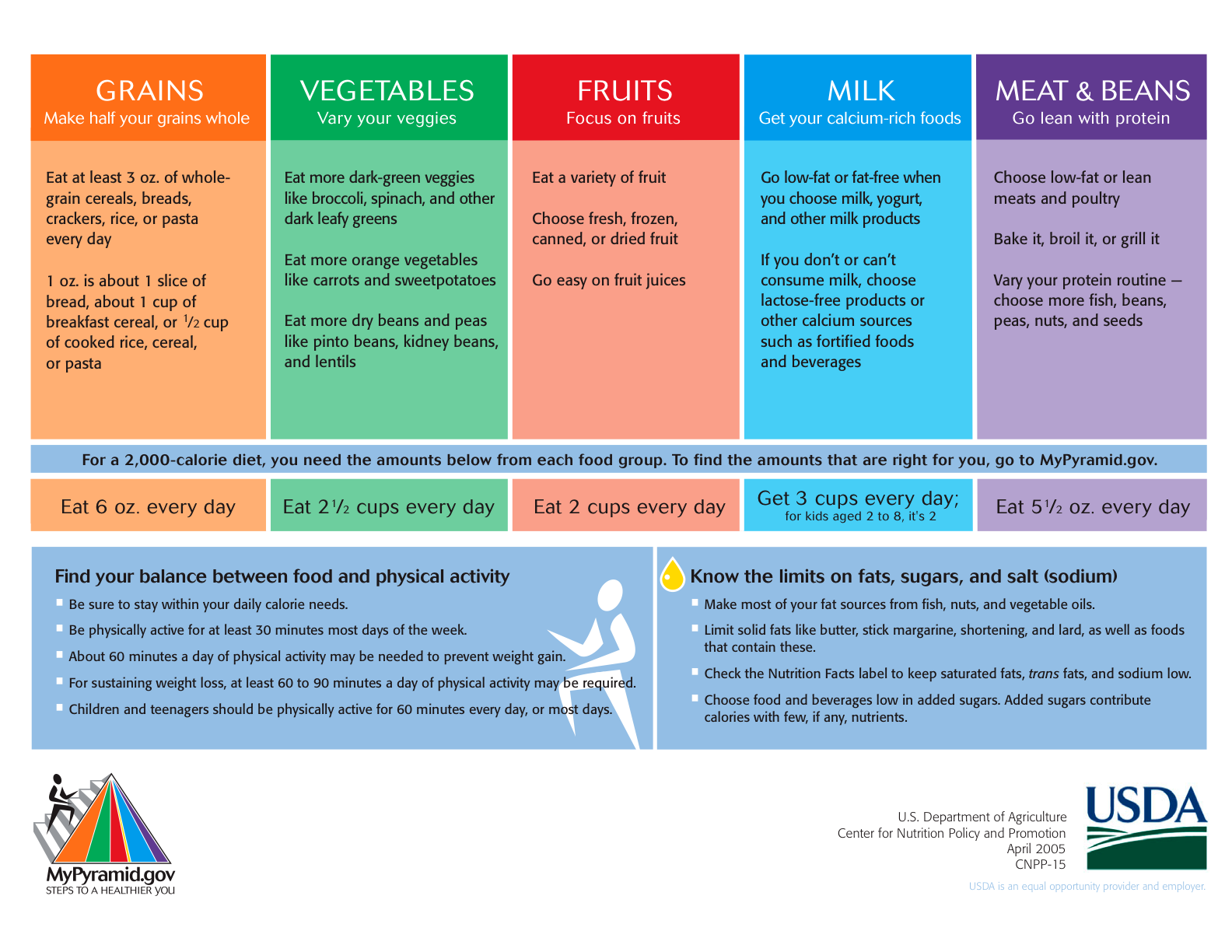
"Team Nutrition's Goal is to improve children's lifelong eating and physical activity habits by using the principles of the Dietary Guidelines for Americans and MyPyramid."
So someone makes a pyramid about how kids should eat. The govt takes it, tries to put it into schools and ends up with pizza, chips and other such food being "healthy" simply because it contains stuff they're supposed to eat.
Now, you want to see why this is on point?
Well, poverty effects educational achievement. Kids with family problems, kids with poor diets, kids with poor role models, kids with a life that is not as good as others do less well in education than kids with a good family environment, a good social environment etc.
How many kids from inner city areas go to university?
Education in the Inner City
"For mostly financial reasons, people who live in the inner city are often left out of opportunities presented to people living elsewhere."
"Living in the inner city effects all families, elderly couples and young working class members, but nobody is effected more than children. Growing up as a child in the inner city is certainly a challenge. These kids don't have adequate facilities to grow up in a healthy manner. Parks aren't well kept streets are dirty and above all, the education they are offered is inexcusably poor. For most kids a solid education is perhaps their only chance to get off the streets, out of the city so that they can create a better situation for their own kids. But if these inner city kids aren't given the same educational opportunities as other kids, then they can never get out and the problem just grows."
http://www.princeton.edu/~jcurrie/publications/inman_june07.pdf
"In fact, poverty has increasingly become an urban problem: In 1979, rural poverty exceeded urban poverty, but by 1999, the situation had been reversed. In 2003, 17.5 percent of central city urban residents were poor compared to 9.1 percent in other urban areas, and 14.2 percent outside metro areas (Weinberg, 2005)."
"The negative effects of poverty on children can be especially pernicious, blighting lives
before they really start. Brooks-Gunn and Duncan (1997) document that children who grow up in poverty suffer worse outcomes than other children. This is especially true of those who live in extreme poverty or who live below the poverty line for many years (and about 15 percent of children who ever become poor will live in poverty for at least 10 years.) Currie and Lin (2007) show that low income children are more likely than other children to suffer from virtually every type of health insult, and, perhaps as a result, are in worse overall health. Poor children are more likely than other children to suffer mental health problems including learning disabilities and developmental delays, in addition to their physical health problems. These problems in turn may be linked to higher rates of school failure, teen parenthood, and risky behaviors among poor children."
It doesn't take a genius to figure out that poverty has a lasting impact on children.
Then this has an impact on who goes to university.
Now if 25% of black people are in poverty what effect does this have on education?
http://www.census.gov/prod/2013pubs/p20-571.pdf
Table 1
Drop out rate grades 10-12
White non-hispanic 2.4
Black 3.8
Hispanic 4.1
Asian 3.1
No high school completion
White non-hispanic 6.4
Black 6.5
Asian 4.4
Hispanics 12.6
Table 2
Full time Enrollment in university 2 year course/4 year course (respectively)
White non-hispanic 16.6/56.8
Black 22.9/49.5
Asian 14.4/65.5
Hispanics 27.1/41.9
Now, you want to know why there are more females in university but more males in high school? Maybe you can say that boys are simply inferior, and will never make it to the top.
Now, it seems that black kids do better than hispanic kids, when both have about the same level of poverty. But if I could find statistics about where kids came from, I'd bet that white kids in poverty would have similar statistics to black kids in poverty.


 At times people all over the world were under the thumb of imperialism, enslaved, discriminated, and forced to migrate to new lands with nothing to become second-class citizens. There is only one group to fail uniformly and miserably where ever they are found.