ICE’s Unconstitutional Double Standard for Protesters
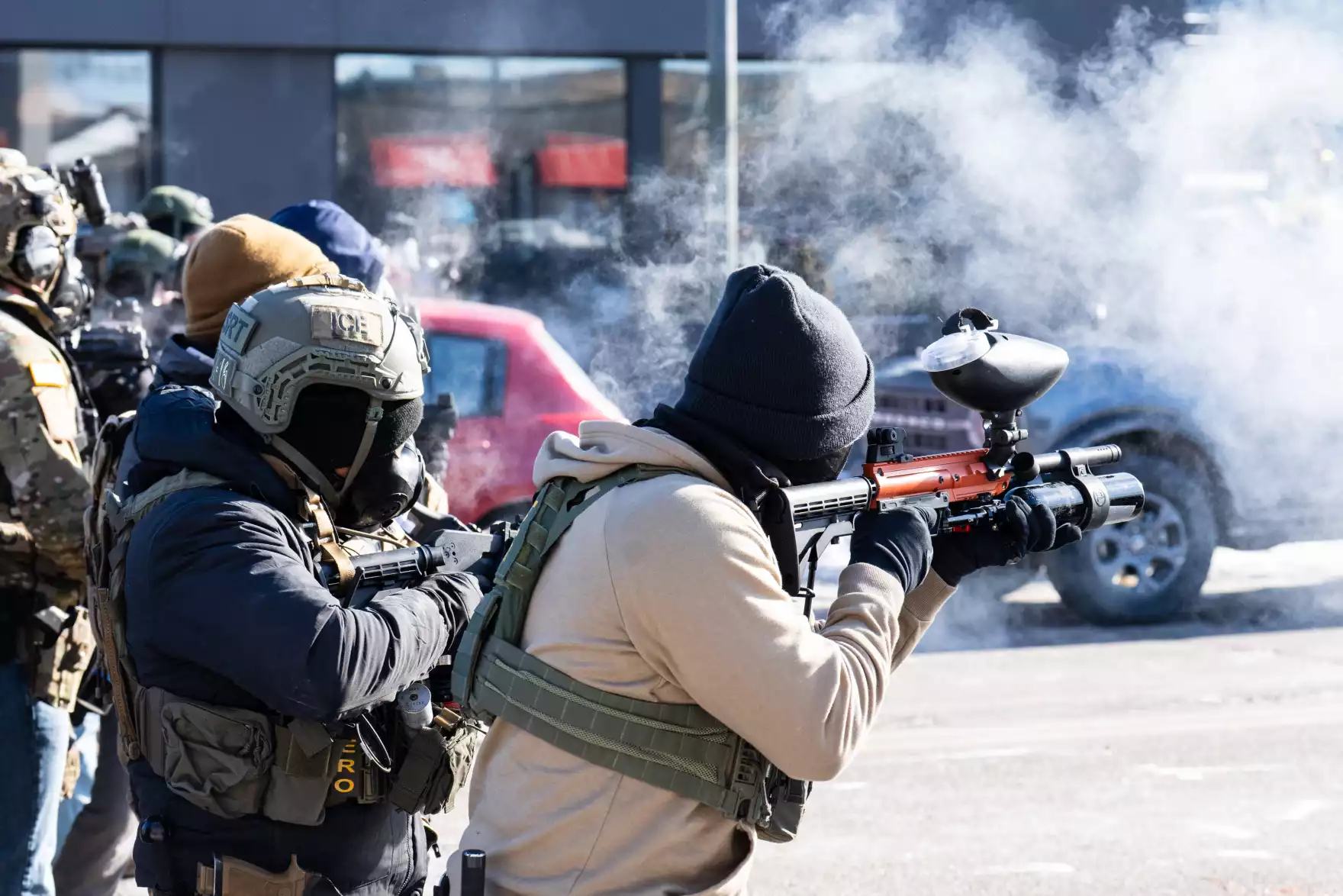
On Jan. 15, White House Border Czar Tom Homan told Laura Ingraham during a Fox News interview that he is “pushing for” the federal government to create a “database” of people arrested during demonstrations against Immigration and Customs Enforcement (ICE). In Homan’s words, “we’re gonna make them famous. We’re gonna put their faces on TV. We’re gonna let their employers, and their neighborhoods, and their schools, know who these people are.”
Reporting suggests that Homan’s database may already be a reality—and not just for people whose protest activity leads to arrest. On Jan. 23, an anti-ICE protester captured an ICE agent on video explaining that he was taking pictures of the protester’s car, “’cause we have a nice little database and now you’re considered a domestic terrorist. So have fun with that.” Ken Klippenstein reported that a federal official directly involved with the program confirmed that the database exists and that the Department of Homeland Security (DHS) has ordered immigration officers to collect information about anyone filming their activities.
However, DHS spokesperson Tricia McLaughlin subsequently disavowed the existence of the database, while other reporting suggests that the “database” may be decentralized and disorganized at this point.
Regardless of its current status, the intent behind such a database is troubling: to strike back against recent efforts to film, follow, and monitor ICE agents and publicize their identities. As Homan said, “If they want to broadcast the ICE officer that was nearly killed all over the internet [presumably referring to the ICE agent who shot and killed Renée Macklin Good in Minneapolis], we’re gonna broadcast every one of these people we arrest.”
Homan is drawing a false equivalency between what protesters are doing—filming law enforcement officers doing their duties in public, following them to monitor those activities, and publishing recordings that disclose agents’ names, faces, and badge numbers—and what the government is doing: arresting people for this activity, creating a government-controlled list of ICE protesters, and preparing to use this information to lean on private parties in hopes that the private parties will then punish the protesters in ways the government cannot.
DHS’s threats to create a database of anti-ICE protesters raise troubling First Amendment concerns.

www.lawfaremedia.org
Police states are known to use surveillance of their citizens as a means of controlling the population. Protests, exercises of free speech, media that questions authority, authoritarian governments don't like those things. Attempts are made to stifle dissent.
For instance, unfriendly media outlets and individual reporters are targeted. Protesters are attacked by the police and files are kept on them. Not that anything like that would happen here.