
IM2
Diamond Member
- Mar 11, 2015
- 113,095
- 141,801
- 3,645
What is a tyrant, folks? We have seen people get called tyrants for making people stay inside during a pandemic. We saw people being called tyrants for making people get vaccinated to not spread a deadly virus. People have complained about tyranny because of an attempt to enforce equal rights and opportunities. Today, we have a president snatching people off the street, putting them in jails, or shipping them away without due process. To me, that's a tyrant, yet we see people defending this.
For as long as I’ve been alive, American presidents have defined tyrants by their willingness to use military force against their own people in reprisal for political opposition. This was a staple of Cold War presidential rhetoric, and it survived long into the War on Terror era.
Ronald Reagan declared in 1981 that “it is dictatorships, not democracies, that need militarism to control their own people and impose their system on others.” His successor, George H. W. Bush, did the same in 1992, talking about American presidents confronting the Warsaw Pact, which had been “lashed together by occupation troops and quisling governments and, when all else failed, the use of tanks against its own people.” Bill Clinton, when justifying strikes against the Iraqi dictator Saddam Hussein in 1998, emphasized that Hussein had used his arsenal “against civilians, against a foreign adversary, and even against his own people.” George W. Bush repeated that justification when invading Iraq in 2003, saying that Hussein’s government “practices terror against its own people.” Barack Obama, when intervening in Libya on behalf of rebels fighting Muammar Qaddafi, warned that Qaddafi had said “he would show ‘no mercy’ to his own people.”
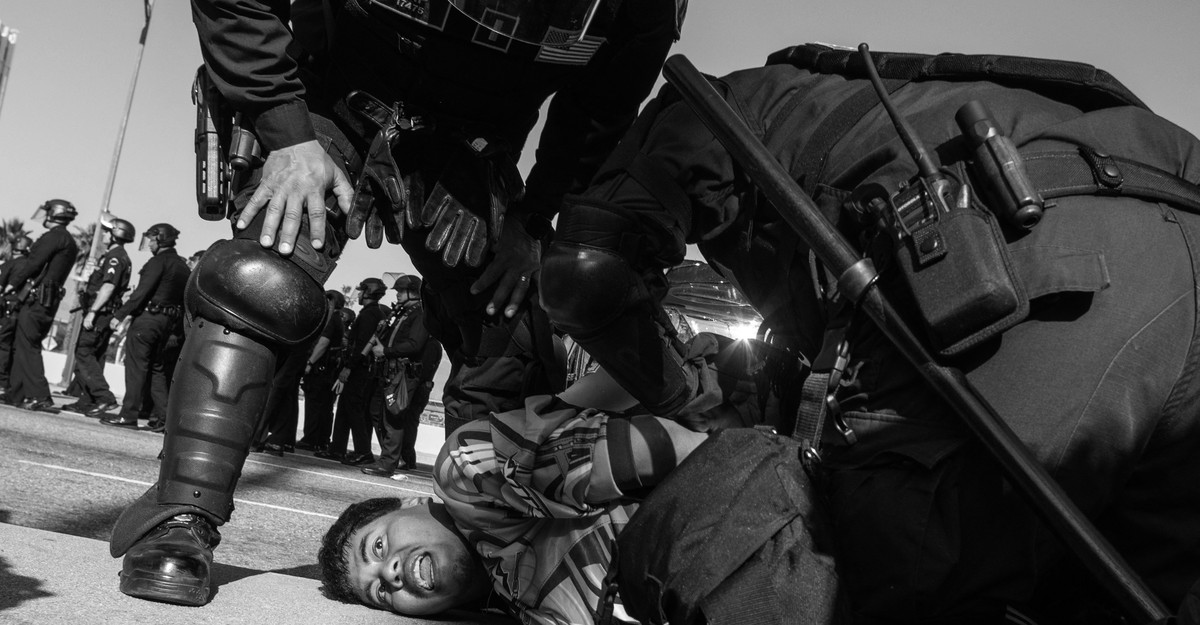
It would be absurd to say that American presidents have always been principled defenders of freedom and democracy, but their long-shared, bipartisan definition of tyrant is one who oppresses his own. So it’s striking that these warnings about tyrants in distant lands, who were supposedly the opposite of the kind of legitimate, democratic leaders elected in the United States of America, now apply to the sitting U.S. president, Donald Trump. It is a simple but morally powerful formulation: A leader who uses military force to suppress their political opposition forfeits the right to govern. You could call this the “tyrant test,” and Trump is already failing it.
 www.theatlantic.com
The Tyrant Test
A leader who uses military force to suppress his political opposition ought to lose the right to govern.For as long as I’ve been alive, American presidents have defined tyrants by their willingness to use military force against their own people in reprisal for political opposition. This was a staple of Cold War presidential rhetoric, and it survived long into the War on Terror era.
Ronald Reagan declared in 1981 that “it is dictatorships, not democracies, that need militarism to control their own people and impose their system on others.” His successor, George H. W. Bush, did the same in 1992, talking about American presidents confronting the Warsaw Pact, which had been “lashed together by occupation troops and quisling governments and, when all else failed, the use of tanks against its own people.” Bill Clinton, when justifying strikes against the Iraqi dictator Saddam Hussein in 1998, emphasized that Hussein had used his arsenal “against civilians, against a foreign adversary, and even against his own people.” George W. Bush repeated that justification when invading Iraq in 2003, saying that Hussein’s government “practices terror against its own people.” Barack Obama, when intervening in Libya on behalf of rebels fighting Muammar Qaddafi, warned that Qaddafi had said “he would show ‘no mercy’ to his own people.”
It would be absurd to say that American presidents have always been principled defenders of freedom and democracy, but their long-shared, bipartisan definition of tyrant is one who oppresses his own. So it’s striking that these warnings about tyrants in distant lands, who were supposedly the opposite of the kind of legitimate, democratic leaders elected in the United States of America, now apply to the sitting U.S. president, Donald Trump. It is a simple but morally powerful formulation: A leader who uses military force to suppress their political opposition forfeits the right to govern. You could call this the “tyrant test,” and Trump is already failing it.
The Tyrant Test
A leader who uses military force to suppress his political opposition ought to lose the right to govern.
www.theatlantic.com


