The Renewable Green Energy Disaster off the Northeastern US is Getting Worse

excalibur

Diamond Member
Joined
Mar 19, 2015
Messages
28,468
Reaction score
57,562
Points
2,290
Dumb ideas always come back to bite you.

Biden's [crack]pipe dreams going up in smoke. Meanwhile, the grid grows weaker.


A slow-motion collapse in the offshore wind industry continues to grow as sticky inflation and supply chain challenges force developers to delay or cancel major projects. In particular, progress towards the Biden administration’s goal of building large amounts of floating wind off the northeastern US coast is just about stalled.
Shell, which invested in a series of offshore wind projects in recent years, including offshore the northeastern United States, announced last week it would lay off much of its offshore wind business staff as the oil giant advances its program of refocusing on its core oil and gas business.
“We are concentrating on select markets and segments to deliver the most value for our investors and customers,” a Shell spokesperson told Bloomberg. “Shell is looking at how it can continue to compete for offshore wind projects in priority markets while maintaining our focus on performance, discipline and simplification.”
Wind turbine maker Siemens Gamesa announced even bigger layoffs, saying it would cut 15 per cent of its global staff to adjust to a slowing market. The announcement comes after the company reported a €4.6 billion loss for 2023, a losing trend that has continued over the first half of 2024…..
In light of the industry’s gloomy outlook, Westwood notes that “calls are ringing out for governments to provide more specific policy and regulatory support for technology development in addition to cost reduction and investment in port infrastructure to accelerate adoption.”
This is completely predictable, since the voracious rent-seeking wind business invariably calls for more government largesse in response to any challenge that arises. Unfortunately, the call is too often answered by policymakers who have made big political bets on being able to show off arrays of mammoth windmills floating atop various oceans and seas, intermittently producing some electricity – generally 25-30 per cent of nominal plant capacity over time.
This latest bad news for offshore wind could become especially troublesome for US President Joe Biden’s re-election campaign, since he has invested so much of his personal political capital in pushing a major buildout of floating offshore wind in the Atlantic northeast. A 2023 Department of Energy fact sheet sets the administration’s goal of installing 30 GW of offshore wind capacity by 2030 for the US alone, exceeding Westwood’s just estimated potential for global new capacity by that year by a factor of 10 times over.
To date, regulators under Biden have approved permits for 6 major offshore projects, several of which have already been delayed or cancelled by developers in response to tougher economic factors. In late 2023, major Danish wind developer Orsted cancelled two projects off the Atlantic coast, and Shell divested its 50 per cent stake in another in March of this year. Equinor and BP announced in January they were cancelling plans for their Empire Wind 2 project, citing similar economic concerns.
One US offshore project, Vineyard Wind 1, was able to begin delivering its intermittent 25-30 per cent of 68 megawatts (MW) to Massachusetts residents in January with the activation of 5 offshore turbines. The South Fork Wind Project was also able to commence first deliveries into New York in March, with 12 turbines capable of generating some proportion of 130 MW.
But this is less than one per cent of the Biden goal of 30 GW, with just five and a half years remaining until 2030. Given the wind industry’s insatiable appetite for ever-increasing subsidies and constantly rising utility charges, it’s an open question how many more billions of dollars the federal government will be allowed to print to keep projects alive before the voters start to rebel at the cost.
It’s a rebellion that could commence as soon as this coming November.

 
You can get time in prison for possession of a single eagle feather but the Obama administration authorized the wind turbine industry to kill as many migratory endangered bird species as it took to justify the pathetic addition to the electric grid. No complaints from "green" activists or PETA>
 
Dumb ideas always come back to bite you.

Biden's [crack]pipe dreams going up in smoke. Meanwhile, the grid grows weaker.


A slow-motion collapse in the offshore wind industry continues to grow as sticky inflation and supply chain challenges force developers to delay or cancel major projects. In particular, progress towards the Biden administration’s goal of building large amounts of floating wind off the northeastern US coast is just about stalled.
Shell, which invested in a series of offshore wind projects in recent years, including offshore the northeastern United States, announced last week it would lay off much of its offshore wind business staff as the oil giant advances its program of refocusing on its core oil and gas business.
“We are concentrating on select markets and segments to deliver the most value for our investors and customers,” a Shell spokesperson told Bloomberg. “Shell is looking at how it can continue to compete for offshore wind projects in priority markets while maintaining our focus on performance, discipline and simplification.”
Wind turbine maker Siemens Gamesa announced even bigger layoffs, saying it would cut 15 per cent of its global staff to adjust to a slowing market. The announcement comes after the company reported a €4.6 billion loss for 2023, a losing trend that has continued over the first half of 2024…..
In light of the industry’s gloomy outlook, Westwood notes that “calls are ringing out for governments to provide more specific policy and regulatory support for technology development in addition to cost reduction and investment in port infrastructure to accelerate adoption.”
This is completely predictable, since the voracious rent-seeking wind business invariably calls for more government largesse in response to any challenge that arises. Unfortunately, the call is too often answered by policymakers who have made big political bets on being able to show off arrays of mammoth windmills floating atop various oceans and seas, intermittently producing some electricity – generally 25-30 per cent of nominal plant capacity over time.
This latest bad news for offshore wind could become especially troublesome for US President Joe Biden’s re-election campaign, since he has invested so much of his personal political capital in pushing a major buildout of floating offshore wind in the Atlantic northeast. A 2023 Department of Energy fact sheet sets the administration’s goal of installing 30 GW of offshore wind capacity by 2030 for the US alone, exceeding Westwood’s just estimated potential for global new capacity by that year by a factor of 10 times over.
To date, regulators under Biden have approved permits for 6 major offshore projects, several of which have already been delayed or cancelled by developers in response to tougher economic factors. In late 2023, major Danish wind developer Orsted cancelled two projects off the Atlantic coast, and Shell divested its 50 per cent stake in another in March of this year. Equinor and BP announced in January they were cancelling plans for their Empire Wind 2 project, citing similar economic concerns.
One US offshore project, Vineyard Wind 1, was able to begin delivering its intermittent 25-30 per cent of 68 megawatts (MW) to Massachusetts residents in January with the activation of 5 offshore turbines. The South Fork Wind Project was also able to commence first deliveries into New York in March, with 12 turbines capable of generating some proportion of 130 MW.
But this is less than one per cent of the Biden goal of 30 GW, with just five and a half years remaining until 2030. Given the wind industry’s insatiable appetite for ever-increasing subsidies and constantly rising utility charges, it’s an open question how many more billions of dollars the federal government will be allowed to print to keep projects alive before the voters start to rebel at the cost.
It’s a rebellion that could commence as soon as this coming November.

It doesn't bother me. For power generation to meet the future, we need to be going Nuclear Energy power generation.
 
It doesn't bother me. For power generation to meet the future, we need to be going Nuclear Energy power generation.
Modular nuke plants are the way to go.

By 2026, electricity consumption from data centers — including those used for cryptocurrencies and artificial intelligence — could rise up to 1,050TWh depending on the pace the technology develops. That growth is equivalent to adding an extra country’s worth of electricity demand;

Hell, NOtVA accounts for 70% of data-mining and AI now with two new centers stated for completion within the next couple years.....They are even expanding out into the Hinterlands.
 
Modular nuke plants are the way to go.

By 2026, electricity consumption from data centers — including those used for cryptocurrencies and artificial intelligence — could rise up to 1,050TWh depending on the pace the technology develops. That growth is equivalent to adding an extra country’s worth of electricity demand;

Hell, NOtVA accounts for 70% of data-mining and AI now with two new centers stated for completion within the next couple years.....They are even expanding out into the Hinterlands.
I agree.

Some have an unreasoning fear of the technology, probably by people unfamiliar, and having no wish to study it in a clear light. Also, I suspect big proponents of the fossil fuel industry are opposed and substantial funding and lobbying is done in protection of those interests, also.

It's time to move toward that future, in my opinion.
 
In my deep blue state, you will only be able to buy gas powered cars as "used" come 2030.

It's beyond lunacy.

However, I still predict that Rhode Island will be within single digits this time.

And, interestingly, my Democrat State Senator just resigned to "spend more time with family".

He's fairly conservative, as is my state district.

My city has a Republican mayor.

I wonder if his internal polling convinced him to bow out...

Regardless, the "Green New Deal" is turning folks off, big time.

And you bet your ass if NY, NJ are within single digits, Rhode Island will be too.

And what does that say for how the rest of the nation goes? ;)
 
Dumb ideas always come back to bite you.

Biden's [crack]pipe dreams going up in smoke. Meanwhile, the grid grows weaker.


A slow-motion collapse in the offshore wind industry continues to grow as sticky inflation and supply chain challenges force developers to delay or cancel major projects. In particular, progress towards the Biden administration’s goal of building large amounts of floating wind off the northeastern US coast is just about stalled.
Shell, which invested in a series of offshore wind projects in recent years, including offshore the northeastern United States, announced last week it would lay off much of its offshore wind business staff as the oil giant advances its program of refocusing on its core oil and gas business.
“We are concentrating on select markets and segments to deliver the most value for our investors and customers,” a Shell spokesperson told Bloomberg. “Shell is looking at how it can continue to compete for offshore wind projects in priority markets while maintaining our focus on performance, discipline and simplification.”
Wind turbine maker Siemens Gamesa announced even bigger layoffs, saying it would cut 15 per cent of its global staff to adjust to a slowing market. The announcement comes after the company reported a €4.6 billion loss for 2023, a losing trend that has continued over the first half of 2024…..
In light of the industry’s gloomy outlook, Westwood notes that “calls are ringing out for governments to provide more specific policy and regulatory support for technology development in addition to cost reduction and investment in port infrastructure to accelerate adoption.”
This is completely predictable, since the voracious rent-seeking wind business invariably calls for more government largesse in response to any challenge that arises. Unfortunately, the call is too often answered by policymakers who have made big political bets on being able to show off arrays of mammoth windmills floating atop various oceans and seas, intermittently producing some electricity – generally 25-30 per cent of nominal plant capacity over time.
This latest bad news for offshore wind could become especially troublesome for US President Joe Biden’s re-election campaign, since he has invested so much of his personal political capital in pushing a major buildout of floating offshore wind in the Atlantic northeast. A 2023 Department of Energy fact sheet sets the administration’s goal of installing 30 GW of offshore wind capacity by 2030 for the US alone, exceeding Westwood’s just estimated potential for global new capacity by that year by a factor of 10 times over.
To date, regulators under Biden have approved permits for 6 major offshore projects, several of which have already been delayed or cancelled by developers in response to tougher economic factors. In late 2023, major Danish wind developer Orsted cancelled two projects off the Atlantic coast, and Shell divested its 50 per cent stake in another in March of this year. Equinor and BP announced in January they were cancelling plans for their Empire Wind 2 project, citing similar economic concerns.
One US offshore project, Vineyard Wind 1, was able to begin delivering its intermittent 25-30 per cent of 68 megawatts (MW) to Massachusetts residents in January with the activation of 5 offshore turbines. The South Fork Wind Project was also able to commence first deliveries into New York in March, with 12 turbines capable of generating some proportion of 130 MW.
But this is less than one per cent of the Biden goal of 30 GW, with just five and a half years remaining until 2030. Given the wind industry’s insatiable appetite for ever-increasing subsidies and constantly rising utility charges, it’s an open question how many more billions of dollars the federal government will be allowed to print to keep projects alive before the voters start to rebel at the cost.
It’s a rebellion that could commence as soon as this coming November.

The northeast should have brought in the very cheap Canadian hydro-electric power.
 
We need giant, muscle powered generators, powered by our prisoners. :biggrin:
 
You can get time in prison for possession of a single eagle feather but the Obama administration authorized the wind turbine industry to kill as many migratory endangered bird species as it took to justify the pathetic addition to the electric grid. No complaints from "green" activists or PETA>

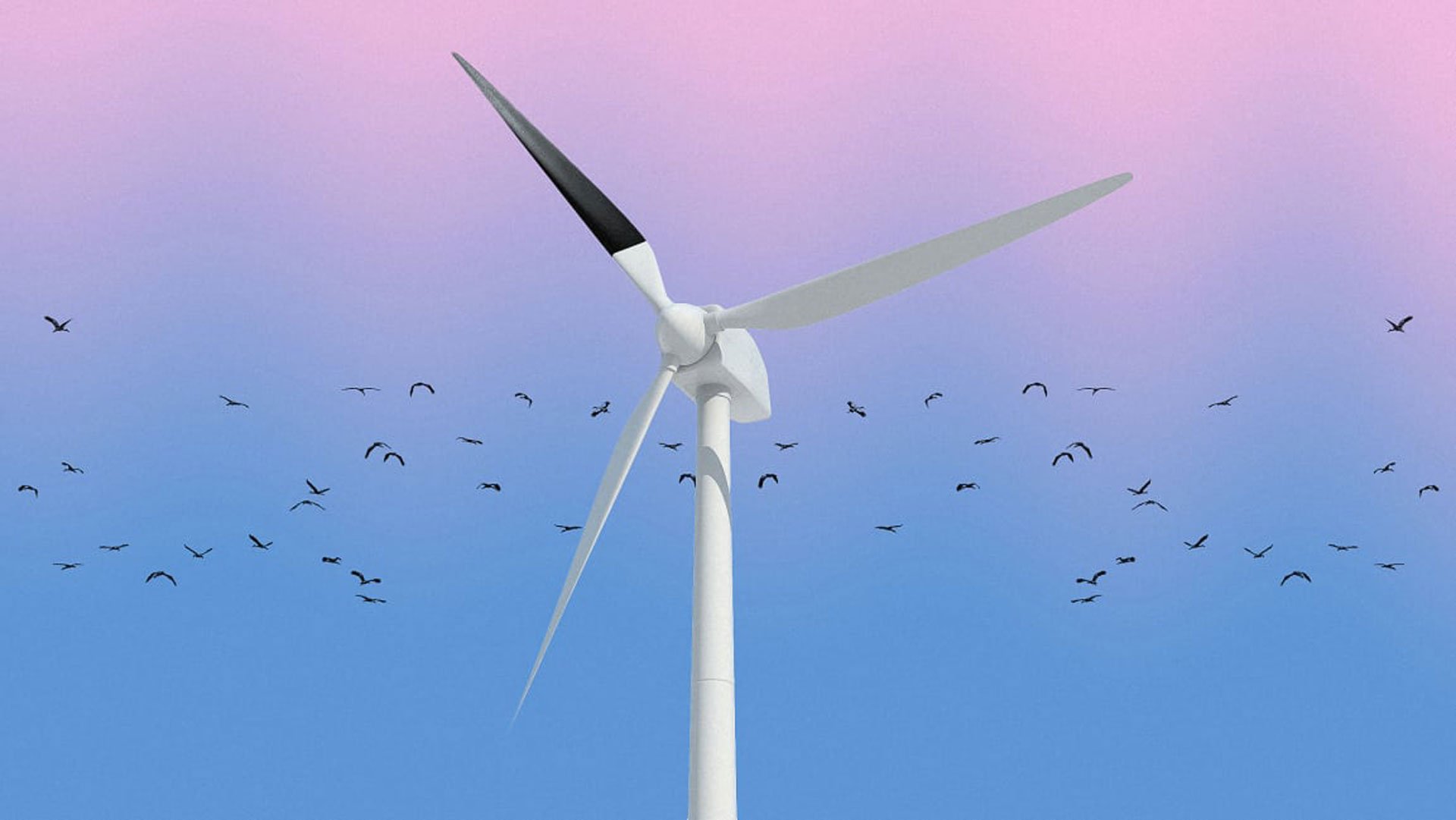
They have mostly fixed the problem of bird deaths by painting one blade black.
 
whitehall


That study showed that painting one blade of a wind turbine rotor black resulted in 70 percent fewer collision bird victims. "That has to do with the way birds perceive the moving rotor of a wind turbine," says Jesper Kyed Larsen, Environmental Expert at Vattenfall. "When a bird comes close to the rotating blades, the three individual blades can 'merge' into a smear and birds may no longer perceive it an object to avoid.
 
They have mostly fixed the problem of bird deaths by painting one blade black.
You play a dangerous game. Civilizations are finnicky and this one survives with relative cheap energy ways.
 
You can get time in prison for possession of a single eagle feather but the Obama administration authorized the wind turbine industry to kill as many migratory endangered bird species as it took to justify the pathetic addition to the electric grid. No complaints from "green" activists or PETA>

That's because it isn't about doing anything good. It's only about their own personal financial and political gains, that's it.

They get political gains by doing the bidding of the world economic forum which is a cadre of the world's richest and most powerful people. They get political gains by doing the bidding of all these companies that manufacturer the green energy stuff because they get chummy with these big companies.

They get financial gain by taking "donations" to their campaign from companies that manufacturer this stuff in return for pushing it on America which makes those companies billions. And those companies directly pay (aka bribe) politicians like how Goldman sachs pays shitpots of money to the Clinton's for their speeches.

And they use it as political leverage because they can be on tv and talk about how they want to save the planet, save the bees, save those trees. And use it to politically attack opponents by saying "those Republicans are trying to destroy our planet!!!". And because they can scare Americans with their fear mongering of climate change.

The whole green energy fad is a system designed to be taken advantage of to advance the desires of a small group of people's personal gains. They do more harm than good for their own gain.

It's the same reason Tesla had happen to him what he happened. Because he had more powerful people in energy that wanted their product sold. It's the same reason pot was originally banned, because the timber industry felt threatened by hemp so they had it outlawed. Even odd cases like Stanley Meyer, a man that claimed to have made a hydrogen engine car and tried to get a patent claimed he was threatened and tried to be bought off suddenly died one day at a restaurant while claiming he was poisoned.
 
15th post
That's because it isn't about doing anything good. It's only about their own personal financial and political gains, that's it.

They get political gains by doing the bidding of the world economic forum which is a cadre of the world's richest and most powerful people. They get political gains by doing the bidding of all these companies that manufacturer the green energy stuff because they get chummy with these big companies.

They get financial gain by taking "donations" to their campaign from companies that manufacturer this stuff in return for pushing it on America which makes those companies billions. And those companies directly pay (aka bribe) politicians like how Goldman sachs pays shitpots of money to the Clinton's for their speeches.

And they use it as political leverage because they can be on tv and talk about how they want to save the planet, save the bees, save those trees. And use it to politically attack opponents by saying "those Republicans are trying to destroy our planet!!!". And because they can scare Americans with their fear mongering of climate change.

The whole green energy fad is a system designed to be taken advantage of to advance the desires of a small group of people's personal gains. They do more harm than good for their own gain.

It's the same reason Tesla had happen to him what he happened. Because he had more powerful people in energy that wanted their product sold. It's the same reason pot was originally banned, because the timber industry felt threatened by hemp so they had it outlawed. Even odd cases like Stanley Meyer, a man that claimed to have made a hydrogen engine car and tried to get a patent claimed he was threatened and tried to be bought off suddenly died one day at a restaurant while claiming he was poisoned.

The Saudis have been working on Hy-solar at KAUST since 1982.
 
You can get time in prison for possession of a single eagle feather but the Obama administration authorized the wind turbine industry to kill as many migratory endangered bird species as it took to justify the pathetic addition to the electric grid. No complaints from "green" activists or PETA>

Or you can reduce bird deaths by 70% if you paint one blade black.
 
Dumb ideas always come back to bite you.

Biden's [crack]pipe dreams going up in smoke. Meanwhile, the grid grows weaker.


A slow-motion collapse in the offshore wind industry continues to grow as sticky inflation and supply chain challenges force developers to delay or cancel major projects. In particular, progress towards the Biden administration’s goal of building large amounts of floating wind off the northeastern US coast is just about stalled.
Shell, which invested in a series of offshore wind projects in recent years, including offshore the northeastern United States, announced last week it would lay off much of its offshore wind business staff as the oil giant advances its program of refocusing on its core oil and gas business.
“We are concentrating on select markets and segments to deliver the most value for our investors and customers,” a Shell spokesperson told Bloomberg. “Shell is looking at how it can continue to compete for offshore wind projects in priority markets while maintaining our focus on performance, discipline and simplification.”
Wind turbine maker Siemens Gamesa announced even bigger layoffs, saying it would cut 15 per cent of its global staff to adjust to a slowing market. The announcement comes after the company reported a €4.6 billion loss for 2023, a losing trend that has continued over the first half of 2024…..
In light of the industry’s gloomy outlook, Westwood notes that “calls are ringing out for governments to provide more specific policy and regulatory support for technology development in addition to cost reduction and investment in port infrastructure to accelerate adoption.”
This is completely predictable, since the voracious rent-seeking wind business invariably calls for more government largesse in response to any challenge that arises. Unfortunately, the call is too often answered by policymakers who have made big political bets on being able to show off arrays of mammoth windmills floating atop various oceans and seas, intermittently producing some electricity – generally 25-30 per cent of nominal plant capacity over time.
This latest bad news for offshore wind could become especially troublesome for US President Joe Biden’s re-election campaign, since he has invested so much of his personal political capital in pushing a major buildout of floating offshore wind in the Atlantic northeast. A 2023 Department of Energy fact sheet sets the administration’s goal of installing 30 GW of offshore wind capacity by 2030 for the US alone, exceeding Westwood’s just estimated potential for global new capacity by that year by a factor of 10 times over.
To date, regulators under Biden have approved permits for 6 major offshore projects, several of which have already been delayed or cancelled by developers in response to tougher economic factors. In late 2023, major Danish wind developer Orsted cancelled two projects off the Atlantic coast, and Shell divested its 50 per cent stake in another in March of this year. Equinor and BP announced in January they were cancelling plans for their Empire Wind 2 project, citing similar economic concerns.
One US offshore project, Vineyard Wind 1, was able to begin delivering its intermittent 25-30 per cent of 68 megawatts (MW) to Massachusetts residents in January with the activation of 5 offshore turbines. The South Fork Wind Project was also able to commence first deliveries into New York in March, with 12 turbines capable of generating some proportion of 130 MW.
But this is less than one per cent of the Biden goal of 30 GW, with just five and a half years remaining until 2030. Given the wind industry’s insatiable appetite for ever-increasing subsidies and constantly rising utility charges, it’s an open question how many more billions of dollars the federal government will be allowed to print to keep projects alive before the voters start to rebel at the cost.
It’s a rebellion that could commence as soon as this coming November.

The link below has the scoop regarding efficiency of all the various styles of power generating plants.

 
Back
Top Bottom