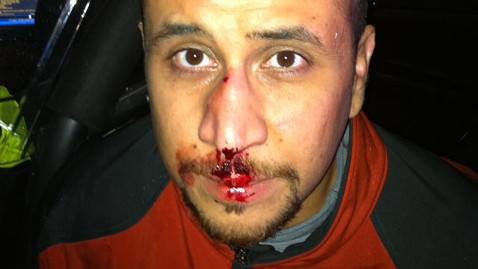
actually the autopsy showed Martin to only have abrasions on his knuckles and the gun shot wound which would concur, due to Zimmermans injuries, with Martin's hitting Zimmerman.
A person doesn't necessarily have to have bruised knuckles in a fight.
Also, depending on a timeline between the hitting and the gun shot and dying, there may not have been enough time to have the bruising develop....just saying
sounds to me like that would have shown up in the autopsy -
Marks Of Violence
A murderer will always leave marks of violence on the bodies of their victims, no matter how hard they try to hide it. During an autopsy, these marks may be difficult to find if the murder agent was drugs or poison, but these agents can still be found through blood tests. On the other end of the scale, signs that the victim suffered a violent death are immediately discovered from the external examination.
Choose one of the following topics for more information:
--> Internal/external examinations
--> Bruising
--> Cuts
--> Gunshots
--> Assualt
Internal/External Examinations Top^
During an autopsy, there may be no external signs that the victim suffered from a brain haemorrhage. Brain scans performed during the internal examination are the only way that a coroner can reveal the fatal clots that may have been caused by a blow to the head. Changes in the appearance of skin colour may also lead to solving the crime, as some fatal agents have the ability to change the physical appearance of the body. For example, carbon monoxide poisoning can cause the skin to become pink in colour and smothering and the crushing of the chest can cause can cause pin sized patches of bleeding in the face. When many of these pin sized patches of bleeding occur, it can give the face a blue appearance.
Bruising Top^
Bruising on the skin occurs when the blood vessels are broken by some form of hard and forceful contact with the skin, usually by a blunt object. The shape of the bruise can often reveal which direction the blow was received from and the colour of the bruise can indicate how long ago the injury occurred. As bruising heals, it goes red-purple, to brown, to green and finally to yellow. Bruising is not an accurate way of deciding how the victim met their fate, as interpreting bruising is different in every person, due to the fact that people bruise at different rates and bruising continues for a short while after death. Strangulation around the neck also leaves significant bruising. The hands, cords and ropes usually leave a distinct mark around the neck in the shape of the pattern on the strangling agent. If the strangling agent is very soft material, it may leave little or no marks, but the dissection of the neck area is able to show tissue bruising beneath the skin.
Forensic Science | Marks Of Violence