ShahdagMountains
Diamond Member
- Jan 16, 2012
- 14,870
- 17,175
- 2,278
The Myth of the Empty Land
When we learn Jewish history, the story of the Jewish people in the Land of Israel seems to end with the Jewish-Roman wars of the 1st and 2nd centuries. From there, normative history courses shift to the Diaspora: the Talmudic academies in Babylonia, the Golden Age in Spain, Jewish life in Eastern Europe. The implied takeaway is that the Jewish population in the Land of Israel rapidly collapsed and was virtually nonexistent for 2,000 years, until the waves of mass immigration in the late 19th and early 20th centuries.In this perspective, the Land of Israel is depicted as a memory, a place to long for in prayer, but long since left behind, until modern times.
The Musta'arabi Jews make a vital point in today's debate over Jewish indigeneity. We are not colonizers arriving on a foreign shore. We are a people returning to our family home, where a small, stubborn group of relatives kept the lights on and refused to leave. While the rest of the nation scattered like seeds to the wind, these Jews stayed.
The Musta'arabim no longer exist as a distinct group, but an estimated 10 percent of Israeli Jews are their descendants, an unbroken chain reaching back to Biblical times.
The prophet Isaiah wrote:
"And the Lord removes the people far away, and the deserted places be many in the midst of the land. And when there is yet a tenth of it, it will again be purged, like the terebinth and like the oak, which in the fall have but a trunk, the holy seed is its trunk." (Isaiah 6:12-13)
The branches scattered. The trunk held.
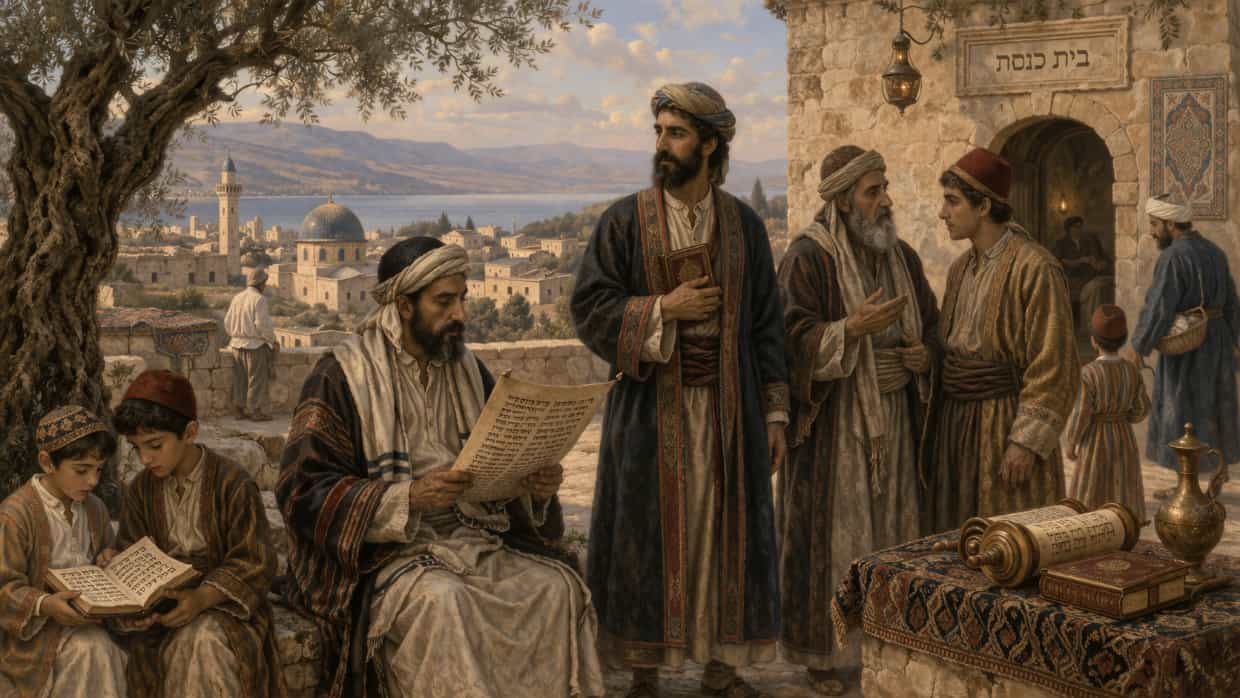
The Jews Who Never Left the Land of Israel | Aish
For 2,000 years, while Jews scattered across the globe, a small group never left the Land of Israel. Almost no one has heard of them.
 aish.com