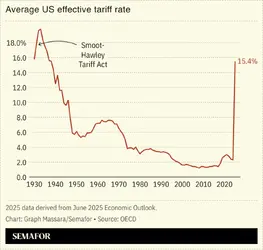
It's likely America will not be great again. Amen!
The U.S. dollar has slipped to its lowest level since 1973, marking its steepest decline in the first half of a year in over five decades, with a drop exceeding 10% against major global currencies127.
This significant depreciation reflects growing global investor concerns about the U.S. economic outlook, fiscal challenges, and policy uncertainty under President Donald Trump’s administration.
For America, this dollar weakness has several key implications:
Higher Costs for Consumers: A weaker dollar means imports become more expensive, leading to inflationary pressures on everyday goods. This reduces Americans' purchasing power domestically and makes foreign travel costlier, as the dollar buys less abroad147.
Potential Export Boost: The decline may help U.S. exporters by making American goods cheaper and more competitive internationally. Trump’s policies aimed at increasing exports through tariffs ostensibly benefit from a weaker dollar, although the overall economic impact remains uncertain13.
Rising Borrowing Costs and Debt Concerns: The large and growing U.S. federal debt, exacerbated by recent spending bills and tax cuts, undermines investor confidence. This can lead to less demand for U.S. Treasury securities, potentially raising borrowing costs2349.
Economic Growth Uncertainty: Tariffs and trade policy fluctuations have introduced economic uncertainty, causing some investors to worry about slower U.S. growth prospects and reduced returns on investments denominated in dollars137.
For the global economy, the dollar’s decline signals:
Shift in Global Financial Dynamics: The dollar’s status as the world’s primary reserve currency and safe-haven asset is being questioned, as investor confidence erodes amid U.S. policy unpredictability and increasing debt239.
Investment Reallocation: Global investors may diversify away from dollar assets into alternatives like gold or other currencies (yen, euro). This shift could alter capital flows and exchange rate dynamics worldwide49.
Impacts on Trade Partners: Countries trading heavily with the U.S. see a relative strengthening of their currencies, which can influence their export competitiveness and economic conditions17.
In summary, the dollar’s historic fall is a barometer of broader challenges facing the U.S., including fiscal imbalances, inflation fears, and policy volatility. While a weaker dollar can support U.S. exports, it raises costs for consumers and clouds the outlook for economic stability. Globally, it may mark a gradual shift in financial influence away from the U.S., driving international investors to reconsider the dollar’s dominance in the global economy1239.
sources:
1.
The U.S. dollar has fallen at the fastest clip since 1973. Here's what that means.
2.
Why some see the dollar's drop as a sign America is losing its financial might
3.
The dollar is sinking: here's why
4.
US dollar is off to its worst start in 50 years. Here's why that matters for you.
5.
6.
The U.S. Dollar Is Having a Bad Year
7.
https://www.nytimes.com/2025/06/30/business/dollar-decline-trump.html
8.
Where is the U.S. dollar headed in 2025?
9.
Why is the US dollar falling by record levels in 2025?
10.
The value of the dollar is dropping. What does that mean for Americans and the world?
11.
https://www.morningstar.com/markets/how-low-can-dollar-go

www.nbcnews.com