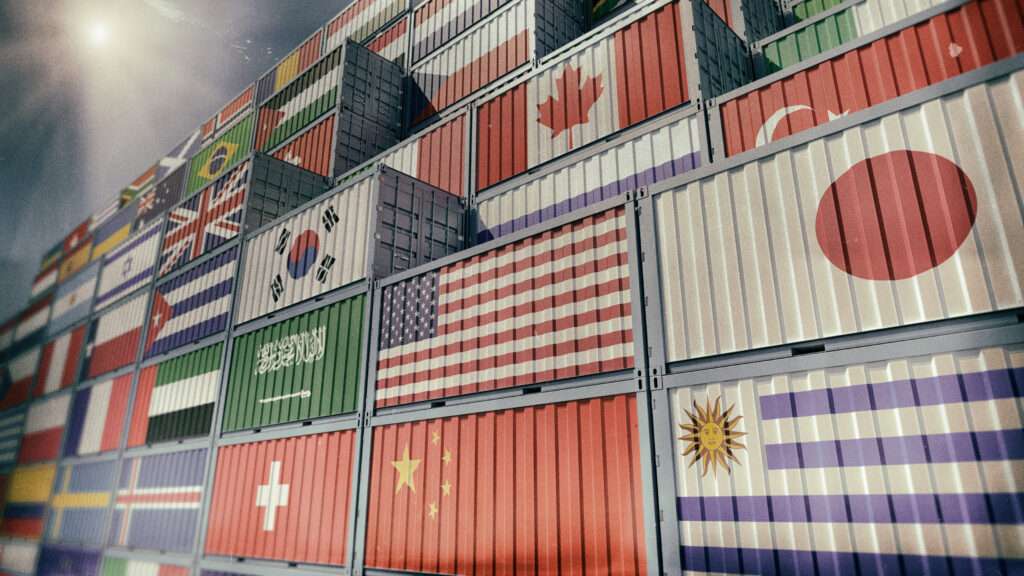
Study Shows Tariffs Paid Almost Exclusively By American Consumers

Trump has put tariffs on countries that do not in any way tariff us

He is now talking about putting tariffs on our allies to punish them for not supporting his attack on Greenland

Tariffs are a cudgel to punish his opponents… and WE pay for it
 
What a monumentally stupid thread headline!

Who else — besides Americans — would pay for the American tariffs?

Let’s face it. Of course Americans are paying the tariffs. It’s akin to another form of taxation. But with a huge difference. The tariffs are expected to make our own industries far more competitive.

Why wouldn’t we want the money being spent on products to go to American industries and to American workers?
 

So every time Trump pulls one of these stunts he’s taking money out of YOUR pocket

You good with that?
OH MY GOD!!!

i-t6CzThG-M.jpg


I didn't know that!
I'm shocked!
I'm so done with Donald Trump!
Forever!
I'm going to sign up with the Communists! They'll take good care of my money and give me free bus rides and that rich guy down the street will finally have to pay his fair share!!!
Those tariffs ... they ruined me forever! I can't even afford a candy bar now that Trump is in!
I'm done with him forever!
Really!
I swear!

Really.
 
What a monumentally stupid thread headline!

Who else — besides Americans — would pay for the American tariffs?

Let’s face it. Of course Americans are paying the tariffs. It’s akin to another form of taxation. But with a huge difference. The tariffs are expected to make our own industries far more competitive.

Why wouldn’t we want the money being spent on products to go to American industries and to American workers?

Lesh thinks he's some kind of "community organizer" or something. His ulterior motive is to drive a wedge between Trump and his supporters, which he invariably fails at.

But what do you expect from someone masquerading under an avatar of foreign nation's flag?
:laughing0301:
 
Last edited:
So now you have abandoned the stupid claim that foreign businesses will be paying for the tariffs

That’s a start (although you had little choice)

Now you need to explain how industries that we no longer have are going to be more competitive

Prices are gonna have to go WAYYYY up before we make shoes and underwear and shit like that again
 
No tariffs on products made in America or from nations with no tariffs on America.

America's friends don't put tariffs on America.
What a load of shit. Countries without tariffs on US goods now have American citizens being taxed to purchase those countries' goods.

If MAGAts didn't have denial they'd have nothing.
 

So every time Trump pulls one of these stunts he’s taking money out of YOUR pocket

You good with that?
Since inflation is slowing that study is 100% BS. Prices have come down and tariffs have had little effect.
Trump put money in my pocket with the biggest tax cut in history and low gas prices.

Why Didn’t You See a Price Hike?​

Here are 10 key reasons why consumers haven’t seen the predicted price increases:

1. Foreign Vendors Absorbed Costs​

Foreign suppliers, eager to maintain their foothold in the U.S. market, often absorbed part of the tariff costs. Especially in competitive sectors such as electronics or furniture, suppliers in China reduced their prices to stay competitive. That shielded U.S. consumers from the full impact of the tariffs.

2. Exchange Rate Fluctuations Worked in America’s Favor​

Tariff impacts were softened by exchange rate movements. When the U.S. dollar strengthened, foreign goods grew cheaper. That offset some of the price increases that would have otherwise occurred due to the tariffs.

3. Cost Sharing Along the Supply Chain​

In complex supply chains, tariff costs are spread across multiple points. Importers, wholesalers, and retailers all absorb portions of the cost. That prevents a dramatic price increase at the checkout counter.

4. Substitution of Inputs​

Many manufacturers responded to tariffs by switching to alternative, non-tariffed materials or inputs. For example, tariffs on certain metals led some companies to use domestic steel or alternative materials, preventing steep price hikes on end products.

5. Increased Domestic Production to Meet Demand​

Tariffs can lead to a boost in domestic production as American manufacturers ramp up to meet demand. As these businesses grow and achieve economies of scale, their per-unit costs decrease, helping to keep prices stable. For example, domestic steel production increased after tariffs were imposed on imports, helping to offset price increases.

6. Long-term Contracts​

Many companies sign long-term agreements with suppliers that set prices for months or even years, allowing them to avoid immediate price hikes due to tariffs. These contracts gave businesses time to adjust their strategies before any cost increases reached retailers.

7. Cross-Subsidization​

Large companies with diverse product lines often spread the cost of tariffs across their entire range of goods. They may raise prices slightly on other non-tariffed products to offset the higher costs of imported items, meaning consumers won’t notice a big jump in the price of the tariffed goods themselves.

8. Price Sensitivity and Competition​

In markets where consumers are highly sensitive to price changes, businesses may be reluctant to pass the full cost of a tariff onto the buyer. Instead, they will absorb the increased cost in order to avoid losing customers. This is especially true in competitive industries such as electronics or clothing.

9. Inventory Stockpiling Before Tariffs Hit​

Many businesses stockpiled goods before the tariffs went into effect, allowing them to continue selling at pre-tariff prices. By the time their stock ran out, these companies often had found alternative suppliers or ways to reduce costs.

10. ‘Shrinkflation’ and Other Cost-Cutting Measures​

Some companies responded to tariffs by subtly adjusting their products—reducing the size or quantity while keeping the price the same (a tactic known as “shrink
 
15th post

New Topics

Latest Discussions

Back
Top Bottom