You have already had several members tell you the difference in culture between resource extracting and farmer states, and resource consuming states.
That you refuse to acknowledge this difference, and the need for both types of states to have equal say in how the nation is governed? This is all the forum needs to see.
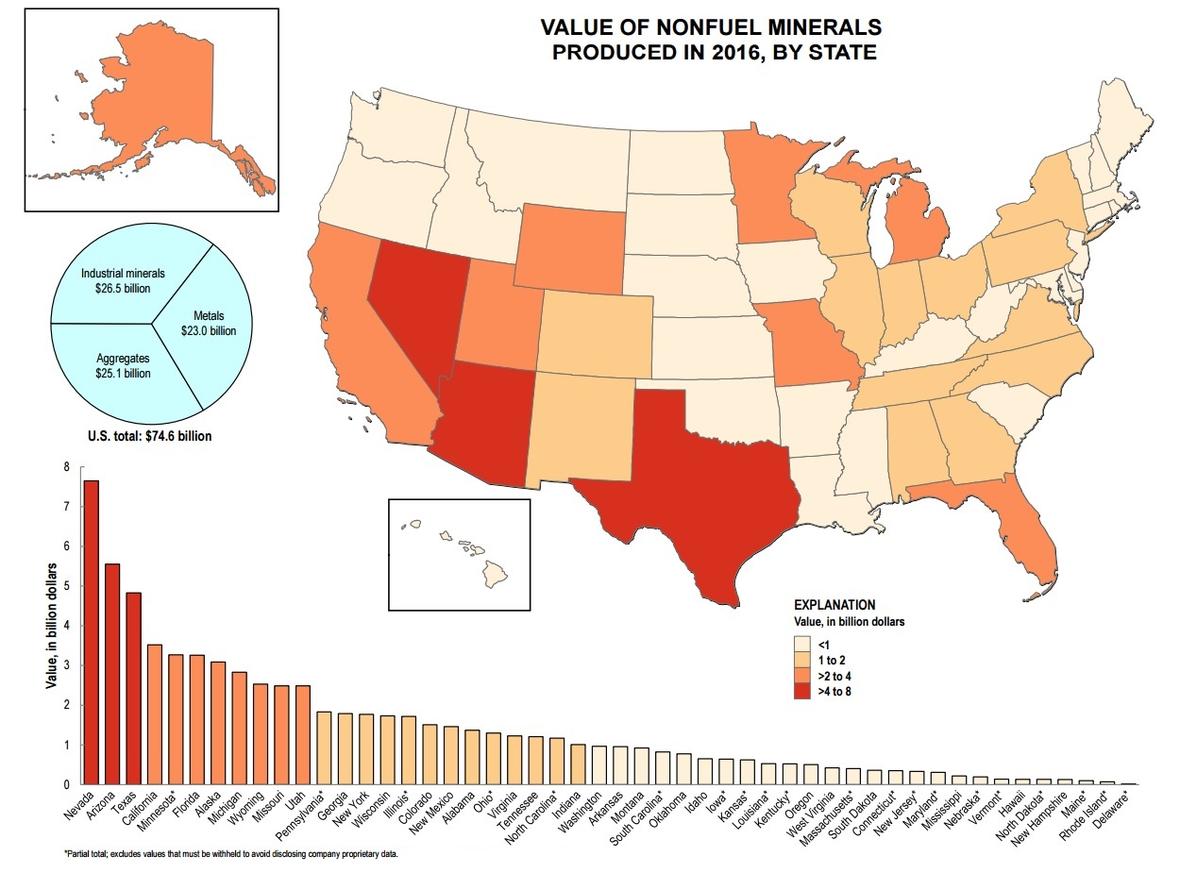
In 2016, these five states led the pack in mineral production, accounting for about one third of the total mineral production value for the entire country.

www.usgs.gov
View attachment 843049
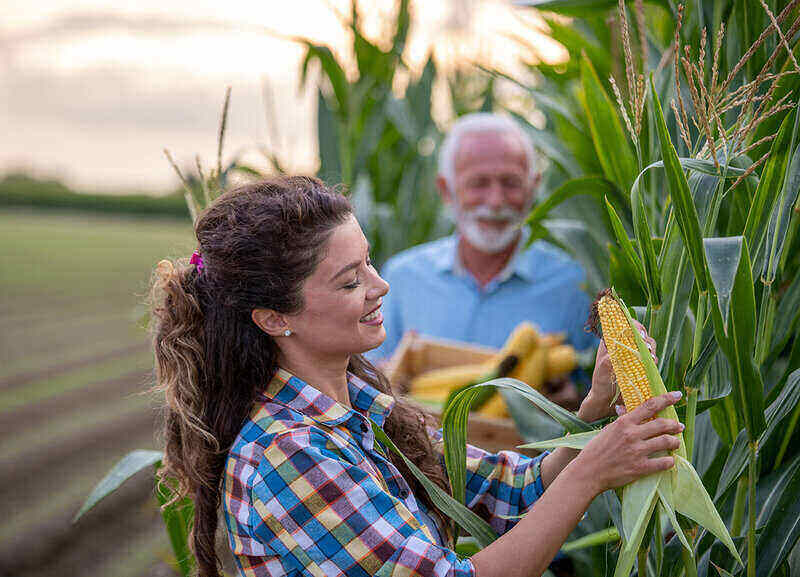
2021’s Best States to Start a Farm or Ranch
LawnStarter compared the 50 states across 44 key metrics to rank the Best States to Start a Farm or Ranch.

www.lawnstarter.com
State Rankings
See how each state fared in our ranking:
View attachment 843050
Agricultural scientist Steve Savage examines the current state of cattle ranching, and finds it may be more sustainable than we think.

sustainablog.org
View attachment 843058
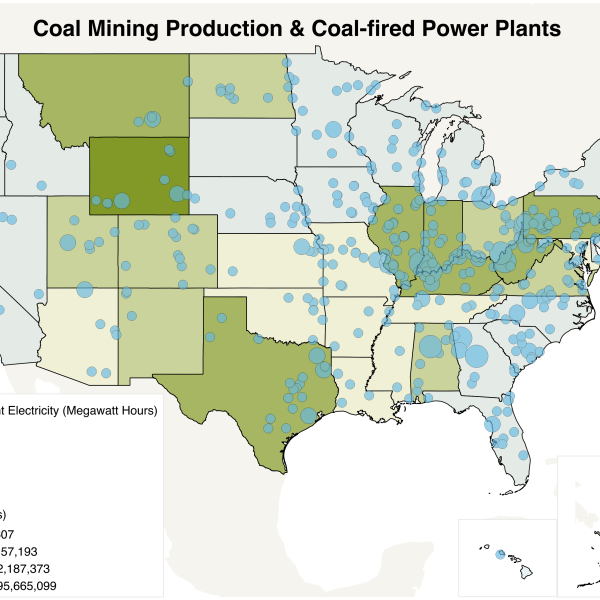
The Geography of Coal in the U.S.
Where in the United States does coal come from? Where do we make and use coal-powered electricity? Learn more with these maps.

education.nationalgeographic.org
View attachment 843052
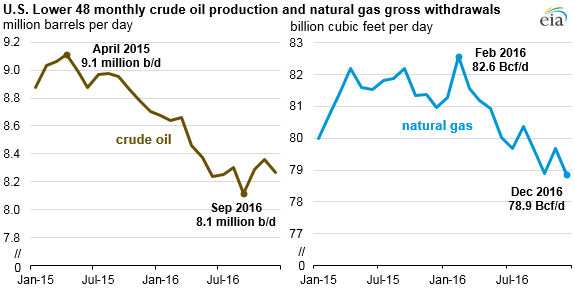
Today in Energy

www.eia.gov
View attachment 843053
Click here to learn all about production for the lumber industry. Learn the largest sawmills in the USA, as well as top producing states & more.

www.yorksaw.com
View attachment 843054
Now, I suppose, if you are part of the WEF great reset crowd, that wishes to destroy America, and create a global police state, the best plan would be to get everyone to eat fake meat or bugs, and stop using electricity.
Yeah, then encouraging everyone to move to massive cities where you can indoctrinate them, and vote blue no matter who, sounds like a swell idear.

The changes you folks ***** about, and claim to want? They have to come at yoar end silly. They have to come from the cities and industry, supply and demand.. You just need to demand less supply. Not less representation of where that supply is coming from. Asking a leftist to understand economics is like asking a toddler to understand algebra though, isn't it?
The material basis of the global economy: Worldwide patterns of natural resource extraction and their implications for sustainable resource use policies
". . . A distinction must be made between absolute and relative dematerialisation. Absolute dematerialisation, also referred to as strong dematerialisation, occurs when total material input to an economy decreases in absolute terms. Relative dematerialisation, or weak dematerialisation, refers to a decrease in the intensity of use, requiring the ratio between material input and GDP to fall over time. This can only be achieved if growth in resource use is slower than economic growth (Moll et al., 2003).
The importance of improved material management for sustainable development is recognised by various institutions in international politics. Facilitating and stimulating economic growth while reducing environmental impacts associated with resource use in Europe and beyond is central to the European “Thematic Strategy on the sustainable use of natural resources” (European Commission, 2005). Taking into consideration the entire life cycle of resource use, this strategy focuses on three main goals, summarised under the heading “more value – less impact – better alternatives”. These refer to increasing resource productivity, increasing eco-efficiency and – if cleaner use is not achievable – the substitution of currently used resources with more environmentally benign alternatives. The strategy defines a time horizon of 25 years, without, however, mentioning any quantitative reduction targets. The German Strategy for Sustainable Development (German Federal Government, 2002), on the other hand, includes targets with respect to energy and resource productivity. Aiming for an absolute reduction of resource use, this strategy calls for doubling the 1990 levels of energy productivity and the 1994 levels of resource productivity until 2020. In the long run, Germany aims for a “Factor 4” development — doubling wealth while halving resource use. A similar approach has been adopted in Japan, where a number of quantitative targets for material flow indicators to be reached until 2010 have been agreed upon in the national plan for a recycling-based society (Government of Japan, 2003). These include a 40% improvement in resource productivity calculated as GDP per Direct Material Input (DMI), a 40% increase in the cyclical use ratio, calculated as the amount of materials reused and/or recycled in total materials used, and a 50% reduction of the final disposal amount of waste (landfill). Targets refer to 2000 as the base year. Japan has also been leading the promotion of the “3R Initiative” (reduce, reuse and recycle) on the global level. Following agreement at the G8 Sea Island Summit in 2004, the initiative was formally launched in early 2005 and reaffirmed at the G8 Gleneagles Summit in 2005 (G8 Summit of Heads of State and of Government, 2005).. . . "