Can you explain why someone's position in the work force should matter in regards to receiving health benefits but not matter regarding driving on public highways?
Medical costs are a big part of the debt burden Americans are dealing with. Eliminate private for-profit medicine and health insurance, and US consumers will have far more dollars for saving, investing and consuming.
First, the derivatives and credit default swaps, had nothing to do with the crash. Nothing. And regulating them would have done nothing. The cause of the crash, was people not paying their mortgages.
It repealed part of the Glass–Steagall Act of 1933, removing barriers in the market among banking companies, securities companies and insurance companies that prohibited any one institution from acting as any combination of an investment bank, a commercial bank, and an insurance company. With the bipartisan passage of the Gramm–Leach–Bliley Act, commercial banks, investment banks, securities firms, and insurance companies were allowed to consolidate. Furthermore, it failed to give to the SEC or any other financial regulatory agency the authority to regulate large investment bank holding companies.[1]
The Commodity Futures Modernization Act of 2000 (CFMA) is United States federal legislation that ensured financial products known as over-the-counter (OTC) derivatives are unregulated, accelerating the collapses of major financial companies. [1]
After the House passed H.R. 4541, press reports indicated Sen. Gramm was blocking Senate action based on his continued insistence that the bill be expanded to prevent the SEC from regulating swaps, and the desire to broaden the protections against CFTC regulation for "bank products."[62]
If everyone had paid their mortgages, no amount of, or lack of, regulations on derivatives and credit default swaps, would have caused a crash.
And when people failed to pay their mortgages, no amount of, or lack of, regulations on derivatives and credit default swaps, would have prevented a crash.
Individuals which were only capable of low downpayment , fixed interest , long term housing loans should not have been given variable interest rate loans and sec oversight of the commodities would have realized that fraud was taking place in the ratings .
Second, Glass-Steagal had nothing to do with anything. Few, almost none, of the institutions that failed, would have been effected by Glass-Steagal.
Third, most of the banks around the world, have never had regulations like Glass-Steagal, and yet the problem originated in the US, not in Europe, Canada or anywhere else.
The glass steagal act separated commercial and investment banking after the 1929 stockmarket crash and that stipulation is precluded for the underwriting of fdic insurance such that the federal government need not reimburse not one individual for the loss of moneys lost post the gram-bliley-leachy act , even though they raised the coverage to $250,000 .
A complaint about the same to one of my congressman resulting in the only time i have ever received a phone call back from the representative with a candid apology that , albeit true , there was nothing that could be done about it .
Investment banks expect approximately 15% of investments to fail and over subscription in the housing market through unregulated and ignored for sight derivatives was irrelevant to the moneys garnered by the gluttony of banksters and finance swindlers .
The Federal Government through Freddie Mac, securitized Sub-prime loans, and gave these loans a "AAA" rating. Remember when everyone was screaming about how the rating agencies gave sub-prime loans a "AAA" rating? They didn't. Government did.
At the exact same time Freddie Mac was doing this, the Clinton Administration was suing banks to make bad loans.
Andrew Cuomo who was in charge of HUD, proudly admits they forced the banks to make loans to people who otherwise didn't qualify. And if you watch the end of the clip, Andrew Cuomo openly, and directly, himself admits the default rate would be higher.
At least on that prediction, history now proved him entirely correct.
So let's review. The start of the sub-prime mortgage bubble, both in the sheer number, and the effects on the housing price bubble, both started in 1997.
In 1997 Freddie Mac, an arm of the government, starts encouraging sub-prime lending by guaranteeing bad sub-prime loans, and giving them a AAA rating.
In 1998, HUD under the leadership of Andrew Cuomo, a member of the Clinton administration, puts all banks across the country on notice, that they will be sued and forced to make sub-prime loans to people who don't qualify.
And from that point on the sub-prime crash was unavoidable.
Glass-Steagal had nothing to do with it. Derivatives and CDS, had nothing to do with it. In fact, blaming Credit Default Swaps, is really ironic honestly. It was Credit Default Swaps, that minimized the damage. CDSs allowed banks to hedge against the drop in property values. Many more banks would have gone bankrupt, without CDSs.
No, the real cause of everything was government regulating the mortgage market. If not for Freddie Mac securitizing bad loans, and if not for goverment suing banks to make bad loans, none of the bubble and crash would have happened.
The derivative markets have played an important role in the financial crisis of 2007–2008. Specifically the credit default swaps CDSs, financial instruments traded on the over the counter derivatives markets, and the mortgage-backed securities MBSs, a type of securitized debt.[3][4]The leveraged operations are said to have generated an "irrational appeal" for risk taking, and the lack of clearing obligations also appeared as very damaging for the balance of the market.
The holder of any debt is subject to interest rate risk and credit risk, inflationary risk, currency risk, duration risk, convexity risk, repayment of principal risk, streaming income risk, liquidity risk, default risk, maturity risk, reinvestment risk, market risk, political risk, and taxation adjustment risk. Interest rate risk refers to the risk of the market value of a bond changing due to changes in the structure or level of interest rates or credit spreads or risk premiums.
First, the derivatives and credit default swaps, had nothing to do with the crash. Nothing. And regulating them would have done nothing. The cause of the crash, was people not paying their mortgages.
It repealed part of the Glass–Steagall Act of 1933, removing barriers in the market among banking companies, securities companies and insurance companies that prohibited any one institution from acting as any combination of an investment bank, a commercial bank, and an insurance company. With the bipartisan passage of the Gramm–Leach–Bliley Act, commercial banks, investment banks, securities firms, and insurance companies were allowed to consolidate. Furthermore, it failed to give to the SEC or any other financial regulatory agency the authority to regulate large investment bank holding companies.[1]
The Commodity Futures Modernization Act of 2000 (CFMA) is United States federal legislation that ensured financial products known as over-the-counter (OTC) derivatives are unregulated, accelerating the collapses of major financial companies. [1]
After the House passed H.R. 4541, press reports indicated Sen. Gramm was blocking Senate action based on his continued insistence that the bill be expanded to prevent the SEC from regulating swaps, and the desire to broaden the protections against CFTC regulation for "bank products."[62]
If everyone had paid their mortgages, no amount of, or lack of, regulations on derivatives and credit default swaps, would have caused a crash.
And when people failed to pay their mortgages, no amount of, or lack of, regulations on derivatives and credit default swaps, would have prevented a crash.
Individuals which were only capable of low downpayment , fixed interest , long term housing loans should not have been given variable interest rate loans and sec oversight of the commodities would have realized that fraud was taking place in the ratings .
Second, Glass-Steagal had nothing to do with anything. Few, almost none, of the institutions that failed, would have been effected by Glass-Steagal.
Third, most of the banks around the world, have never had regulations like Glass-Steagal, and yet the problem originated in the US, not in Europe, Canada or anywhere else.
The glass steagal act separated commercial and investment banking after the 1929 stockmarket crash and that stipulation is precluded for the underwriting of fdic insurance such that the federal government need not reimburse not one individual for the loss of moneys lost post the gram-bliley-leachy act , even though they raised the coverage to $250,000 .
A complaint about the same to one of my congressman resulting in the only time i have ever received a phone call back from the representative with a candid apology that , albeit true , there was nothing that could be done about it .
Investment banks expect approximately 15% of investments to fail and over subscription in the housing market through unregulated and ignored for sight derivatives was irrelevant to the moneys garnered by the gluttony of banksters and finance swindlers .
The Federal Government through Freddie Mac, securitized Sub-prime loans, and gave these loans a "AAA" rating. Remember when everyone was screaming about how the rating agencies gave sub-prime loans a "AAA" rating? They didn't. Government did.
At the exact same time Freddie Mac was doing this, the Clinton Administration was suing banks to make bad loans.
Andrew Cuomo who was in charge of HUD, proudly admits they forced the banks to make loans to people who otherwise didn't qualify. And if you watch the end of the clip, Andrew Cuomo openly, and directly, himself admits the default rate would be higher.
At least on that prediction, history now proved him entirely correct.
So let's review. The start of the sub-prime mortgage bubble, both in the sheer number, and the effects on the housing price bubble, both started in 1997.
In 1997 Freddie Mac, an arm of the government, starts encouraging sub-prime lending by guaranteeing bad sub-prime loans, and giving them a AAA rating.
In 1998, HUD under the leadership of Andrew Cuomo, a member of the Clinton administration, puts all banks across the country on notice, that they will be sued and forced to make sub-prime loans to people who don't qualify.
And from that point on the sub-prime crash was unavoidable.
Glass-Steagal had nothing to do with it. Derivatives and CDS, had nothing to do with it. In fact, blaming Credit Default Swaps, is really ironic honestly. It was Credit Default Swaps, that minimized the damage. CDSs allowed banks to hedge against the drop in property values. Many more banks would have gone bankrupt, without CDSs.
No, the real cause of everything was government regulating the mortgage market. If not for Freddie Mac securitizing bad loans, and if not for goverment suing banks to make bad loans, none of the bubble and crash would have happened.
The derivative markets have played an important role in the financial crisis of 2007–2008. Specifically the credit default swaps CDSs, financial instruments traded on the over the counter derivatives markets, and the mortgage-backed securities MBSs, a type of securitized debt.[3][4]The leveraged operations are said to have generated an "irrational appeal" for risk taking, and the lack of clearing obligations also appeared as very damaging for the balance of the market.
The holder of any debt is subject to interest rate risk and credit risk, inflationary risk, currency risk, duration risk, convexity risk, repayment of principal risk, streaming income risk, liquidity risk, default risk, maturity risk, reinvestment risk, market risk, political risk, and taxation adjustment risk. Interest rate risk refers to the risk of the market value of a bond changing due to changes in the structure or level of interest rates or credit spreads or risk premiums.
Correct. Indymac, was only a retail bank. Countrywide, was only a mortgage bank. Bear Stearns was only an investment bank.
Few if any of the banks, would have been affected by this laws. Lehman Brothers, Wachovia, and the list goes on... none would have been affected by this.
The only one I know of off hand, is Citigroup. One bank among hundreds on hundreds that failed.
Again, none of the other countries around the world, have ever had such restrictions. Why didn't the crash start in Europe or Canada, if the repeal of that restriction had anything to do with the crash?
Furthermore, it failed to give to the SEC or any other financial regulatory agency the authority to regulate large investment bank holding companies.
Which again, would not have mattered. The problem was sub-prime loans, that the government forced banks to make.
Whether they had more regulatory authority or not, would not have changed the fact that banks were making bad loans, at the request and demand of government, and those loans defaulted.
The Commodity Futures Modernization Act of 2000 (CFMA) is United States federal legislation that ensured financial products known as over-the-counter (OTC) derivatives are unregulated, accelerating the collapses of major financial companies. [1]
I'll go with facts over opinion any day. I have already posted clear unambiguous evidence that both the sub-prime mortgage market, and the housing price bubble, started in 1997.
It is not logical, to blame legislation that passed in 2000, for a bubble that started in 1997.
After the House passed H.R. 4541, press reports indicated Sen. Gramm was blocking Senate action based on his continued insistence that the bill be expanded to prevent the SEC from regulating swaps, and the desire to broaden the protections against CFTC regulation for "bank products."[62]
The role of credit default swaps (CDS) in the financial crisis has been debated among regulators, market participants and academics since early 2008. …
pdf.sciencedirectassets.com
Looking at the research, tells a very different story from the Wiki-stupidia, and political pundits that have no idea how the system works.
Credit default swaps have been blamed for financial instability and generating systemic risk. Much of the blame has to do with the supposed role of speculative credit default swaps in pushing up CDS spreads of entities in distress, thus making it harder for them to access the debt markets. Statesmen have been quoted as blaming CDS markets as responsible for the deterioration of their sovereign debt, the most recent example being Greece. No empirical evidence has been offered to back such anecdotic claims.
The Lehman Brothers default illustrated the problems caused by the lack of information available to individual participants before a credit event occurs. Initial media estimates suggested that total gross insurance claims would amount to USD 400 billion, much higher than Lehman’s bond debt of USD 150 billion or less. But preliminary estimates from ISDA, based on the auction, give a net figure of USD 7 billion only. According to DTCC, USD 72 billion in CDS was settled normally through the automatic settlement procedure on 21 October 2008, without incident. This made it possible to calculate the funds transferred from net protection sellers to net protection buyers at just USD 5.2 billion, or 7% of the notional amount. As a result, fears of serial default among protection sellers unable to settle their claims proved baseless.
So let's review. Many empty claims have been made about Credit Default Swaps, with zero actual evidence.
Counter-evidence, suggests they worked perfectly, and provided a mitigating factor, against the crash, and the claims that it would cause a serial default, were absolutely baseless.
Individuals which were only capable of low downpayment , fixed interest , long term housing loans should not have been given variable interest rate loans and sec oversight of the commodities would have realized that fraud was taking place in the ratings .
That's not how loaning money works. The reason people were given variable rate loans, is because they did not qualify for prime-rate mortgages.
If you don't qualify for a loan, I'm not going to give you a prime rate loan, because the whole point of you not qualifying, means you are a risky borrower. So if I am going to give you any loan, it's going to be a loan with a higher interest rate. That way if you default, I can recoup as much money has possible, from the higher interest rate or variable rate.
The higher the risk of default, the higher the interest rate has to be, to cover that risk.
And no the SEC would not have realized it was fraud, because the entire government was pushing sub-prime loans. Obama himself, sued banks to make such loans.
If you are in the SEC, and you start nailing banks for making risky loans.... when the President of the United States and his entire administration is pushing risky loans.... you are going to get yourself fired from your job.
No, you are wrong.
The glass steagal act separated commercial and investment banking after the 1929 stockmarket crash and that stipulation is precluded for the underwriting of fdic insurance such that the federal government need not reimburse not one individual for the loss of moneys lost post the gram-bliley-leachy act , even though they raised the coverage to $250,000 .
Well, again, I don't know how else to present the facts, that will convince you. Go look up Countrywide financial was exclusively a mortgage bank. IndyMac was exclusively an investment bank. Bear Stearns was exclusively an investment bank. Lehman Brothers was exclusively an investment bank. AIG was exclusively an insurance company.
I don't know how else to explain to you the most simple and easy to understand facts in this discussion. Glass Steagal would have done nothing to the vast majority of the banks.
Again, the rest of the world, has never had such restrictions. Germany, UK, France, Luxemburgh, Denmark, and Canada, has never had such a requirement that Investment, Retail, and Commercial banks be separated. Never. Even to this day, my understanding is that Canada still doesn't have such regulations, and most of Europe.
So why didn't the crash start there? Why did it start here?
And by the way, why did the bubble start two years before the repeal, if it had anything to do with it?
Facts over opinion.
The derivative markets have played an important role in the financial crisis of 2007–2008. Specifically the credit default swaps CDSs, financial instruments traded on the over the counter derivatives markets, and the mortgage-backed securities MBSs, a type of securitized debt.[3][4] The leveraged operations are said to have generated an "irrational appeal" for risk taking, and the lack of clearing obligations also appeared as very damaging for the balance of the market.
So now, you seem to be implying that derivatives itself, are a problem.
Do you even know the history of how derivatives came to exist? Government. Government created derivatives.
Ginnie Mae guaranteed the first mortgage pass-through security of an approved lender in 1968.
In 1971, Freddie Mac issued its first mortgage pass-through.
In 1981, Fannie Mae issued its first mortgage pass-through, called a mortgage-backed security.
Government did all of this. What changed in 1997, is that Freddie Mac, guaranteed mortgage backed securities, that included sub-prime mortgages, which had never been done before.
As soon as the government stamped their approval on high yield, high risk mortgages........ THEN.... The leveraged operations are said to have generated an "irrational appeal" for risk taking.
That did not happen prior. Again, you look at the evidence.
Sub-prime loans had always existed as a niche market. The explosive growth, and resulting price bubble that caused the crash, only started in 1997, because that is when the government made it happen.
If the crash had nothing to do with government through Freddie Mac guaranteeing bad loans..... why didn't the boom happen in 1994, or 1995, or 96... or before, why didn't it happen in 1980, or 1985? Or why didn't it happen in 1999 when the repeal of Glass Steagal happened? Or 2000, when the modernization act was passed?
No, it didn't happen any of those other times, because the cause was government supporting sup-prime loans, which it did in 1997. That was the issue.
Facts. That's the facts. Your claims, do not fit the facts.
At one time fannie mae and freddie mac were restricted to housing loans for poor creditors by low downpayment , fixed interest , long term loans , and the lending institutions were solvent , and those institutions were disingenuously blamed as a scapegoat for Financial crisis of 2007–2008 - Wikipedia .
Then clinton idiocy authorized hud to include variable rate interest loans for poor creditors towards its quota goals and the loans were incorporated into the unregulated derivatives and credit default swaps markets .
At some point the clinton idiocy realized there was a problem with poor creditors defaulting on loans once interest rates rose and removed authorization from hud to issue variable interest loans but then the bush idiocy came along and again issued authorization for hud to issue variable interest loans .
The phenomenology includes a gramm whose name relates with weights and measures , along with leachy a name whose homonym is a blood sucking leech and bliley whose name associated with a ship captain whose crew was inspired to mutiny .
Then clinton idiocy authorized hud to include variable rate interest loans for poor creditors towards its quota goals and the loans were incorporated into the unregulated derivatives and credit default swaps markets .
Then clinton idiocy authorized hud to include variable rate interest loans
^^^^^^^^^^^^^^^^^^^^^^^^^^^^^^^^^^^^^^^^^^^^^^^^^^^^^^^^^^^^^^^^^^^^^^^^
That is actually the only true statement in the rant.
Loans were incorporated into unregulated derivatives? No. That is false. Into Credit Default Swaps? No, that has nothing to do with with mortgages at all.
Nor did Glass Steagal and GLB Act, or the Commodities Futures Modernization.
Can you explain why someone's position in the work force should matter in regards to receiving health benefits but not matter regarding driving on public highways?
Medical costs are a big part of the debt burden Americans are dealing with. Eliminate private for-profit medicine and health insurance, and US consumers will have far more dollars for saving, investing and consuming.
1. Because public roads benefit absolutely everyone equally. Which is the requirement of the constitution, that spending be for the General Welfare, not for the sake of one group, at the expense of another.
2. Because public roads are not such an expense that they will destroy the entire country. Greece was not destroyed by paved roads. They were destroyed by health care, and pensions, and education.
3. Because if you have ever been to any country with socialized care, you know that it sucks. People come from around the world, from countries that have free care.
The only time Americans go to another country for care, is to engage in free-market capitalism, and get the care cheaper.
No one goes to America to get cheaper care. They come to America because staying in their own country would result in them dying from their 'free' socialized health care.
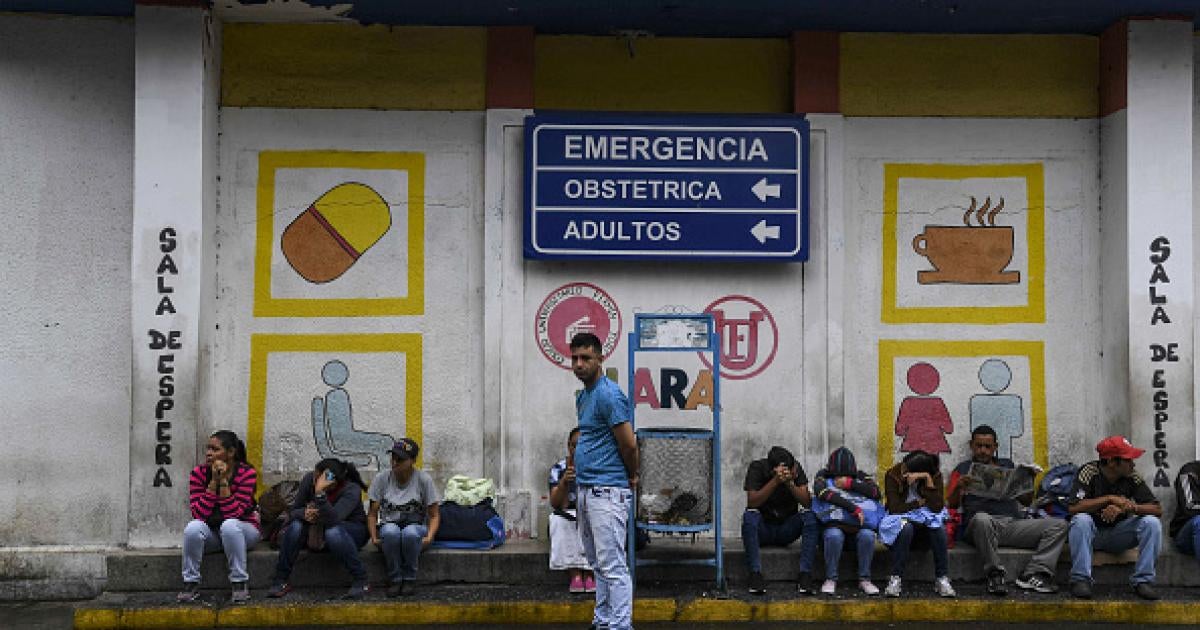
I guarantee you, Greek people would have preferred to have a pay-for-service hospital, back when the government went broke and all the hospitals closed. And we for certain know that is true in Venezuela.
Venezuela’s health care infrastructure is so weak that the most basic recommendation—handwashing—is difficult even for health care providers, who work under difficult conditions. The Venezuelan doctors and nurses we have interviewed over the past few months say that soap and disinfectants are virtually nonexistent in their clinics and hospitals. As inflation has risen and salaries have been devalued, it has become impossible for them to bring in their own supplies. Public hospitals in Caracas, the capital, are also suffering regular water shortages. In remote hospitals, the shortages have lasted weeks to months. Patients and personnel are required to bring their own water for drinking and sometimes for flushing toilets.
The coronavirus has quickly evolved from an epidemic in China’s Hubei province to a global pandemic. The question now isn’t which countries will get it, but how they will respond—and whether human rights will be protected. The World Bank and the United Nations have committed emergency funds to...
www.hrw.org
Once the leading economy in all of Latin America, now can't even get soap or water for hospitals.
Medical costs are a big part of the debt burden Americans are dealing with. Eliminate private for-profit medicine and health insurance, and US consumers will have far more dollars for saving, investing and consuming.
Then explain why not a single country with government run health care, has citizens with more dollars for saving and investing and consuming?
Not one. Which one would you point to? Denmark with a 60% income tax? Germany, where wages are lower than in the US, and the cost of buying chicken nuggets at McDonald's is $20?
Where is this country where people have more money to spend and save and invest, than in the US? Where? Name it? Let's hear it. You know that an Engineer that makes $50,000 and pays 50% in taxes in Europe, makes $100,000 and pays 30% in taxes in the US?
And you think skipping on the insurance premium is going to offset that? Show me how that math works out. Please.
It's ironic that you mention that, because I consider the Federal Highways to be one of the biggest wastes of money there is.
Do you know that nearly every single federal highway, is redundant?
States paid for highways between cities and other states already, before a single Federal highway had been built.
And of course they did, since it benefited each city, and each state, to be connected to other cities and states. View attachment 410697
Foreign countries are tracking intelligence and facilitating training for qualified individuals in areas of engineering and technical expertise to promote a more qualified and competitive workforce by which to innovate and acquire greater market share of industry .
Glass–Steagall legislation - Wikipedia was repealed by Gramm–Leach–Bliley Act - Wikipedia and Commodity Futures Modernization Act of 2000 - Wikipedia prohibited federal oversight of the derivatives and credit default swap commodities .
Then clinton idiocy authorized hud to include variable rate interest loans for poor creditors towards its quota goals and the loans were incorporated into the unregulated derivatives and credit default swaps markets .
Then clinton idiocy authorized hud to include variable rate interest loans
^^^^^^^^^^^^^^^^^^^^^^^^^^^^^^^^^^^^^^^^^^^^^^^^^^^^^^^^^^^^^^^^^^^^^^^^
That is actually the only true statement in the rant.
Loans were incorporated into unregulated derivatives? No. That is false. Into Credit Default Swaps? No, that has nothing to do with with mortgages at all.
Nor did Glass Steagal and GLB Act, or the Commodities Futures Modernization.
Certainly none with an ounce of sensibilities believes that they should simply give another the ability to use their money to make money without concern for how and in what the money is invested .
U.S. home mortgage debt relative to GDP increased from an average of 46% during the 1990s to 73% during 2008, reaching $10.5 trillion.[12] The increase in cash out refinancings, as home values rose, fueled an increase in consumption that could no longer be sustained when home prices declined.[13][14][15]Many financial institutions owned investments whose value was based on home mortgages such as mortgage-backed securities, or credit derivatives used to insure them against failure, which declined in value significantly.[16][17][18]The International Monetary Fund estimated that large U.S. and European banks lost more than $1 trillion on toxic assets and from bad loans from January 2007 to September 2009.[19]
It's ironic that you mention that, because I consider the Federal Highways to be one of the biggest wastes of money there is.
Do you know that nearly every single federal highway, is redundant?
States paid for highways between cities and other states already, before a single Federal highway had been built.
And of course they did, since it benefited each city, and each state, to be connected to other cities and states. View attachment 410697
Foreign countries are tracking intelligence and facilitating training for qualified individuals in areas of engineering and technical expertise to promote a more qualified and competitive workforce by which to innovate and acquire greater market share of industry .
I'm not sure what you think your point is.... but I've driven US 40... is almost entirely abandoned. There is no efficiency to be gained by having a redundant highway, that is deserted.
Glass–Steagall legislation - Wikipedia was repealed by Gramm–Leach–Bliley Act - Wikipedia and Commodity Futures Modernization Act of 2000 - Wikipedia prohibited federal oversight of the derivatives and credit default swap commodities .
Then clinton idiocy authorized hud to include variable rate interest loans for poor creditors towards its quota goals and the loans were incorporated into the unregulated derivatives and credit default swaps markets .
Then clinton idiocy authorized hud to include variable rate interest loans
^^^^^^^^^^^^^^^^^^^^^^^^^^^^^^^^^^^^^^^^^^^^^^^^^^^^^^^^^^^^^^^^^^^^^^^^
That is actually the only true statement in the rant.
Loans were incorporated into unregulated derivatives? No. That is false. Into Credit Default Swaps? No, that has nothing to do with with mortgages at all.
Nor did Glass Steagal and GLB Act, or the Commodities Futures Modernization.
Certainly none with an ounce of sensibilities believes that they should simply give another the ability to use their money to make money without concern for how and in what the money is invested .
U.S. home mortgage debt relative to GDP increased from an average of 46% during the 1990s to 73% during 2008, reaching $10.5 trillion.[12] The increase in cash out refinancings, as home values rose, fueled an increase in consumption that could no longer be sustained when home prices declined.[13][14][15]Many financial institutions owned investments whose value was based on home mortgages such as mortgage-backed securities, or credit derivatives used to insure them against failure, which declined in value significantly.[16][17][18]The International Monetary Fund estimated that large U.S. and European banks lost more than $1 trillion on toxic assets and from bad loans from January 2007 to September 2009.[19]
Certainly none with an ounce of sensibilities believes that they should simply give another the ability to use their money to make money without concern for how and in what the money is invested
So you are suggesting I should be able to dictate how and what you invest your money into? If I determine you should never be allowed to own a car, because I 'feel' that your car damages the environment, therefore you should not be allowed to buy one?
Unless I am doing something illegal... which the government itself is pushing banks to make bad loans, and suing them if they don't make bad loans.... then what right do you think you have to dictate what I do with my money?
U.S. home mortgage debt relative to GDP increased from an average of 46% during the 1990s to 73% during 2008, reaching $10.5 trillion.[12] The increase in cash out refinancings, as home values rose, fueled an increase in consumption that could no longer be sustained when home prices declined.
Correct... but why did this happen? Well I told you why. The government using Freddie Mac and Fannie Mae, guaranteed bad loans. The government through HUD, with Andrew Cuomo sued banks to force them to make bad loans.
You are looking at the results, and overlooking the cause. All of those things you listed are results.
The cause remains, government itself forced bad loans on the market.
Invoking history is not the same as living the recent Chinese scourge, in which the scapegoated are forced to deal with no place to go 24/7. You assholes don't have the intelligence to ask why anyone in their right minds would even go near charity lines or shelters.
Unless I am doing something illegal... which the government itself is pushing banks to make bad loans, and suing them if they don't make bad loans.... then what right do you think you have to dictate what I do with my money?
The purpose of regulations and oversight is to ensure that illegal practices such as junk bonds , loan sharking and usury do not occur , especially when commercial banks are consolidated with investment banking and investment insurance institutions are not just risking their money but risking OUR MONEY .
Correct... but why did this happen? Well I told you why. The government using Freddie Mac and Fannie Mae, guaranteed bad loans. The government through HUD, with Andrew Cuomo sued banks to force them to make bad loans.
You are looking at the results, and overlooking the cause. All of those things you listed are results.
The cause remains, government itself forced bad loans on the market.
When domestic terrorists such as phillip gramm ensure that agencies designed to prevent such catastrophes are not involved , the consequences of malicious compliance become apparent .
Unless I am doing something illegal... which the government itself is pushing banks to make bad loans, and suing them if they don't make bad loans.... then what right do you think you have to dictate what I do with my money?
The purpose of regulations and oversight is to ensure that illegal practices such as junk bonds , loan sharking and usury do not occur , especially when commercial banks are consolidated with investment banking and investment insurance institutions are not just risking their money but risking OUR MONEY .
Correct... but why did this happen? Well I told you why. The government using Freddie Mac and Fannie Mae, guaranteed bad loans. The government through HUD, with Andrew Cuomo sued banks to force them to make bad loans.
You are looking at the results, and overlooking the cause. All of those things you listed are results.
The cause remains, government itself forced bad loans on the market.
When domestic terrorists such as phillip gramm ensure that agencies designed to prevent such catastrophes are not involved , the consequences of malicious compliance become apparent .
Commercial banks do not loan their money , they loan OUR MONEY .
That's a stupid position. If I hand you $100, and then you buy a burger at McDonald's, and I come start screaming "That is our money!" you would call me a lunatic.... and rightly so.
If you give your money to that bank, then you made a choice. Stop whining.
I only invested in wise investments. I lost absolutely nothing in the 2008 crash, or in the 2020 crash. Because I made wise choices. You can't make stupid choices, and then scream that the people you gave your money to by choice, didn't use it how you wanted.
Grow up.
The purpose of regulations and oversight is to ensure that illegal practices such as junk bonds , loan sharking and usury do not occur , especially when commercial banks are consolidated with investment banking and investment insurance institutions are not just risking their money but risking OUR MONEY .
Right.... and it still doesn't matter what the purpose is.
If the Federal governments policy is to promote bad loans..... Which is EXACTLY what the policy was......
Doesn't matter what the purpose is.
This is what people who want to use government, to stop bad things, never understand. Government is the cause of the bad things.
All the regulations and oversight, and committees throughout the entire USSR government didn't stop Chernobyl. You want to know why? Because the government demanded cheap energy, and all the regulations in the entire system didn't stop them from doing a test that violated every single regulation they had.
Just like there are regulations and oversight over the VA Hospitals. Tons of regulations.
They still have problems years and years after claiming to fix the wait times, after that massive scandal.
Why? Because all the regulations in the world do nothing, when the problem is government itself running the VA hospitals.
You can't fix this with regulations, or oversight, or anything else. Government demanded lower lending standards. No amount of regulations is going to fix Freddie Mac guaranteeing sub-prime loans..... because that was the goal the government.
That's a stupid position. If I hand you $100, and then you buy a burger at McDonald's, and I come start screaming "That is our money!" you would call me a lunatic.... and rightly so.
If you give your money to that bank, then you made a choice. Stop whining.
Your analogy is stupid as a bank is responsible for returning the moneys it holds and is not privy to do as it pleases because it has the taxpayer on the hook through the fraudulence of fdic .
I only invested in wise investments. I lost absolutely nothing in the 2008 crash, or in the 2020 crash. Because I made wise choices. You can't make stupid choices, and then scream that the people you gave your money to by choice, didn't use it how you wanted.
Grow up.
You claim to make wise decisions about your money but claim that the public is not entitled to utilize the expertise of institutions designed to ensure wise decisions by financial institutions - ******* retarded .
Right.... and it still doesn't matter what the purpose is.
If the Federal governments policy is to promote bad loans..... Which is EXACTLY what the policy was......
Doesn't matter what the purpose is.
This is what people who want to use government, to stop bad things, never understand. Government is the cause of the bad things.
All the regulations and oversight, and committees throughout the entire USSR government didn't stop Chernobyl. You want to know why? Because the government demanded cheap energy, and all the regulations in the entire system didn't stop them from doing a test that violated every single regulation they had.
By all means get rid of firewalls , get rid of anti-virus , mallware detection , encryption , and all the security protocols and policies as all of them are not needed .
Just like there are regulations and oversight over the VA Hospitals. Tons of regulations.
They still have problems years and years after claiming to fix the wait times, after that massive scandal.
Why? Because all the regulations in the world do nothing, when the problem is government itself running the VA hospitals.
You can't fix this with regulations, or oversight, or anything else. Government demanded lower lending standards. No amount of regulations is going to fix Freddie Mac guaranteeing sub-prime loans..... because that was the goal the government.
Over regulation can be as much of a problem as under regulation , and the objective is to create an efficient and effective system , but that requires input from experts .
The clinton idiocy wrecked fannie and freddie and that should not have happened , as low down payment , long term , fixed interest loans were functional , that is until greed of self serving psychopaths entered the picture .
That's a stupid position. If I hand you $100, and then you buy a burger at McDonald's, and I come start screaming "That is our money!" you would call me a lunatic.... and rightly so.
If you give your money to that bank, then you made a choice. Stop whining.
Your analogy is stupid as a bank is responsible for returning the moneys it holds and is not privy to do as it pleases because it has the taxpayer on the hook through the fraudulence of fdic .
I only invested in wise investments. I lost absolutely nothing in the 2008 crash, or in the 2020 crash. Because I made wise choices. You can't make stupid choices, and then scream that the people you gave your money to by choice, didn't use it how you wanted.
Grow up.
You claim to make wise decisions about your money but claim that the public is not entitled to utilize the expertise of institutions designed to ensure wise decisions by financial institutions - ******* retarded .
Right.... and it still doesn't matter what the purpose is.
If the Federal governments policy is to promote bad loans..... Which is EXACTLY what the policy was......
Doesn't matter what the purpose is.
This is what people who want to use government, to stop bad things, never understand. Government is the cause of the bad things.
All the regulations and oversight, and committees throughout the entire USSR government didn't stop Chernobyl. You want to know why? Because the government demanded cheap energy, and all the regulations in the entire system didn't stop them from doing a test that violated every single regulation they had.
By all means get rid of firewalls , get rid of anti-virus , mallware detection , encryption , and all the security protocols and policies as all of them are not needed .
Just like there are regulations and oversight over the VA Hospitals. Tons of regulations.
They still have problems years and years after claiming to fix the wait times, after that massive scandal.
Why? Because all the regulations in the world do nothing, when the problem is government itself running the VA hospitals.
You can't fix this with regulations, or oversight, or anything else. Government demanded lower lending standards. No amount of regulations is going to fix Freddie Mac guaranteeing sub-prime loans..... because that was the goal the government.
Over regulation can be as much of a problem as under regulation , and the objective is to create an efficient and effective system , but that requires input from experts .
The clinton idiocy wrecked fannie and freddie and that should not have happened , as low down payment , long term , fixed interest loans were functional , that is until greed of self serving psychopaths entered the picture .
Your analogy is stupid as a bank is responsible for returning the moneys it holds and is not privy to do as it pleases because it has the taxpayer on the hook through the fraudulence of fdic .
At some point, you need to take responsibility for your actions. Whether or not you have the FDIC, does not mean you are excused from doing your own do diligence.
Further, most of the banks we're talking about, were not FDIC anyway. Lehman Brother, Countrywide, and most of the rest, were not FDIC banks. AIG was not. Bear Stearns was not. Most were not.
I personally support banks doing as they please. In a free market Capitalist system, banks that engaged in too much risk would push away depositors. Thus, to please market and gain customers, banks would engage in wise prudence.
Now customers have completely disconnected acting wisely in choosing where to bank, and ignored the actions of the bank, and then cried bitter tears when banks act badly.
This is normal when you off load your responsibility as a customer and investor, onto the government.
And this is why mass bank failures will get worse in the future, as the public becomes more and more irresponsible in what they do with their money. No amount or regulation is going to fix that. In fact, the regulations will make it worse.
You claim to make wise decisions about your money but claim that the public is not entitled to utilize the expertise of institutions designed to ensure wise decisions by financial institutions - ******* retarded .
That's because you think those institutions have expertise. They generally don't. As with most government positions, typically the politicians that win, give those positions to political supporters.
Take Mary Jo White, the SEC chairman from 2013 to 2017.
White was born in Kansas City, Missouri, and grew up in McLean, Virginia. She received a bachelor of arts from the College of William & Mary in 1970. She earned an master of arts in psychology in 1971 from The New School for Social Research[8] and a Juris Doctor degree from Columbia Law School in 1974,[2] where she was a Writing & Research Editor of the Columbia Law Review.
White became Acting United States Attorney for the Eastern District of New York in December 1992, and in March 1993 was appointed by President Bill Clinton as U.S. Attorney for the Southern District. She is noted for having led the prosecution of John Gotti and overseen those of the terrorists responsible for the 1993 World Trade Center bombing, chief among them Sheik Omar Abdel Rahman and Ramzi Yousef.[9]
After President Bill Clinton's controversial last-day presidential pardons, she was appointed by new Attorney General John Ashcroft to investigate Marc Rich's pardon.[2]
For 10 years, she was chair of the litigation department at Debevoise & Plimpton,[10] whose self-proclaimed "core practices" and expertise are focused on the success of Wall Street financial firms.[11] The Huffington Post called her "a well-respected attorney who won high-profile cases against mobsters, terrorists and financial fraudsters over the course of nearly a decade as the U.S. attorney for Manhattan."[12]
Does anything in her career history, suggest to you that this lady has any idea how to regulate a Wall St firm?
I have actually looked up the SEC reports, that firms are required to file. Have ever tried to read one? They are useless. This is why nearly all major corporations file a second report for their investors, that actually has useful information. Why don't they just give investors their SEC report? Because it is ridiculous, and convoluted, and has little information that is of use.
Moreover, the SEC has been used many times, to cover up fraud. Again the reports are so badly designed by the SEC, that no one understands what they mean.
Infamously, Enron prior to their crash, was confronted by investors. Investors met with Jeff Skillings, and said that their investor relation reports appeared to be concealing something. Skillings responded to those questions, with the fact they had filed their financial statements with the SEC, and had no problems. This silenced the skeptical, and Enron went on to be one of the largest crashes in US history.
I'm not saying the public is not entitled to use.... I'm saying you are an idiot to trust them. Government doesn't do a good job of anything, and if you are stupid enough to live your life based on what some agency run by a political supporter says..... you are a fool.