Evolution Theory Overview
"Nothing in biology makes sense except in the light of evolution". Theodosius Dobzhansky (geneticist)
The often seen quote above by famous geneticist Dobzhansky elegantly captures the paramount importance of evolution. Stated differently, evolution is the single organizing principle of all the biological sciences. The terms evolution and natural selection are often used synonymously, though natural selection itself is but one of the mechanisms by which evolution operates. The mechanisms of evolution are ubiquitous and not limited to biology, and as a theory, evolution is as validated as Newton's Laws of Motion, and clearly as important for the understanding of the physical world. Yet, and paradoxically, evolution is either misunderstood or even adamantly denied by a large proportion of the public.
Darwin's Observations and Conceptualizations
Darwin's observations during his travels ultimately led him to four fundamental concepts that he elegantly put forth on his 1859 book, Origin of Species:
Adaptation: all organisms adapt to their environments.
Variation (or diversity): organisms exhibit variability in their traits (in modern terms, genotype variability determines the phenotype variability).
Over-reproduction: organism populations tend to reproduce beyond the environment's ability to support them ultimately encountering a limit on population size.
Reproductive success: Organisms exhibit variability in adaptation to environment; hence some will survive and reproduce better than others, a process known as natural selection. This is often referred to as "survival of the fittest". In reality, such attributes as speed, size or strength is only more fit for survival if it endows the organism with a reproductive advantage in the existing enviroment. Those organisms best adapted to the environment will have a greater chance of surviving and passing their genes on to the next generation.
Darwin's conceptualization of natural selection was a remarkable accomplishment in the mid-19th century, and Darwin was right, within the limits of the science at the time. However, that Darwin's natural selection is perhaps too easy to understand led to misunderstandings such as "survival of the fittest", and its sad extrapolation to social Darwinism. Darwin's natural selection could not incorporate gene inheritance or random gene mutation because genes had not yet been discovered. Modern evolutionary theory describes decent with modification at the level of genes, phenotypes, and populations whereas Darwin described evolution at the level of organisms, speciation and individuals.
"From the first dawn of life, all organic beings are found to resemble each other in descending degrees, so they can be classed in groups under groups." Charles Darwin
Evolution and the Tree of Life
The modern theory of evolution is based on two primary tenets:
All living things are related to one another to varying degrees through common decent (share common ancestors), have developed from other species, and all life forms have a single common ancestor.
The origin of a new species results from random heritable genetic mutations (changes), some of which are more likely to spread and persist in a gene pool than others. Mutations that result in an advantage to survive and reproduce are more likely to be retained and propagated than mutations that do not result in a survival to reproduce advantage.
Decent with modification, or evolution, is often described by the so-called tree of life. A tree is inherently hierarchical, as is the great "Tree of Life". Its boughs are analogous to the higher Linnean rankings, i.e., the domains, kingdoms, phyla, classes, etc. Smaller branches correspond to middle rankings, i.e., the orders, families and genera. At the end of the many branches are the twigs, the uncountable species, some 99% of which are extinct. The great Tree of Life is real. It is a phylogenetic tree representing the unique ancestral history of each and every creature. Darwin believed that all creatures on Earth might have originated from a single common ancestor so that each species through geological history fit somewhere in an overarching metaphorical tree; he elegantly wrote:
"The affinities of all the beings of the same class have sometimes been represented by a great tree. I believe this simile largely speaks the truth. The green and budding twigs may represent existing species; and those produced during each former year may represent the long succession of extinct species . . . The limbs divided into great branches, and these into lesser and lesser branches, were themselves once, when the tree was small, budding twigs; and this connexion of the former and present buds by ramifying branches may well represent the classification of all extinct and living species in groups subordinate to groups . . . From the first growth of the tree, many a limb and branch has decayed and dropped off, and these lost branches of various sizes may represent those whole orders, families, and genera which have now no living representatives, and which are known to us only from having been found in a fossil state . . . As buds give rise by growth to fresh buds, and these, if vigorous, branch out and overtop on all a feebler branch, so by generation I believe it has been with the Tree of Life, which fills with its dead and broken branches the crust of the earth, and covers the surface with its ever branching and beautiful ramifications" (Charles Darwin, 1859).
The eye of the Trilobite was already highly sophisticated by Cambrian time - yet, it was hardly a perfect design - rather, it resulted from the tinkering of natural selection on the genomic ingredients that already existed.
Misconceptions about evolution
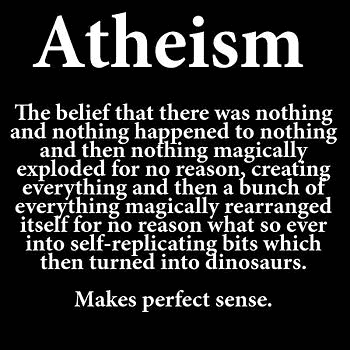
Unfortunately, misconceptions about evolution are ubiquitous. One prominent misconception is that evolution proceeds in a specific direction leading to the improvement of organisms - this is often stated as climbing an evolutionary ladder. This is simply not the case. Rather, organisms either adapt to environments that are always undergoing change, or they risk extinction.
EVOLUTION




 Truth, in the end, educates, generally our youth, more open to acceptance of new perspectives. I'm not saying new perspectives, or any perspective should be taken at face value, but tested and compared, which is where science serves the truth, yet only where integrity is maintained. Separating what we know from what we think we know, what we assume, be it in science or religion, or any other aspect of life, is where we tend to lose it, by nature, and design. When we stray, trouble awaits.