Renewables on a roll

Well dumb ass, I said posted that hydro produce a tremendous amount of electricity use in the Pacific Northwest.

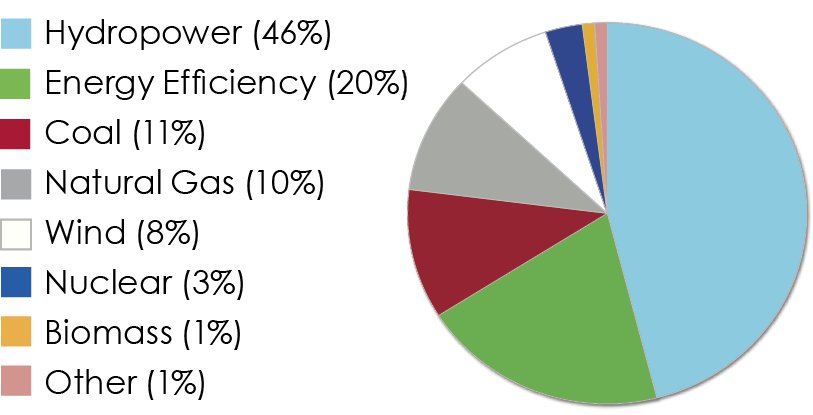
hydropower_chart.png__813.0x415.0_q85_subsampling-2.jpg
Pacific Northwest energy resources

Lmfao.

If you took the time and effort to read my posts, it's always been hydro in general, for the UK and USA. So for you to stick to and argue your position, is to reference one area where a few towns and cities are plugged into a hydro damn and claim 44%.

You are a drain on the world's oxygen levels.
 
Last edited:
Lmfao.

If you took the time and effort to read my posts, it's always been hydro in general, for the UK and USA. So for you to stick to and argue your position, is to reference one area where a few towns and cities are plugged into a hydro damn and claim 44%.

You are a drain on the world's oxygen levels.
LOL And you are an idiot. LOL The Pacific Northwest has more than just a few towns and cities. And we also supply power to California when we have a surplus. Where the geology is right, hydro is great. But most of those places have already been dammed. So the renewables of the future will be mostly solar and wind with storage.
 
Lmfao.

If you took the time and effort to read my posts, it's always been hydro in general, for the UK and USA. So for you to stick to and argue your position, is to reference one area where a few towns and cities are plugged into a hydro damn and claim 44%.

You are a drain on the world's oxygen levels.
And if you read my posts, you would know that I have already said that hydro takes a certain geomorphology to work But then, you are so set on poisoning the earth with coal and gas that you ignore anything that makes sense.
 
I posted that you are projecting.

Kiss my ass.
My but you guys have a thing about ass kissing. Could be because you are constantly kiss the orange ass even when the diaper is full?

As the need for power for the data centers expands, the market for solar and wind will expand with storage at the same time. The new chemistries for storage batteries is not only safe, but cost far less, and is capable of delivering power for days.
 
As the need for power for the data centers expands, the market for solar and wind will expand with storage at the same time. The new chemistries for storage batteries is not only safe, but cost far less, and is capable of delivering power for days.
The Wet Dream continues.
 
And if you read my posts, you would know that I have already said that hydro takes a certain geomorphology to work But then, you are so set on poisoning the earth with coal and gas that you ignore anything that makes sense.
Aw bless you, still trying to un-prat yourself, lol

I live in Scotland, prat. There are several hydro electric schemes because of it's topography, prat. But the UK electric from hydro is only 1.5% to 2%. In your head it'll be 44% because one area of Scotland will receive 44% of it's electric from hydro, prat.

In the USA, hydro accounted for roughly 6% of the it's electricity. What a doofus.
 
Last edited:
In spite of the idiocy of the present admin, renewables are on a roll. And will continue to be purely on economics. And all the ignorant flapyap on this board will not slow it one whit.

View attachment 1224429

View attachment 1224430

View attachment 1224431

Looks like renewables are the winner. Even with the extra subsidies that Trump is throwing to fossil fuels, the utilities are choosing renewables.

20% is your idea of a winner?

When the government subsidies run out greenies are own your own the picture will not be so bright
 
Aw bless you, still trying to un-prat yourself, lol

I live in Scotland, prat. There are several hydro electric schemes because of it's topography, prat. But the UK electric from hydro is only 1.5% to 2%. In your head it'll be 44% because one area of Scotland will receive 44% of it's electric from hydro, prat.

In the USA, hydro accounted for roughly 6% of the it's electricity. What a doofus.
Well, for sure, now I know there is at least one bampot in Scotland. The area of Oregon is 98,466 square miles, that of Washington state, 71,362. Scotland is area is 30,418 square miles. And Idaho, part of Northern California, and British Columbia are also considered in the Pacific Northwest, you can see that the area of Scotland is really quite small compared to that of just the Pacific Northwest. So supplying that large of area with 44% of the power needed by industry and residents with hydro is a significant amount of power to a very large area. By the way, Oregon has one county seat named after Scotland's greatest poet.
 
Well, for sure, now I know there is at least one bampot in Scotland. The area of Oregon is 98,466 square miles, that of Washington state, 71,362. Scotland is area is 30,418 square miles. And Idaho, part of Northern California, and British Columbia are also considered in the Pacific Northwest, you can see that the area of Scotland is really quite small compared to that of just the Pacific Northwest. So supplying that large of area with 44% of the power needed by industry and residents with hydro is a significant amount of power to a very large area. By the way, Oregon has one county seat named after Scotland's greatest poet.
Lol, you still clinging the n to your stupidness. In other news -

1000009905.webp


:laughing0301:
 
15th post
Lol, you still clinging the n to your stupidness. In other news -

View attachment 1231534


:laughing0301:
"Earth’s continents receive 23, 000 terawatt hours of solar energy each year, compared to the 18. 5 terawatt hours used by modern society. Every hour, 622 Exawatts (EW) of energy hits the Earth from the sun, resulting in 622, 800, 000, 000, 000, 000, 000, 000 or 6. 228e+20. The sun sends 14. 9 Zettawatts of solar power daily, which is enough to meet the world’s energy needs for an entire year. The U. S. power grid is highly reliable, with a 99. 95 reliability rate.

In a single hour, the amount of solar energy from the sun that strikes the Earth is more than the entire world consumes in an year. The global solar energy potential is enormous, with an estimated 173, 000 terawatts (TW) of solar energy reaching the Earth’s surface daily. The total energy consumption of humans worldwide is approximately 3. 85 million exajoules."


New Topics

Back
Top Bottom