That’s true, because Iranian people abhors Islam and the Mullahs at this point. They can’t wait for Israelmor US to drop a big one in order for the people to once and for all remove these Mullahs from power. Either way, we will soon see them hanging from lampposts Mussolini style by the revolutionaries,
I lived in West LA and knew many many Iranians. I worked for an Iranian law firm. I did not meet one, ever, that had anything to say about obama that wasn't cursing. His betrayal at the Green Revolution will never be forgotten or forgiven.
I lived in West LA and knew many many Iranians. I worked for an Iranian law firm. I did not meet one, ever, that had anything to say about obama that wasn't cursing. His betrayal at the Green Revolution will never be forgotten or forgiven.
These guys actually eat dogs, which is sickening. Muslims cannot even eat them because they are considered dirty and therefore Haram, in other words not Hallal.
*** I had read that many Palestinians abuse gay people, so I was not astonished to learn that many of them also abuse doggies.
*** But -- with all due respect -- how Palestinians treat gays and dogs is separate from the issue that confronts the world regarding Gaza,
*** Some (many?) people feel that Israel is treating the 2,000,000 Gazans too harshly, an issue that is separate from how the latter treat dogs (and gays).
The Malinois breed has cat like ability to climb up trees and over walls, which makes them one of the best for police and military use. The only weird thing with them is their bark is very whimpy Sounding and not the full throated bark of a Sheperd , Doberman or Great Dane for example.
The Malinois breed has cat like ability to climb up trees and over walls, which makes them one of the best for police and military use. The only weird thing with them is their bark is very whimpy Sounding and not the full throated bark of a Sheperd , Doberman or Great Dane for example.
So…I’m going to disagree with some of this Roudy, I think this is a way of ginning up more hatred of the Palestinians.
In the ancient Middle Eastern cultures, dogs were often despised and considered unclean and dangerous. Given the fact that rabies was (and is) endemic in many areas, it’s easy to see how these prohibitions came into being.
These attitudes were not limited to Islamic scripture either, but rooted in Jewish and Christian scripture as well. No surprise…they all are related and spring from similar culture.
Along with Quran and Hadiths, the Bible and Torah and Talmud have little good to say about dogs and there was a strong distinction made between certain breeds (sight hounds) and any other dog. For example,Salukis we’re revered in Arab culture.
None of these religious traditions like dogs. The idea that animals could be pets or should be treated kindly and humanely is relatively modern and often aligned with cultural prosperity, education and (in my opinion) an increase in secularity or a more liberal view (rather than literal view) of scripture. Many Islamic societies are still very conservative, very religious, more rural than urban and those are cultures that tend to retain those views of dogs.
How do non-Islamic cultures treat dogs or other animals?
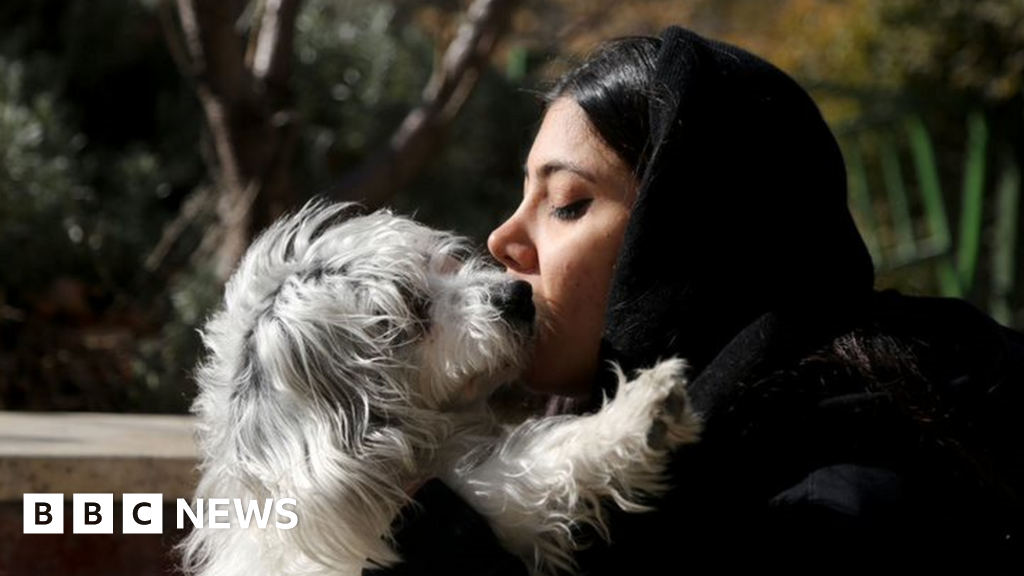
Often not very well. Russia, China (and other Asian countries) for example have a bad rap. In the US, the Amish are known for puppy mills and horse abuse and animal abuse occurs all over tbe US. Religious scripture is all too often used to justify mistreatment of animals. Dogs are often viewed as products, not pets. None of that mitigates how they are treated in Islamic countries, but it is not unique to Islam and there ARE people and groups (many are Muslims) trying to make a difference, sometimes at great personal danger (Iran) in how their cultures treat their fellow animals. They faced ingrained cultural and religious traditions and impoverished communities where pets are considered wasteful.
Palestinian animal rescue group Baladi has worked with around 150 animals since its creation in late 2019. Despite the difficulties of operating under Israeli occupation and having to juggle other life commitments, the team makes a real difference.
Most Muslims hate dogs. It’s a cultural thing. I’ve even seen Muslim dog owners with these small designer dogs that privately kick, bite, pull their ears, and abuse them for fun. Now, this doesn’t mean ALL Muslims. Dogs are considered impure, dirty, evil animals.
So…I’m going to disagree with some of this Roudy, I think this is a way of ginning up more hatred of the Palestinians.
In the ancient Middle Eastern cultures, dogs were often despised and considered unclean and dangerous. Given the fact that rabies was (and is) endemic in many areas, it’s easy to see how these prohibitions came into being.
These attitudes were not limited to Islamic scripture either, but rooted in Jewish and Christian scripture as well. No surprise…they all are related and spring from similar culture.
Along with Quran and Hadiths, the Bible and Torah and Talmud have little good to say about dogs and there was a strong distinction made between certain breeds (sight hounds) and any other dog. For example,Salukis we’re revered in Arab culture.
None of these religious traditions like dogs. The idea that animals could be pets or should be treated kindly and humanely is relatively modern and often aligned with cultural prosperity, education and (in my opinion) an increase in secularity or a more liberal view (rather than literal view) of scripture. Many Islamic societies are still very conservative, very religious, more rural than urban and those are cultures that tend to retain those views of dogs.
How do non-Islamic cultures treat dogs or other animals?
Often not very well. Russia, China (and other Asian countries) for example have a bad rap. In the US, the Amish are known for puppy mills and horse abuse and animal abuse occurs all over tbe US. Religious scripture is all too often used to justify mistreatment of animals. Dogs are often viewed as products, not pets. None of that mitigates how they are treated in Islamic countries, but it is not unique to Islam and there ARE people and groups (many are Muslims) trying to make a difference, sometimes at great personal danger (Iran) in how their cultures treat their fellow animals. They faced ingrained cultural and religious traditions and impoverished communities where pets are considered wasteful.
Palestinian animal rescue group Baladi has worked with around 150 animals since its creation in late 2019. Despite the difficulties of operating under Israeli occupation and having to juggle other life commitments, the team makes a real difference.
Soluki‘s were dogs bred specifically for hunting. The exception to the Islamic rule for dogs is if it’s used for hunting or farming / livestock purposes. Fact is there is a deep hatred for dogs in the Muslim world which is based on religious teachings. Many Muslim countries have banned having dogs as pets, and the more Islamic they are, the more anti dog they are. Israel in the other hand is a nation of dog lovers and owners. No comparison between the two cultures.
Whatever the ancient origins of this hatred for dogs, fact is it still exists predominately among Muslims.
Saudi Arabia’s religious police, normally tasked with chiding women to cover themselves and ensuring men attend mosque prayers, are turning to a new target: cats and dogs. The police have issued a decree banning the sale of the pets, seen as a sign of Western influence.
We are pleased to present several articles examining the place of dogs in Islam.
www.animalsinislam.com
Animal abuse, cruelty, and/or neglect form part of the many social ills plaguing the Muslim community.
Last Ramadaan, I wrote an article highlighting the phenomenon whereby misinformed Muslims took their dogs (and/or cats) to the animal hospitals or mobile clinics during Ramadaan, to have them put to death by lethal injection. The reason given by the majority of these Muslims was that Islam forbids them to keep a dog. Also encountered was when an animal that had been ill for a prolonged time and the disease had progressed to an almost terminal state was it only then brought in for veterinary attention. When asked why they waited so long, the Muslim owner would use Islam as a reason, stating that it is not permissible to touch a dog. This still happens.
If you live in United Arab Emirates, Saudi Arabia, Qatar or Kuwait, you cannot have these dogs. Banned breeds of the Middle East.
www.newdoggy.com
In the Middle East, dogs are traditionally thought of as unclean animals.
Working dogs, such as those used for herding or guarding, are accepted, but aside from the prized Saluki, dogs are traditionally kept out of the house. Touching a dog is said to make one impure, and many people are nervous or even afraid of dogs.
Soluki‘s were dogs bred specifically for hunting. The exception to the Islamic rule for dogs is if it’s used for hunting or farming / livestock purposes. Fact is there is a deep hatred for dogs in the Muslim world which is based on religious teachings. Many Muslim countries have banned having dogs as pets, and the more Islamic they are, the more anti dog they are. Israel in the other hand is a nation of dog lovers and owners. No comparison between the two cultures.
Whatever the ancient origins of this hatred for dogs, fact is it still exists predominately among Muslims.
Saudi Arabia’s religious police, normally tasked with chiding women to cover themselves and ensuring men attend mosque prayers, are turning to a new target: cats and dogs. The police have issued a decree banning the sale of the pets, seen as a sign of Western influence.
We are pleased to present several articles examining the place of dogs in Islam.
www.animalsinislam.com
Animal abuse, cruelty, and/or neglect form part of the many social ills plaguing the Muslim community.
Last Ramadaan, I wrote an article highlighting the phenomenon whereby misinformed Muslims took their dogs (and/or cats) to the animal hospitals or mobile clinics during Ramadaan, to have them put to death by lethal injection. The reason given by the majority of these Muslims was that Islam forbids them to keep a dog. Also encountered was when an animal that had been ill for a prolonged time and the disease had progressed to an almost terminal state was it only then brought in for veterinary attention. When asked why they waited so long, the Muslim owner would use Islam as a reason, stating that it is not permissible to touch a dog. This still happens.
If you live in United Arab Emirates, Saudi Arabia, Qatar or Kuwait, you cannot have these dogs. Banned breeds of the Middle East.
www.newdoggy.com
In the Middle East, dogs are traditionally thought of as unclean animals.
Working dogs, such as those used for herding or guarding, are accepted, but aside from the prized Saluki, dogs are traditionally kept out of the house. Touching a dog is said to make one impure, and many people are nervous or even afraid of dogs.
I think my point is still valid however. These other religions have similar prohibitions but have moved past that in most western countries. The Middle East and elsewhere have a long ways to go.
I think my point is still valid however. These other religions have similar prohibitions but have moved past that in most western countries. The Middle East and elsewhere have a long ways to go.
Other religions had these prohibitions thousands of years ago, but it is only Islam whose main prophet Mohammad called the killing of all black dogs. There’s a lot of medieval things Muslims do today that others used to do thousands of years ago. The list is long.