A mere half-year ago, before collusion and Comey, before Mika’s face and Muslim bans and the Mooch, there was a
shining moment where millions of Americans flooded the streets in cities across the country to register their rage that an unapologetic misogynist had just been made leader of the free world.
Donald Trump’s election was a watershed moment. Even those like me, who had previously pulled levers for candidates of both parties, felt that Mr. Trump had not only violated all sense of common decency, but, alarmingly, that he seemed to have no idea that there even existed such an unspoken code of civility and dignity. Now was the time to build a broad coalition to resist the genital-grabber with the nuclear codes.
The Women’s March moved me. O.K., so Madonna and Ashley Judd said some
nutty things. But every movement has its excesses, I reasoned. Mr. Trump had campaigned on attacking the weakest and most vulnerable in our society. Now was the time to put aside petty differences and secondary issues to oppose his presidency.
That’s certainly what the leaders of the Democratic Party, who applauded the march, told us. Senator Charles Schumer
called the protest “part of the grand American tradition.” The House Democratic leader, Nancy Pelosi,
offered her congratulations to the march’s “courageous organizers” and Senator Kirsten Gillibrand
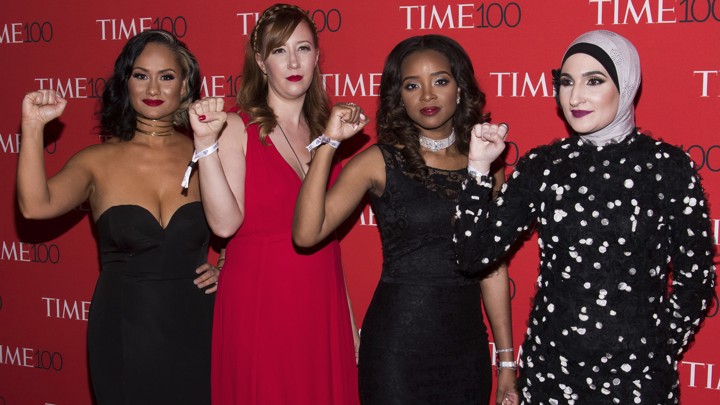
gushed about them in Time, where they were among the top 100 most influential people of 2017. “The Women’s March was the most inspiring and transformational moment I’ve ever witnessed in politics,” she wrote. “And it happened because four extraordinary women — Tamika Mallory, Bob Bland, Carmen Perez and Linda Sarsour — had the courage to take on something big, important and urgent, and never gave up.”