It is possible to be wrong and still be right.. Again Quantum Mechanics is THEORY!
Quantum Mechanics? I thought we were discussing emission and absorption?
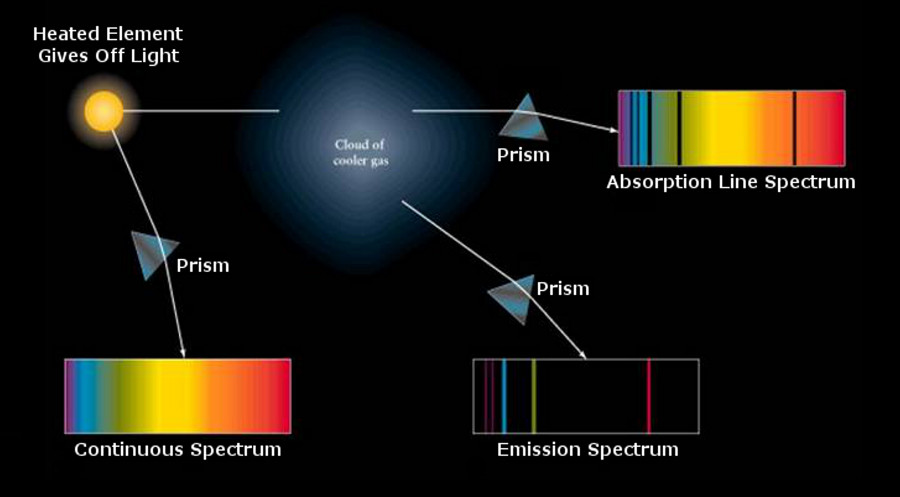
Emission and absorption happen through quantum level mechanics. We are talking how electrons react to excitement.
In a single gas atmosphere it may possible to reabsorb but in a multiple gas atmosphere with water vapor, not so much..
Wait, CO2 can't reabsorb the energy emitted by another CO2, because other gasses are in the way?
Yes! This is due to the properties of the other gases and the emittance of photons vibrating at frequencies which are not conducive to absorption by CO2. Were talking parts per million here leaving vast areas for other gases and water vapor. Do you think that all photons, at any frequency, can be absorbed by CO2?
I will give you an I was incorrect if it will make you feel better.
Who said anything about my feelings?
If you were correct, prove it.
If you were incorrect, admit it.
Leave my inconsequential feelings out of it.
My original point however, in our atmosphere, makes it virtually impossible to reabsorb due to other gases remains.
Prove it.
There is loss through CO2 in amplitude.
Huh? Loss of what? How?
Where do those photos magically go?
What photons?
Lest start with a cylinder of CO2 and argon gas at 400ppm CO2. Lets pass 100 watts of focused light through the cylinder 12" in diameter. How much energy is placed on the surface below if all 100 watts is directed in a 6 x 6 inch square area. there is a 12 inches between the source and the cylinder and 12 inches between the cylinder and the surface. Assume no resistance of the glass cylinder.
In a non-atmosphere condition, heat would register proportional to the surfaces ability to absorb the photons minus the black body emittance factor of the solid.
In the above described experiment, argon has no absorptive properties in the spectrum that CO2 does, so it is considered a zero factor. We will consider the bandwidth of 0.4um to 18.0um assuming the area around the cylinder is non-atmospheric. There is a measured loss of around 0.06 watts/square inch due to CO2. The emitted long wave IR from the cylinder, measured @ 12" is 0.00021 watts/sq inch.
The emitted photons are a far cry from the absorbed photon energy. when you calculate the inside of sphere in square inches we have lost roughly 55% of the incoming energy. Granted its only 0.03 watts/sq inch and the gas in the cylinder rose just 0.32 deg C in one hour. (6 cubic feet of gas in total @ 1000kpa)
This same experiment done with all atmospheric gasses (except CO2) and 40% humidity had some astonishing results. When it was redone with CO2 @ 400ppm and the results compared there was no determinable trace of CO2 involvement.
What was interesting to watch is how adding items to the cylinder changed the outputs. When we added water vapor to the Argon/CO2 cylinder the emitted output fell to near zero and the cylinder temp rise slowed. Conversely the time it took to cool off increased slightly. When CO2 was increased to 5000ppm we regained the cooling rate but never over came the heat up rate loss. We never saw an increase of the heat up process. We also saw very little pass through loss but this was just clear vapor. The simple addition of water vapor killed CO2's absorptive/emittance properties. My take is water vapor is a negative feed back for CO2.
There are over 300 experiments to do in this atmospheric area to determine what does what in our atmosphere. The only problem is its not just the atmosphere, its the oceans too.. The cylinder gives us a limited look at how the different gasses react together. I am far from done and there will be many nights in the lab coming.
This probably wont satisfy as proof but it is observed scientific evidence. Empirical evidence which just happens to match what we have seen in our atmosphere.