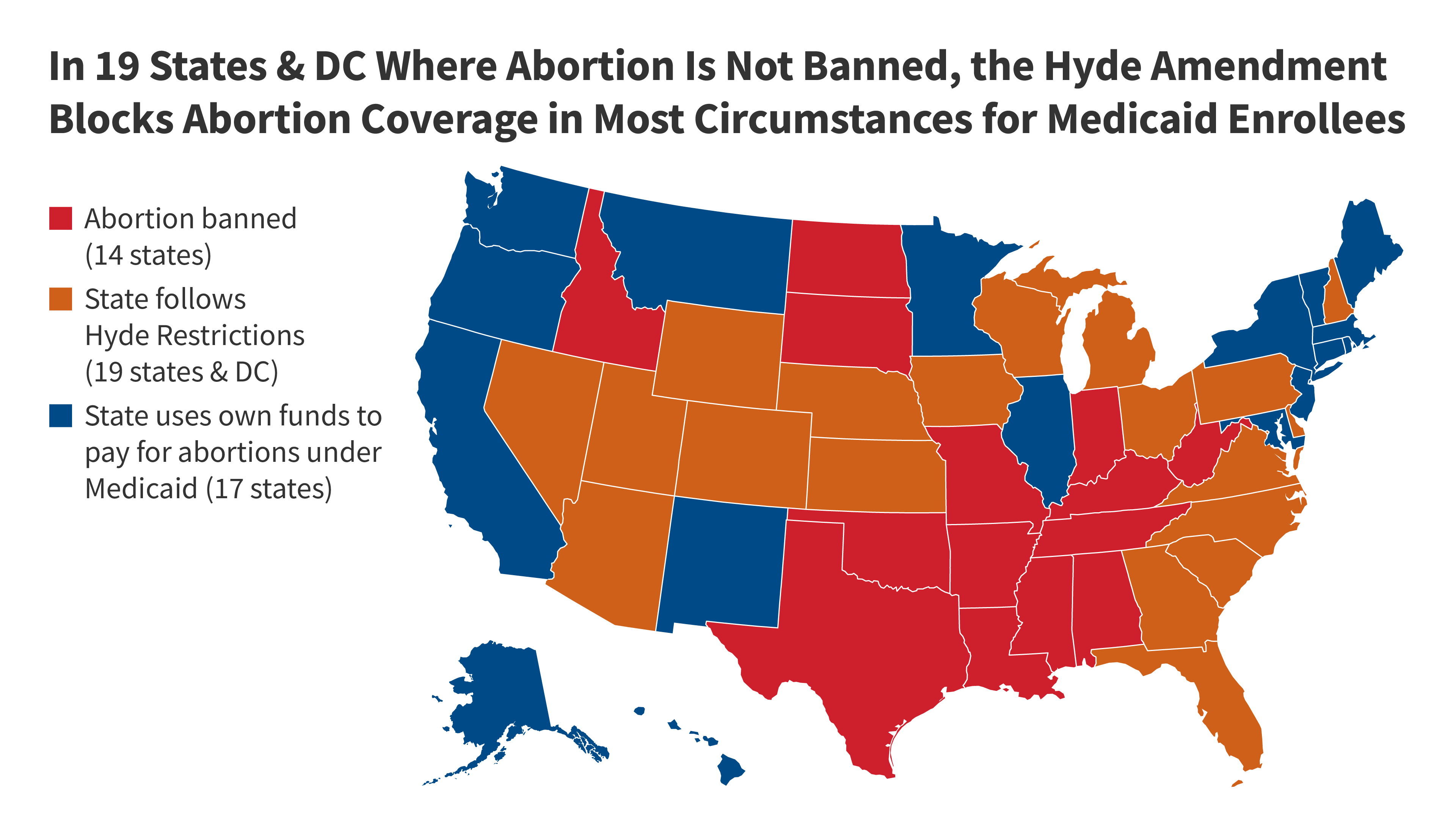
This brief details the federal programs that are affected by the Hyde Amendment and laws and regulations that have a similar goal, provides estimates on the share of women insured by Medicaid affected by the law, reviews the impact of the law on their access to abortion services, and discusses...

www.kff.org
The Hyde Amendment is a legislative provision that prohibits the use of federal funds for abortion, with some exceptions:
The life of the pregnant person is endangered
The pregnancy is the result of rape or incest
The pregnant person has a physical disorder, injury, or illness that would endanger their life if they carried the pregnancy to term
The Hyde Amendment was named after its chief sponsor, Republican Congressman Henry Hyde of Illinois. It was passed by the House of Representatives in 1976 and took effect in 1980. Congress has made several changes to the amendment since then.
The Hyde Amendment has several consequences, including:
Medicaid coverage
19 states and DC follow the Hyde Amendment, which restricts Medicaid coverage of abortion. Women of color are more likely to rely on Medicaid for family planning services and face financial barriers when seeking abortions.
Reproductive rights
The Hyde Amendment can limit a person's ability to make reproductive decisions for their body.
Democracy
Without the ability to make reproductive decisions, those who can become pregnant cannot participate equally in democracy.