Some say the militant group appears to be losing strength, leaving checkpoints unmanned and losing track of escapees. About 40 people rode into this camp on the backs of two flatbed trucks late Friday. Early that morning, they had fled bomb-laden villages guarded by Islamic State militants. As guards open the gates to the camp, family members in the dirt parking area weep and kiss their relatives through the truck’s grated sides. “We were afraid to run,” says 26-year-old Youseff, a former construction worker traveling with his wife and toddler. “But we had no choice. IS fired on us as we escaped the village.”
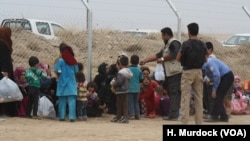
Families wait by the fence as soldiers screen incoming refugees in Khazir Camp in the Kurdish region of northern Iraq
Women and children gather by one section of the fence, while men lean their backs on another part. The men all have IS style-beards and shortened trousers, as is law under the militants. Many shave soon after arriving, says Islam, a Peshmerga soldier in the camp. “They are ordinary people, and it bothers them to look like IS,” he explains. Some men also are staying in IS territory, he says, despite fearing the group and the ongoing battles as Iraqi and Peshmerga soldiers fight towards Mosul, the militants' largest stronghold in Iraq and home to 1.5 million people. “Members of IS stay,” he says, “But others stay to protect their homes, or confuse the militants into thinking theirs is not a family that ran away.” In many places, IS says it will kill any relatives remaining if residents flee.
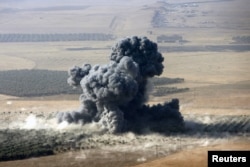
Smoke rises at Islamic State militants' positions in the town of Naweran, near Mosul, Iraq
By the fence, Youseff says ultimately it wasn’t just harsh punishments, draconian rules or even fear of battle that forced them to flee after more than two years. With no jobs and no access to the outside word, his family was broke. And the militant group appears to be losing its grip on the village, he adds. Like many people here, he decided it was time to run. “Before, they were very strong, but now they seem weaker,” he explains. “So we took a chance.”
How IS took over