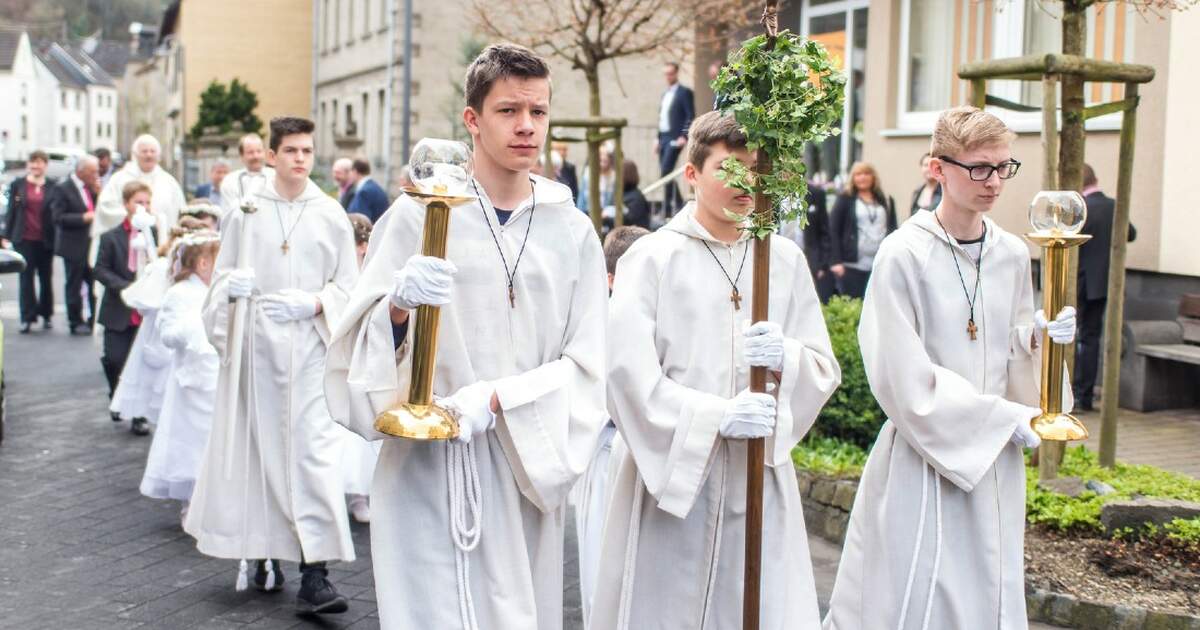
This Thursday is another
public holiday in some parts of Germany and, if you're in the right place at the right time, you will be treated to the sight of large processions of people parading through the streets in traditional clothing, chanting prayers and singing hymns, accompanied by parishioners carrying jewelled statues of the Virgin Mary and other saints. Meet Corpus Christi, known as
Fronleichnam in Germany.
Celebrated at the beginning of
summer, 10 days after Whitsun, Corpus Christi always falls on a Thursday and commemorates the Holy Eucharist – the body and blood of Jesus Christ. The festival – once controversial – is not celebrated as widely around the globe as other Christian festivals such as Christmas and Easter.
Origins of Corpus Christi
So what exactly is Corpus Christi, and why is it celebrated?
Word origins
The German name for this festival,
Fronleichnam, comes from the Middle High German word "
vronlicham" – "
vron" meaning "lord" and "
licham" meaning "body". Thus, the name literally translates to “body of God”. The English name, Corpus Christi, comes from Latin, and also holds the same meaning (Body of Christ).