I assume you're okay with a 13.8 billion year old universe ... so evolution has all the time she needs ...
No, we have time dilation or light being warped and slowed through space. How can you believe 13.8 B yrs old universe when light is coming from the far reaches of the universe?
Science doesn't really know how old. It's based on getting the long time needed for evolution on Earth 4.54 B yrs. Darwin wanted more than 3 B yrs.
I don't change my clocks. I just fall back an hour in my head when doing stuff.
You can read the following and weep in your Cheerios as evolution (cannot explain beauty and complexity) has been disproved by nature once again.
"
Welcome to the Real World
Appreciating the relevant evolutionary hurdles requires attention to the
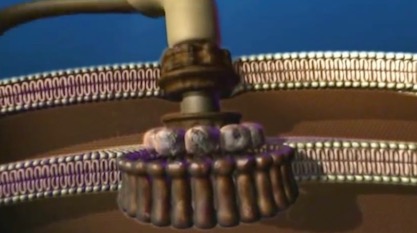
details of flagellar assembly. As a brief overview, a flagellum consists of three major components: the basal body which is housed in the cell membrane, the hook which extends beyond the outer cell membrane, and the filament which acts as a propeller. The basal body includes several subcomponents:
- A series of supportive rings which attach to the cell membrane.
- A motor comprised of a stator which attaches to the cell membrane and a rotor which rotates. The motor derives its power from the proton gradient that exists across the cell membrane.
- A rod which transmits power to the hook and filament.
- A transport gate which sends proteins through the central channel of the motor to assemble structures external to the cell.
Flagellar assembly includes the following steps:
- The basal body’s proteins self-assemble in methodical order to form different subcomponents, including the transport gate.
- Chaperones attach to key flagellar proteins to protect them from degradation. They also deliver them to a complex that inserts the proteins into the transport gate.
- The transport gate sends rod-cap proteins through the channel, and they form the rod assembly tool. The rod proteins are then allowed through, and the rod cap assembles them into the rod structure.
- In a similar process, the hook-cap tool forms and then assembles the hook structure.
- After hook assembly is completed, a hook-filament junction composed of two proteins self-assembles.
- A filament-cap tool forms and assembles the filament structure.
Every step in the process is meticulously timed through a
complex regulatory network of flagellar genes and protein interactions. For instance, in many flagella a
protein known as FliK monitors the
length of the developing hook. Once the hook is sufficiently long,
FliK signals the transport gate to stop sending the hook protein through and to start sending the proteins which assemble the next structures. If any major step in the entire process proceeds improperly,
feedback controls signal the assembly to cease. Understanding these details allows us to properly evaluate the plausibility of evolutionary explanations of the origin of the flagellum."
...
" For any evolutionary explanation of the origin of a complex adaptation, these findings prove extremely problematic. A few straightforward calculations will highlight the magnitude of the problem.
Experiments on proteins in a variety of species demonstrate that 1 in 3 mutations will completely inactivate them. Conversely, if an amino acid at a specific location in a protein (e.g., the 3rd from the end) were allowed to change to any other amino acid or to remain the same, 2/3 of amino acids on average would correspond to a viable protein. This result allows for the calculation of the chance of a random sequence of length L in the region around that of an existing protein to yield a modified version of that protein which was still operational. The maximum probability can be derived from
Cauchy’s mean-value theorem to yield an upper bound of 2/3 to the power of L, P(L) < (2/3)L."
...
"
Here Lies the Challenge
As alluded to already, the single evolutionary step of adding the flagellar filament requires the creation of the genes for the filament (FliC), the assembly cap (FliD), and the two joint-proteins (FlgK and FlgL) along with the
genes’ regulatory regions. The cap is not essential in one special group of bacteria, but it is believed to have been
essential in the hypothetical common ancestor to all flagella. Each of these proteins is so highly specialized for its role in filament construction that it could not possibly serve any other cellular purpose.
One can now assess for the addition of the filament a minimum required timescale. The number of amino acids associated with each protein are as follows:
FliC — 498,
FliD — 468,
FlgK — 547,
FlgL — 317. Their lengths all exceed the limit for a target that could ever be found in the entire history of the Earth, and most exceed the limit significantly. Compounding the challenge, all of the proteins are required before the filament can properly assemble, which dramatically increases the disparity between the available and the required waiting time.
Conversely, one might start by assuming that all four proteins could form within a few billion years. The fact that timescales grow exponentially with the number of coordinated proteins would then constrain the average time for the appearance of an individual protein in standard laboratory studies of microorganisms to less than a decade and in nature to less than a day. This result clearly does not match reality since no evidence exists that any new protein has recently appeared in any species.
The Harvard article is not unique in undermining virtually all possibility for evolution to generate complex adaptations. A completely different
analysis by Doug Axe demonstrated that the maximum number of coordinated mutations (i.e., all are neutral until the final one appears) that could accumulate in any organism is six. Therefore, not only would the origination of a novel protein prove unfeasible, but even properly integrating a single flagellar gene’s regulatory region into the assembly process would be exceedingly problematic. As a consequence, adding just the filament through undirected evolution is mathematically implausible."
One of most popular attempts at explaining the flagellum via cooption was developed by Nicholas Matzke.

evolutionnews.org
This is a common misunderstanding ... time and distant are the same thing, there is no difference
Which shows time and spacetime are joined together. We only have access to the three dimensions as time waits for no person haha.
The Bible doesn't say God created spacetime ... and I asked above, here's dust, make me a human body ... unraveling dimensions provide the energy ... and in a trillion generations all kinds of things can happen ...
You're just wobbling out in space somewhere
ReinyDays . No wonder there is a dark cloud hanging over you.
"In the beginning God created the heavens and the earth. Now the earth was formless and empty, darkness was over the surface of the deep, and the Spirit of God was hovering over the waters." Genesis 1:1-2


 .
.