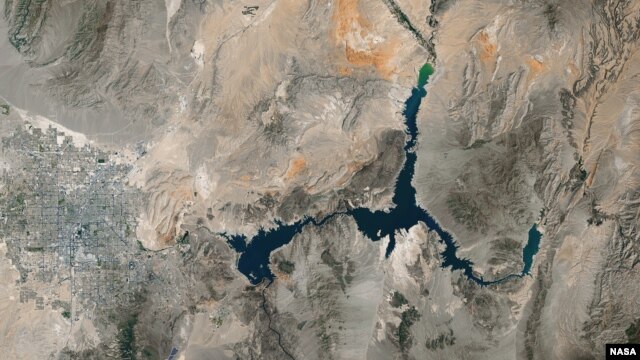
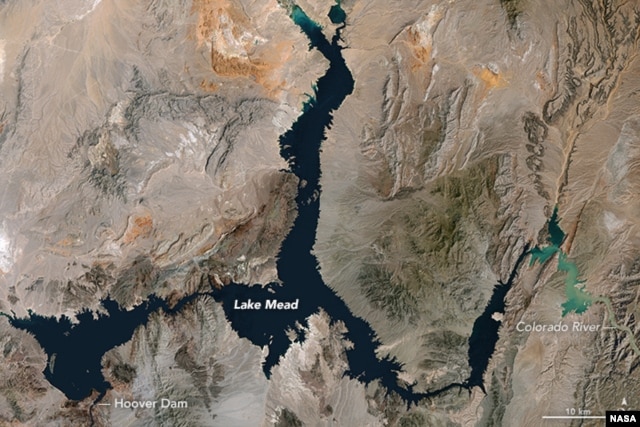
It’s hot. The lake is the perfect place to be on a scorching Nevada morning. Baroudi loves coming out here with his son to fish and swim. But for the last few years, they have watched the lake shrink from under them. “Every time we come out here, we’re shocked by how much water’s missing,” Baroudi shouted over the roar of the engine. To get an idea how far the nation’s largest reservoir has fallen, consider this: What was once one of Lake Mead’s top scuba-diving spots is now halfway up a dry hillside.
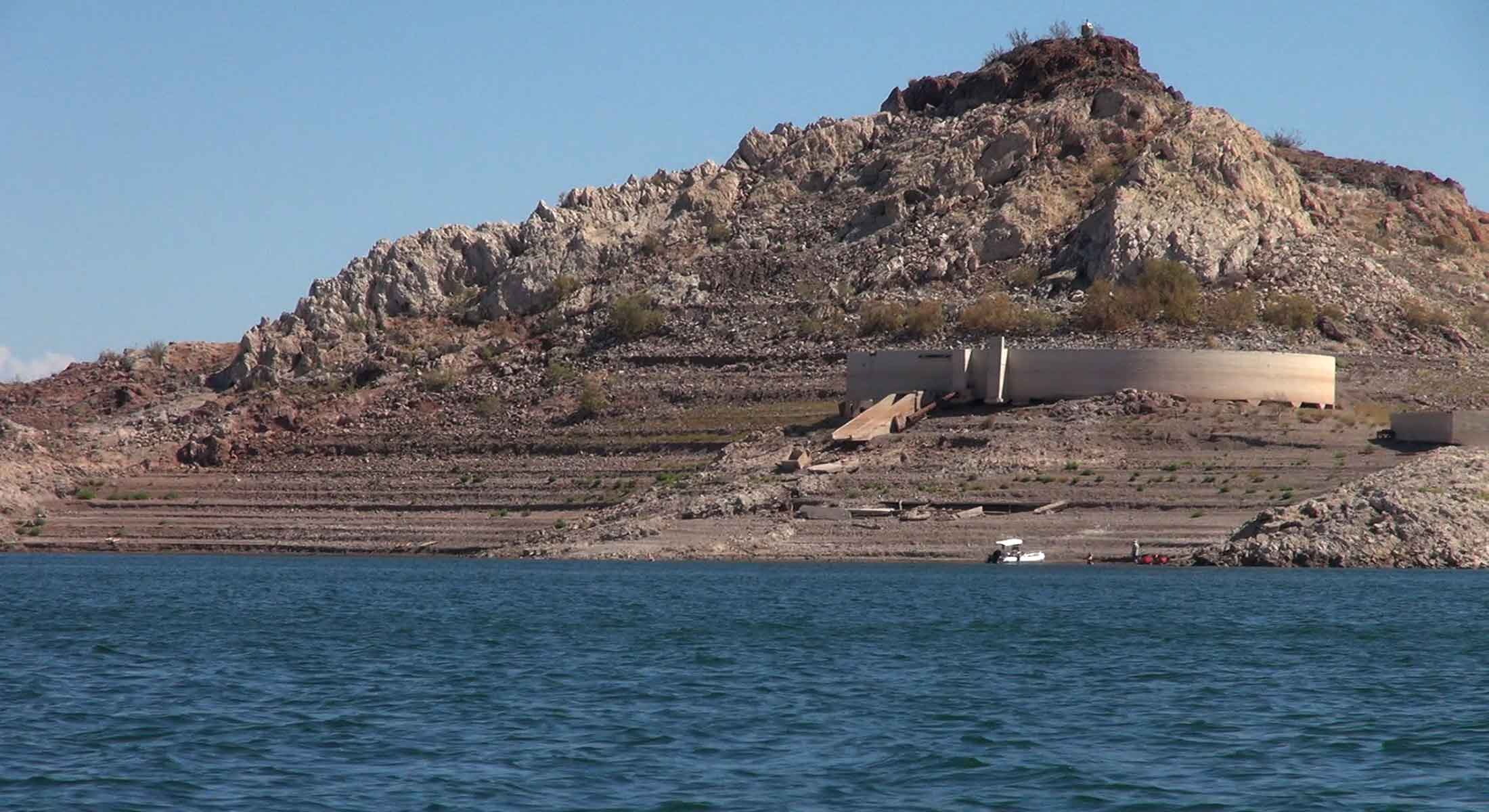
Scuba divers used to swim down to this section of the old concrete plant that helped build Hoover Dam. Parked at the water's edge, boaters can be seen beginning the climb up to it. Only the brown tip of the island is above water when Lake Mead is full.
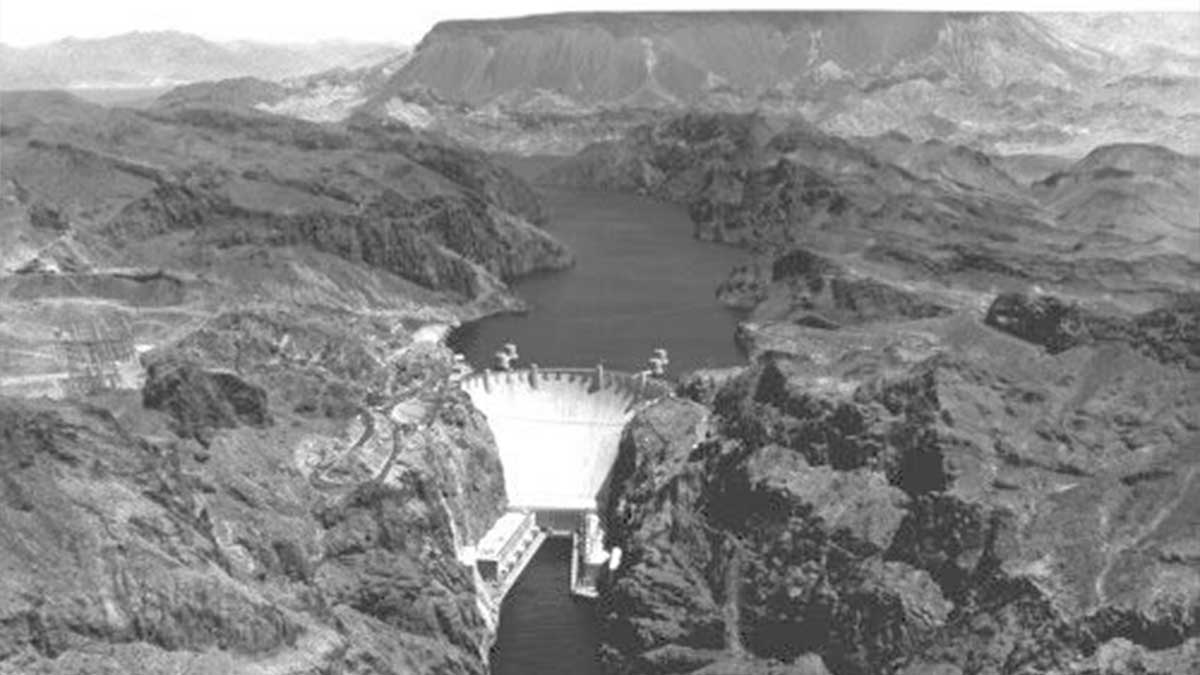
Baroudi steers the boat past an island with a squat, beige cylinder the width of a basketball court. It looks a bit like a concrete UFO. It was part of the plant that churned out 4,360,000 cubic yards of concrete to build Hoover Dam, a couple miles over the hills to the southeast. The plant disappeared into the murky depths in the 1930s when the dam was completed and the reservoir filled. “Now look at it,” Baroudi said. The structure sits beached on a rocky outcrop looking down on the lake it helped create. Reaching it is no longer a dive. It’s a climb. Hoover Dam was built to store the waters of the fickle Colorado River, taming floods, relieving droughts and pouring life into the desert southwestern United States.
The Hoover Dam was built in the 1930s to control the Colorado River and store its waters. But from the very beginning, experts overestimated how much water the river could provide.
Lake Mead anchors the lower half of the river basin, a system that provides water to nearly 40 million people in seven U.S. states. Cities from San Diego to Denver drink from the Colorado. The river irrigates more than 5 million acres of farmland, including California’s Imperial Valley and Arizona’s Yuma County, two areas that supply the nation with most of its vegetables through the winter season. Both would be barren without its waters. As Lake Mead recedes, it has left a white stripe of mineral deposits 14 stories tall across the brown and red rock walls, as if to underline a question: Have we overreached?
MORE