Islamist genocides worldwide - ongoing

Yep, as more and more people come to realize the evil that is Israel, 'anti-semitism' grows by leaps and bounds. It becomes easier to understand why so many cultures over so many years have excluded Jews.

Islam in evil incarnate. Yet the focus from the Jew hating idiots on this board is focused on Israel when it's trying to defend itself from the evil that is Islam.


An estimated 800,000 to over 1 million people have been killed directly by the actions of authoritarian or repressive regimes in Muslim-majority countries between 2006 and 2026.
When isolating deaths caused explicitly by state governments—as opposed to foreign militaries, rebel factions, or terrorist organizations—the overwhelming majority of these fatalities stem from three primary vectors: large-scale state suppression of domestic uprisings, devastating internal civil wars where state militaries intentionally bombed populated areas, and systematic judicial executions or state-perpetrated political purges.
Data compiled from the ⁠Uppsala Conflict Data Program (UCDP), the Armed Conflict Location & Event Data Project (ACLED), and human rights monitors outline the primary state drivers of this death toll over the last 20 years: [1, 2, 3]

1. The Syrian Arab Republic (Bashar al-Assad Regime)
By far the largest contributor to state-inflicted fatalities in the last two decades is the Syrian government. [1]
  • Direct Regime Causalities: According to trackers like the ⁠Syrian Network for Human Rights (SNHR) and the UN, out of the roughly 500,000 to 600,000 people killed in the Syrian Civil War since 2011, the Assad regime and its allied state forces are directly responsible for over 200,000 civilian deaths through systematic barrel-bombing campaigns, chemical weapons use, and deliberate targeting of hospitals. [1]
  • Torture and Custody Deaths: SNHR records verify that at least 15,000 individuals have been documented as tortured to death inside state-run military prisons (such as Saydnaya) during this 20-year window.

2. The Republic of the Sudan (Omar al-Bashir & Military Regimes) [1]
  • The Darfur Genocidal Campaign: Though the conflict began in 2003, state-sponsored violence carried heavily into the late 2000s and 2010s. The Sudanese Armed Forces under Omar al-Bashir, operating alongside their state-backed Janjaweed militia proxies, are estimated by the UN to have killed between 200,000 and 300,000 people via ethnic cleansing, scorched-earth military operations, and deliberate starvation.
  • Post-Coup Violent Crackdowns: Following internal military shakeups and coups in 2019 and 2021, state security forces killed hundreds of peaceful pro-democracy protesters in Khartoum and surrounding cities.

3. The Islamic Republic of Iran
Iran’s regime has engaged in extensive domestic capital punishment and regional proxy violence over the last 20 years:
  • Protester Killings: Major political crackdowns on internal dissidents—including the 2009 Green Movement, the 2019–2020 economic protests (where Reuters reported state forces killed up to 1,500 people in days), and the 2022 "Woman, Life, Freedom" uprisings—have resulted in over 2,500 direct protester deaths by state security apparatuses like the Islamic Revolutionary Guard Corps (IRGC). [1]
  • Judicial Executions: According to ⁠Iran Human Rights (IHR), Iran systematically utilizes the death penalty as a tool of political intimidation, executing between 500 to nearly 1,000 people annually. Over the past 20 years, total judicial executions exceed 11,000 individuals, heavily targeting political dissidents and ethnic minorities.

4. Direct Anti-Opposition State Purges
  • Egypt (2013 Rabaa Massacre): Following the 2013 military coup against the Muslim Brotherhood government, Egyptian state security forces carried out a heavily coordinated clearing of sit-ins. The Human Rights Watch documented that state forces killed a minimum of 817 to over 1,000 protesters in a single day at Rabaa al-Adawiya Square, marking one of the largest single-day state massacres of demonstrators in modern history. [1, 2, 3]
  • Libya (Gaddafi Regime, 2011): In the opening months of the 2011 uprising, Muammar Gaddafi's military deployed heavy artillery, tanks, and fighter jets against civilian protest strongholds, killing an estimated 2,000 to 5,000 people before foreign intervention shifted the war's trajectory.
  • Yemen (Ali Abdullah Saleh Regime, 2011): During the Arab Spring, state military forces killed over 2,000 civilian protesters trying to force a transition of power.

Understanding the Broader Data Mix
When analyzing total conflict data in the region, researchers at ⁠UCDP separate "state violence" from other concurrent lethal forces: [1]
  • What this number excludes: This data filters out the hundreds of thousands of people killed in the region by non-state actors like ⁠ISIS, Al-Qaeda, or Boko Haram, who have killed roughly 250,000 people globally in the last 20 years. It also excludes deaths caused directly by Western coalitions, such as the direct civilian losses during the wars in Iraq and Afghanistan.
  • Indirect Fatalities: If calculating the broader metric of individuals who died indirectly due to state-induced infrastructure collapse, economic blockades, and medical blockades (such as the actions of warring state actors in Yemen's multi-sided conflict), the death toll expands by an additional 1 to 2 million lives.
 
Islam in evil incarnate. Yet the focus from the Jew hating idiots on this board is focused on Israel when it's trying to defend itself from the evil that is Islam.


An estimated 800,000 to over 1 million people have been killed directly by the actions of authoritarian or repressive regimes in Muslim-majority countries between 2006 and 2026.
When isolating deaths caused explicitly by state governments—as opposed to foreign militaries, rebel factions, or terrorist organizations—the overwhelming majority of these fatalities stem from three primary vectors: large-scale state suppression of domestic uprisings, devastating internal civil wars where state militaries intentionally bombed populated areas, and systematic judicial executions or state-perpetrated political purges.
Data compiled from the ⁠Uppsala Conflict Data Program (UCDP), the Armed Conflict Location & Event Data Project (ACLED), and human rights monitors outline the primary state drivers of this death toll over the last 20 years: [1, 2, 3]

1. The Syrian Arab Republic (Bashar al-Assad Regime)
By far the largest contributor to state-inflicted fatalities in the last two decades is the Syrian government. [1]
  • Direct Regime Causalities: According to trackers like the ⁠Syrian Network for Human Rights (SNHR) and the UN, out of the roughly 500,000 to 600,000 people killed in the Syrian Civil War since 2011, the Assad regime and its allied state forces are directly responsible for over 200,000 civilian deaths through systematic barrel-bombing campaigns, chemical weapons use, and deliberate targeting of hospitals. [1]
  • Torture and Custody Deaths: SNHR records verify that at least 15,000 individuals have been documented as tortured to death inside state-run military prisons (such as Saydnaya) during this 20-year window.

2. The Republic of the Sudan (Omar al-Bashir & Military Regimes) [1]
  • The Darfur Genocidal Campaign: Though the conflict began in 2003, state-sponsored violence carried heavily into the late 2000s and 2010s. The Sudanese Armed Forces under Omar al-Bashir, operating alongside their state-backed Janjaweed militia proxies, are estimated by the UN to have killed between 200,000 and 300,000 people via ethnic cleansing, scorched-earth military operations, and deliberate starvation.
  • Post-Coup Violent Crackdowns: Following internal military shakeups and coups in 2019 and 2021, state security forces killed hundreds of peaceful pro-democracy protesters in Khartoum and surrounding cities.

3. The Islamic Republic of Iran
Iran’s regime has engaged in extensive domestic capital punishment and regional proxy violence over the last 20 years:
  • Protester Killings: Major political crackdowns on internal dissidents—including the 2009 Green Movement, the 2019–2020 economic protests (where Reuters reported state forces killed up to 1,500 people in days), and the 2022 "Woman, Life, Freedom" uprisings—have resulted in over 2,500 direct protester deaths by state security apparatuses like the Islamic Revolutionary Guard Corps (IRGC). [1]
  • Judicial Executions: According to ⁠Iran Human Rights (IHR), Iran systematically utilizes the death penalty as a tool of political intimidation, executing between 500 to nearly 1,000 people annually. Over the past 20 years, total judicial executions exceed 11,000 individuals, heavily targeting political dissidents and ethnic minorities.

4. Direct Anti-Opposition State Purges
  • Egypt (2013 Rabaa Massacre): Following the 2013 military coup against the Muslim Brotherhood government, Egyptian state security forces carried out a heavily coordinated clearing of sit-ins. The Human Rights Watch documented that state forces killed a minimum of 817 to over 1,000 protesters in a single day at Rabaa al-Adawiya Square, marking one of the largest single-day state massacres of demonstrators in modern history. [1, 2, 3]
  • Libya (Gaddafi Regime, 2011): In the opening months of the 2011 uprising, Muammar Gaddafi's military deployed heavy artillery, tanks, and fighter jets against civilian protest strongholds, killing an estimated 2,000 to 5,000 people before foreign intervention shifted the war's trajectory.
  • Yemen (Ali Abdullah Saleh Regime, 2011): During the Arab Spring, state military forces killed over 2,000 civilian protesters trying to force a transition of power.

Understanding the Broader Data Mix
When analyzing total conflict data in the region, researchers at ⁠UCDP separate "state violence" from other concurrent lethal forces: [1]
  • What this number excludes: This data filters out the hundreds of thousands of people killed in the region by non-state actors like ⁠ISIS, Al-Qaeda, or Boko Haram, who have killed roughly 250,000 people globally in the last 20 years. It also excludes deaths caused directly by Western coalitions, such as the direct civilian losses during the wars in Iraq and Afghanistan.
  • Indirect Fatalities: If calculating the broader metric of individuals who died indirectly due to state-induced infrastructure collapse, economic blockades, and medical blockades (such as the actions of warring state actors in Yemen's multi-sided conflict), the death toll expands by an additional 1 to 2 million lives.
Also:
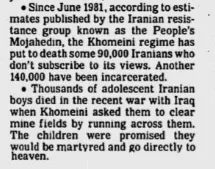
Bet. June 1981 – 1989, some 90,000 Iranian citizens killed and another 150,000 jailed or tortured by the ayatollah. Per WaPo report. Or

.
chrome_screenshot_Jun 23, 2026 2_28_54 PM EDT.webp


And of course the Jan 2026 massacre of it's own people.. estimates range:
Some 37,000 or 80,000, or 140,000
 

Attachments

  • chrome_screenshot_Jun 23, 2026 2_28_54 PM EDT.webp
    chrome_screenshot_Jun 23, 2026 2_28_54 PM EDT.webp
    13.1 KB · Views: 0
Last edited:
Back
Top Bottom