Indigenous Palestinians Were JEWS

Status
Not open for further replies.
P F Tinmore, et al,

Well, I'll try to explain.

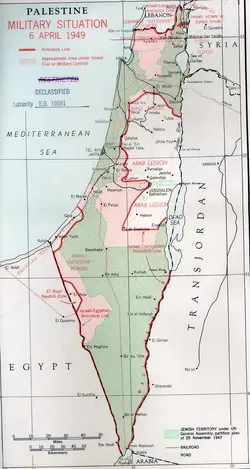
Nice 1949 map of Palestine, thanks.

Every map that I have seen shows Israel inside the 1949 armistice lines. The armistice lines were specifically not to be considered in any way to be political or territorial boundaries. Why don't they show Israel's defined territory on any map? How can we tell if Palestine's defined territory conflicts with Israel's defined territory If Israel's is not shown?

You say that Israel's territory was not revised. Revised from what?
(COMMENT)

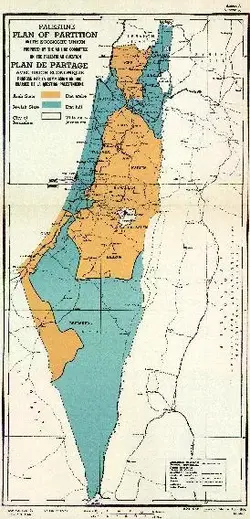
You have to look at the Maps, that represent the geopolitical and military conditions, as a snapshot in time. It constitutes the how the extent of control evolved.


[
Res 181 Map Annex A.webp Class Map 11 JUN 48.webp Mil Situation 6 APR 49.webp

The first map shows you the geopolitical condition the Provisional Government of Israel initially accepted at the time it declared independence (15 May 1948). There was no question that at the outset, the Arab Forces made significant gains particularly in the West Bank, but by June, the battlefield engagements changed. Israeli Forces in the north and northwest, in pursuit to maintain contract and engage with the Arab Forces, pushed the forward edge of the battle area (FEBA) all the way to the Lebanese border, and in doing so, gained control of the northern area that was designated by the Partition Plan to the Arab State. In the mean time, the Arab Forces to the south were routed, pushing the FEBA to a line that is formed between what is today the Rafah Border Crossing to the Nitzana Border Outpost (later to become the International Border between Israel and Egypt by treaty). Having attrited the West Bank northern Arab Force, and southern area forces, the Main Supply Route (MSR) on the Beershiva Highway pushing the FEBA north --- securing a significant portion of the area in pursuit of retreating forces. Again, some of this territory, which was to be allocated to the Arab State, was lost to Israeli control in the wake of the strategic withdrawal by retreating Arab Forces. Israel grew beyond the partition lines, gaining more defensible borders, because Arab Forces were attrited to the point that they were no longer combat effective.

In effect, the attack by 5 Arab Military Formations (Egypt, Syria, Transjordan, Lebanon and Iraq) which the Arab Forces believed would be nearly an assured success --- turned into a decisive victory for Israel. The Armistice Lines have to be examined to determine if they exist into modern times, as it pertains to Palestine.

(DIRECTION - DIRECT QUESTION - DIRECT ANSWER)

  • Q: How can we tell if Palestine's defined territory conflicts with Israel's defined territory If Israel's is not shown?

A: It cannot. And in some cases, that may be a good thing, or it may be a bad thing.

In this Discussion Group, the controversy as to whether the lack of established borders for Palestine certainly is not surprising. But then, if there are no borders international agreed upon, how can the UN General Assembly give recognition of The State of Israel or the State of Palestine? And if there are no borders then on what criteria is the widespread condemnation of Israeli settlements in the West Bank based upon; and charged as illegal?

When the politics is all scraped away, this is a border dispute between the Israelis and the Palestinians. And in the case of the Palestinians, neither any UN Resolution of acknowledging Palestine as a State, nor the earlier International Court of Justice (ICJ) condemnation of the construction of Israel’s security fence, contained any express or implied borders determinations. In fact, the entire criteria by which the ICJ arrived at the conclusion that the Security Barrier was de facto annexation and contrary to international law”, --- is suspect.
Most Respectfully,
R​
 
P F Tinmore, et al,

Well, I'll try to explain.

Nice 1949 map of Palestine, thanks.

Every map that I have seen shows Israel inside the 1949 armistice lines. The armistice lines were specifically not to be considered in any way to be political or territorial boundaries. Why don't they show Israel's defined territory on any map? How can we tell if Palestine's defined territory conflicts with Israel's defined territory If Israel's is not shown?

You say that Israel's territory was not revised. Revised from what?
(COMMENT)

You have to look at the Maps, that represent the geopolitical and military conditions, as a snapshot in time. It constitutes the how the extent of control evolved.


[

The first map shows you the geopolitical condition the Provisional Government of Israel initially accepted at the time it declared independence (15 May 1948). There was no question that at the outset, the Arab Forces made significant gains particularly in the West Bank, but by June, the battlefield engagements changed. Israeli Forces in the north and northwest, in pursuit to maintain contract and engage with the Arab Forces, pushed the forward edge of the battle area (FEBA) all the way to the Lebanese border, and in doing so, gained control of the northern area that was designated by the Partition Plan to the Arab State. In the mean time, the Arab Forces to the south were routed, pushing the FEBA to a line that is formed between what is today the Rafah Border Crossing to the Nitzana Border Outpost (later to become the International Border between Israel and Egypt by treaty). Having attrited the West Bank northern Arab Force, and southern area forces, the Main Supply Route (MSR) on the Beershiva Highway pushing the FEBA north --- securing a significant portion of the area in pursuit of retreating forces. Again, some of this territory, which was to be allocated to the Arab State, was lost to Israeli control in the wake of the strategic withdrawal by retreating Arab Forces. Israel grew beyond the partition lines, gaining more defensible borders, because Arab Forces were attrited to the point that they were no longer combat effective.

In effect, the attack by 5 Arab Military Formations (Egypt, Syria, Transjordan, Lebanon and Iraq) which the Arab Forces believed would be nearly an assured success --- turned into a decisive victory for Israel. The Armistice Lines have to be examined to determine if they exist into modern times, as it pertains to Palestine.

(DIRECTION - DIRECT QUESTION - DIRECT ANSWER)

  • Q: How can we tell if Palestine's defined territory conflicts with Israel's defined territory If Israel's is not shown?

A: It cannot. And in some cases, that may be a good thing, or it may be a bad thing.

In this Discussion Group, the controversy as to whether the lack of established borders for Palestine certainly is not surprising. But then, if there are no borders international agreed upon, how can the UN General Assembly give recognition of The State of Israel or the State of Palestine? And if there are no borders then on what criteria is the widespread condemnation of Israeli settlements in the West Bank based upon; and charged as illegal?

When the politics is all scraped away, this is a border dispute between the Israelis and the Palestinians. And in the case of the Palestinians, neither any UN Resolution of acknowledging Palestine as a State, nor the earlier International Court of Justice (ICJ) condemnation of the construction of Israel’s security fence, contained any express or implied borders determinations. In fact, the entire criteria by which the ICJ arrived at the conclusion that the Security Barrier was de facto annexation and contrary to international law”, --- is suspect.
Most Respectfully,
R​


So true. And let us not forget what the Arab countries did to their Palestinians during the 67 war.
 
P F Tinmore, et al,

This is a "Thought Question."

Nice 1949 map of Palestine, thanks.

Every map that I have seen shows Israel inside the 1949 armistice lines. The armistice lines were specifically not to be considered in any way to be political or territorial boundaries. Why don't they show Israel's defined territory on any map? How can we tell if Palestine's defined territory conflicts with Israel's defined territory If Israel's is not shown?

You say that Israel's territory was not revised. Revised from what?
(COMMENT)

I've address this before in other ways.

(QUESTIONs)

If Palestine has no "defined borders" THEN how can the Israeli Settlements in Area "C" be illegal?

If Palestine has no "defined borders" THEN how can any international laws apply to a domestic issue? (IAC 'vs' NIAC)!

Most Respectfully,
R
 
Last edited:
The European Jews colonized Palestine. They were from Europe.
 
The European Jews colonized Palestine. They were from Europe.

You're correct; Many Jews expelled from Israel by the Roman Empire did indeed remain in Europe and then came back to Israel after WWII.
I'm sure you purposely skipped over the massive documentation left by European Rabbis over the millennia.
You know, the Writings, The Men Of The Great Assembly, The Tannaim, The Amoraim, The Rishonim, The Acharonim, The Gaonim.
But I guess all those Books and Responsa were just fabricated in the last 60 years or so.
 
The European Jews colonized Palestine. They were from Europe.

so? They still were in majority the same families from the Judea and Levite tribes. While the so called balestinians are arabs from Saudia Egypt and Syria with no long term roots or distinct culture of the land. They are Arabs (says all-arab peninsula) who demand to live in Judea, the land of the tribe Jews bare name of.

Arabs from Arabia, Jews from Judea.

Welcome.
 
He wont accept your post as being relevant and because it goes against his POV and beliefes he will ignore what it says and keep asking the same stupid questions over and over again. Reduce the answers to short ones with links to facts and keep them filed for future use.
 
Let's hear it from the horse's mouth:

 
"Native Population almost wholly descended from Jews who had been forcibly converted to Christianity, and later Islam, not Arab in origin"

Native Population almost wholly descended from Jews who had been forcibly converted

With the Crusaders' slaughters -- including mass murder in 1099 of all the 70,000 Muslims in Jerusalem -- the deterioration of the land in Palestine acelerated.

... Massacres and the fear of massacre had greatly reduced the number of Jews in Palestine and Christians in Syria.[87]The "vast majority" remaining in Palestine was "native Christians," of "mixed origin ... carelessly known as Christian Arabs."[88]
Because the population was "decimated" by the endemic massacres, disease, famine, and wars, one Muslim ruler "brought in Turks and Negroes." Another "had Berbers, Slavs, Greeks and Dailamites." The Kurdish conqueror,[89] "Saladin, introduced more Turks, and some Kurds."[90]

"The flower of the Saracenes who fought the Crusaders were Turks," chronicled Philip Graves.[91] "The Mamluks brought armies of Georgians, and Circasians. For his personal security each monarch relied on his own purchase."[92] "In the Palestinian towns Greek was the common tongue..." [93] In 1296, 18,000 'tents" -- families -- of Tartars entered and settled in the land of Palestine. [94]

Thus, not only was Arab rule "extraordinarily short," but the "pure Arab peoples in Palestine for millennia" -- a romanticized notion discredited by serious scholars -- actually consisted of a non-Arabian, multi-ethnic procession of immirants.
 
P F Tinmore, et al,

This is a "Thought Question."

Nice 1949 map of Palestine, thanks.

Every map that I have seen shows Israel inside the 1949 armistice lines. The armistice lines were specifically not to be considered in any way to be political or territorial boundaries. Why don't they show Israel's defined territory on any map? How can we tell if Palestine's defined territory conflicts with Israel's defined territory If Israel's is not shown?

You say that Israel's territory was not revised. Revised from what?
(COMMENT)

I've address this before in other ways.

(QUESTIONs)

If Palestine has no "defined borders" THEN how can the Israeli Settlements in Area "C" be illegal?

If Palestine has no "defined borders" THEN how can any international laws apply to a domestic issue? (IAC 'vs' NIAC)!

Most Respectfully,
R
Now answer that assuming that Palestine does have defined borders.

Remember that Palestine had already came into existence with defined borders several months before the Mandate could start its administration. And Palestine continued to exist after the Mandate left.
 
P F Tinmore, et al,

Show me.

[
Now answer that assuming that Palestine does have defined borders.

Remember that Palestine had already came into existence with defined borders several months before the Mandate could start its administration. And Palestine continued to exist after the Mandate left.
(COMMENT)

I don't know anything about "Palestine" coming "into existence with defined borders several months before the Mandate could start its administration." Show me.

Most Respectfully,
R
 
P F Tinmore, et al,

Show me.

[
Now answer that assuming that Palestine does have defined borders.

Remember that Palestine had already came into existence with defined borders several months before the Mandate could start its administration. And Palestine continued to exist after the Mandate left.
(COMMENT)

I don't know anything about "Palestine" coming "into existence with defined borders several months before the Mandate could start its administration." Show me.

Most Respectfully,
R
The Treaty of Lausanne was a peace treaty signed in Lausanne, Switzerland, on 24 July 1923.

Treaty of Lausanne - Wikipedia, the free encyclopedia
--------------------
The commission submitted its final report on 3 February 1922, and it was approved with some caveats by the British and French governments on 7 March 1923, several months before Britain and France assumed their Mandatory responsibilities on 29 September 1923

British Mandate for Palestine (legal instrument) - Wikipedia, the free encyclopedia
 
But it doesn't as they themselves have said they need to negotiate mutual borders or take the land of Israel.

Palestine the mandate came into existence then, Palestine the nation did not emerge until 1988
 
But it doesn't as they themselves have said they need to negotiate mutual borders or take the land of Israel.

Palestine the mandate came into existence then, Palestine the nation did not emerge until 1988
They have?

Link?
 
15th post
When being created all the time, and as you claim the treaty created the Nation of Palestine so why wasnt it named ?
 
P F Tinmore, et al,

Yes, I'm quite familiar with the Paulet–Newcombe Agreement (AKA: Franco-British Boundary Agreements).

P F Tinmore, et al,

Show me.

[
Now answer that assuming that Palestine does have defined borders.

Remember that Palestine had already came into existence with defined borders several months before the Mandate could start its administration. And Palestine continued to exist after the Mandate left.
(COMMENT)

I don't know anything about "Palestine" coming "into existence with defined borders several months before the Mandate could start its administration." Show me.

Most Respectfully,
R
The Treaty of Lausanne was a peace treaty signed in Lausanne, Switzerland, on 24 July 1923.

Treaty of Lausanne - Wikipedia, the free encyclopedia
--------------------
The commission submitted its final report on 3 February 1922, and it was approved with some caveats by the British and French governments on 7 March 1923, several months before Britain and France assumed their Mandatory responsibilities on 29 September 1923

British Mandate for Palestine (legal instrument) - Wikipedia, the free encyclopedia
(COMMENT)

This did NOT establish a border for Palestine (the country). Nor did the Treaty of Lausanne set the demarcation of Palestine (the country). The Paulet–Newcombe Agreement set the boundary that gave meaning to the Sykes-Picot Agreement the separation of the British Mandates (later to be named Palestine and Iraq) from the French Mandates (later to be named Lebanon and Syria).

The Paulet–Newcombe Agreement relates to the Treaty of Lausanne, only in respect to the demarcation of the territories in Area "A" (French) and Area "B" (British) on the Agreement Map. The demarcation established by the Paulet–Newcombe Agreement does not detail the entire perimeter of Palestine in any fashion. In fact, the Paulet-Newcombe Line, in more contemporary times, is somewhat compromised in certain stretches (See Special Note Below):

Article 3, of the Treaty of Lausanne describes the territory of concern to the British (Area "B") for Mandate purposes.

From the Mediterranean to the frontier of Persia, the frontier of Turkey is laid down as follows:

(I ) With Syria:

The frontier described in Article 8 of the Franco-Turkish Agreement of the 20th October, 1921
(2) With Iraq:

The frontier between Turkey and Iraq shall be laid down in friendly arrangement to be concluded between Turkey and Great Britain within nine months.

In the event of no agreement being reached between the two Governments within the time mentioned, the dispute shall be referred to the Council of the League of Nations.

The Turkish and British Governments reciprocally undertake that, pending the decision to be reached on the subject of the frontier, no military or other movement shall take place which might modify in any way the present state of the territories of which the final fate will depend upon that decision.
You will notice immediately the need for the demarcation line. No where in the Treaty of Lausanne is the territory of Palestine (or Lebanon for that matter) mentioned or identified.

The contemporary demarcation of the perimeter of the modern day "West Bank" is essentially described by the, now superseded, Armistice Line as it converges in the north and south with the international border between Israel and Jordan as described by Article 3, Treaty of Peace between Israel and Jordan.

(SPECIAL NOTE)

Even understand the above, does not actually represent the nature of the border dispute between Lebanon and Israel. In the Journal Article, with retired Lebanese General Nizar Abdel-Kader, he points out that some relationships.

Following the 1967 Arab-Israeli war, then Israeli Foreign Minister Abba Eban declared that Israel would not be bound by any conditions of the 1949 Truce. In 1978 Israel occupied part of southern Lebanon, declaring it a “security zone”. It did not vacate it for the next 22 years, rejecting the requirement of UN Security Resolution (UNSCR) 425 (1978) to withdraw to Lebanon’s “internationally recognised boundaries.” When Israel finally did pull out in May 2000, the new UN Blue Line did not correspond either to Newcomb-Paulet or to the 1949 Truce.

Most Respectfully,
R
 
P F Tinmore, et al,

Yes, I'm quite familiar with the Paulet–Newcombe Agreement (AKA: Franco-British Boundary Agreements).

P F Tinmore, et al,

Show me.

[
Now answer that assuming that Palestine does have defined borders.

Remember that Palestine had already came into existence with defined borders several months before the Mandate could start its administration. And Palestine continued to exist after the Mandate left.
(COMMENT)

I don't know anything about "Palestine" coming "into existence with defined borders several months before the Mandate could start its administration." Show me.

Most Respectfully,
R
The Treaty of Lausanne was a peace treaty signed in Lausanne, Switzerland, on 24 July 1923.

Treaty of Lausanne - Wikipedia, the free encyclopedia
--------------------
The commission submitted its final report on 3 February 1922, and it was approved with some caveats by the British and French governments on 7 March 1923, several months before Britain and France assumed their Mandatory responsibilities on 29 September 1923

British Mandate for Palestine (legal instrument) - Wikipedia, the free encyclopedia
(COMMENT)

This did NOT establish a border for Palestine (the country). Nor did the Treaty of Lausanne set the demarcation of Palestine (the country). The Paulet–Newcombe Agreement set the boundary that gave meaning to the Sykes-Picot Agreement the separation of the British Mandates (later to be named Palestine and Iraq) from the French Mandates (later to be named Lebanon and Syria).

The Paulet–Newcombe Agreement relates to the Treaty of Lausanne, only in respect to the demarcation of the territories in Area "A" (French) and Area "B" (British) on the Agreement Map. The demarcation established by the Paulet–Newcombe Agreement does not detail the entire perimeter of Palestine in any fashion. In fact, the Paulet-Newcombe Line, in more contemporary times, is somewhat compromised in certain stretches (See Special Note Below):

Article 3, of the Treaty of Lausanne describes the territory of concern to the British (Area "B") for Mandate purposes.

From the Mediterranean to the frontier of Persia, the frontier of Turkey is laid down as follows:

(I ) With Syria:

The frontier described in Article 8 of the Franco-Turkish Agreement of the 20th October, 1921
(2) With Iraq:

The frontier between Turkey and Iraq shall be laid down in friendly arrangement to be concluded between Turkey and Great Britain within nine months.

In the event of no agreement being reached between the two Governments within the time mentioned, the dispute shall be referred to the Council of the League of Nations.

The Turkish and British Governments reciprocally undertake that, pending the decision to be reached on the subject of the frontier, no military or other movement shall take place which might modify in any way the present state of the territories of which the final fate will depend upon that decision.
You will notice immediately the need for the demarcation line. No where in the Treaty of Lausanne is the territory of Palestine (or Lebanon for that matter) mentioned or identified.

The contemporary demarcation of the perimeter of the modern day "West Bank" is essentially described by the, now superseded, Armistice Line as it converges in the north and south with the international border between Israel and Jordan as described by Article 3, Treaty of Peace between Israel and Jordan.

(SPECIAL NOTE)

Even understand the above, does not actually represent the nature of the border dispute between Lebanon and Israel. In the Journal Article, with retired Lebanese General Nizar Abdel-Kader, he points out that some relationships.

Following the 1967 Arab-Israeli war, then Israeli Foreign Minister Abba Eban declared that Israel would not be bound by any conditions of the 1949 Truce. In 1978 Israel occupied part of southern Lebanon, declaring it a “security zone”. It did not vacate it for the next 22 years, rejecting the requirement of UN Security Resolution (UNSCR) 425 (1978) to withdraw to Lebanon’s “internationally recognised boundaries.” When Israel finally did pull out in May 2000, the new UN Blue Line did not correspond either to Newcomb-Paulet or to the 1949 Truce.

Most Respectfully,
R
Rocco, all of that smoke.

In order for there to be a mandate for Palestine there first had to be a Palestine.

Everything from the Balfour declaration, to the mandate, to resolution 181, to to the armistice agreements, the common term used was "in Palestine." Not to mention the million Palestinians who had Palestinian citizenship.

Now you and the other Israel propagandists are saying that there never was a Palestine.:cuckoo::cuckoo::cuckoo::cuckoo:
 
Status
Not open for further replies.
Back
Top Bottom