Let's clarify exactly what he said:
As team leader David Schlegel put it, "I now know the size of the universe better than I know the size of my house."
"That means — while we can't say with certainty that it will never come to an end — it's likely (we believe) the universe extends forever in space and will go on forever in time. Our results are consistent with an infinite universe."
This is a perfect example of your complete and total dishonesty. After lying about him saying "we believe" rather than admit he never said those words, you take a snippet completely out of context and then insert YOUR words which have nothing to do with the context of the article and then falsely claim it is EXACTLY what he said. You are absolutely despicable, or should I say the spiritual entity that made you the way you are is despicable.
If you wanted to insert honest words related to what he actually said in the article, you could have used words like "we measured," or "we mapped," or "we calculated" because everything he said in the article was based on the measurements and mapping his team did.
Here are some snippets that give the real context of his words none of which can be interpreted as "we believe":
BBC News - Universe measured to 1 accuracy
Astronomers have
measured the distances between galaxies in the universe to an accuracy of just 1%.
This
staggeringly precise survey - across six billion light-years - is key to mapping the cosmos and determining the nature of dark energy.
The new gold standard was set by
BOSS (the Baryon Oscillation Spectroscopic Survey) using the Sloan Foundation Telescope in New Mexico, US.
"There are not many things in our daily lives that we know to 1% accuracy," said Prof David Schlegel, a physicist at Lawrence Berkeley National Laboratory and the principal investigator of BOSS.
"I now know the size of the universe better than I know the size of my house.
"Twenty years ago astronomers were arguing about estimates that differed by up to 50%. Five years ago, we'd refined that uncertainty to 5%; a year ago it was 2%.
The BOSS team
used baryon acoustic oscillations (BAOs) as a "standard ruler" to measure intergalactic distances.
"Nature has given us a beautiful ruler," said Ashley Ross, an astronomer from the University of Portsmouth.
"
The ruler happens to be half a billion light years long, so
we can use it to measure distances precisely, even from very far away."
Determining distance is a fundamental challenge of astronomy:
"Once you know how far away it is, learning everything else about it is suddenly much easier," said Daniel Eisenstein, director of the Sloan Digital Sky Survey III.
The BOSS distances will help calibrate fundamental cosmological properties - such as how "dark energy" accelerates the expansion of the universe.
The latest results indicate dark energy is a cosmological constant whose strength does not vary in space or time.
They also provide an excellent estimate of the curvature of space.
"The answer is, it's not curved much. The universe is extraordinarily flat," said Prof Schlegel.
"While we can't say with certainty, it's likely the universe extends forever in space and will go on forever in time.
Our results are consistent with an infinite universe," he said.


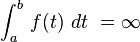
 lmao:
lmao:


