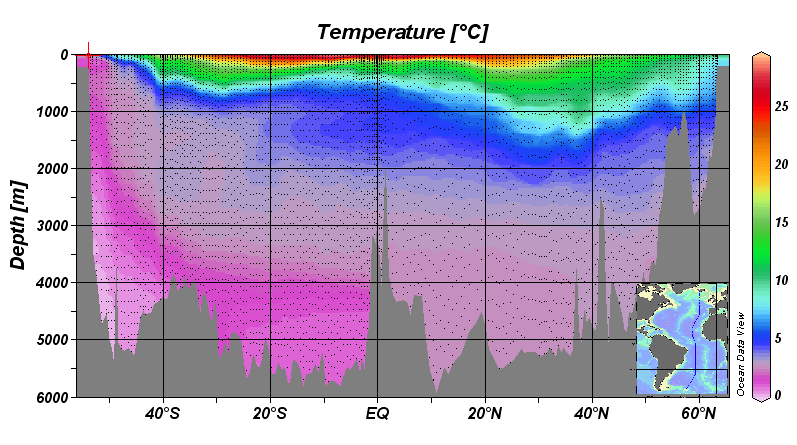
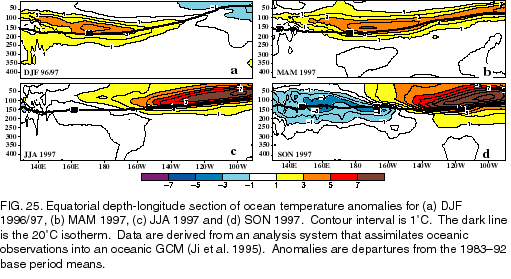
From the reference above.
"Robert S. Pindyck is a professor of economics and finance at MIT, with several decades experience publishing articles and books dealing with energy. Moreover, as he explains in this interview, Pindyck believes that man-made emissions of CO2 and other greenhouse gases will impose climate change damages on future generations, and is an advocate of a carbon tax agreement among the major world governments (though he is doubtful such a tax is politically feasible). With a pedigree like that, you might expect Pindyck to be very complimentary about the computer models that the Obama Administration and other policymakers are using to justify the economics of anti-carbon measures. But as it turns out, Pindyck has written a new, peer-reviewed paper (forthcoming in the Journal of Economic Literature) that is absolutely scathing in its critique of such models. In this post Ill highlight some of his points."
"Two Types of Computer Models"
"In the climate change policy debate, there are two types of computer models. One type refers to models of the Earths climate that are created as simplified simulations of the atmosphere, ocean, suns radiation, etc. that rely just on the natural sciences such as physics, chemistry, and biology. These are the computer models that people have in mind when they say things like, Global temperatures have been basically flat for years, and yet the official models predicted more warming than has actually occurred."
"But there are another set of modelscalled Integrated Assessment Models or IAMsthat have been created by economists, not climate scientists. The IAMs rely on condensed versions of the full-blown climate models as part of their structure, but they also rely on (crude) simulations of the global economy to try and assess the interaction between the economic and climate systems. In addition to all of the uncertainty stemming just from the physical science itselfsuch as asking how much global temperatures will increase in the long run, in response to a doubling of atmospheric CO2 concentrationsthe IAMs have another layer of guesswork. For example, they have to make projections of business as usual growth in carbon dioxide emissions, in order to understand the full economic impact of emitting one more ton of CO2 today. These computer simulations are then used to gauge the likely results of various types of government policies to restrict emissions, which will affect both the economy and the climate."
All of the discussion here has been about climate models assembled by the IPCC.
So, this is a brand new topic. Economic and business models.
I for one have never read one, by anybody. So I have no opinion on this paper.
The guy could be completely right, completely wrong, or, most likely, someplace in between.
And, at least in this article, he doesn't seem to be specific about which papers he's criticizing.
For sure he has no expertise in the science of climatology.