It can't be repealed until 2017 when the next GOP President is sworn in.
I wouldn't count on that. At this point it's already becoming clear that it's
working. We're seeing things in the health system that have never been seen before.
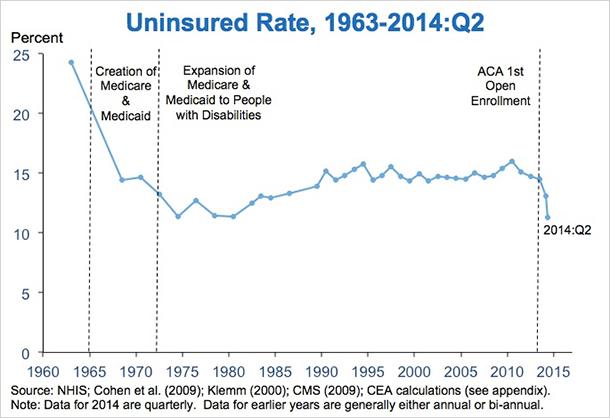
Things like the
lowest uninsurance rate ever (even before counting the ~2 million additional Medicaid enrollments since last summer, the millions more that have already signed up for private exchange coverage beginning January 1 of next year, the millions more that will by mid-February, and the millions more than that who will have signed up for coverage by the start of 2017, two additional open enrollments from now):
We just saw the
lowest health care spending growth ever recorded.
Along with (still-)
sinking hospital prices:
Meanwhile, the benchmark insurance premiums in the new exchanges are changing, some up and some dropping substantially, but
overall growing just ~3% (unusually low for the individual market, which has historically seen 10%+ rate increases):
And premiums in the new SHOP exchanges for small businesses
aren't changing much at all:
Financially, thus far
the law is exceeding expectations, with spending on ACA subsidies and Medicaid (not to mention total health spending across the economy) for 2014 coming in below the numbers "sold" in 2010, while Medicare savings have come in substantially higher:
Perhaps the most impressive piece of that is that
per capita Medicare spending is now falling, a turn that's virtually unprecedented in the history of the program:
Meanwhile,
the way health care is paid for is changing to reward better quality and lower cost growth:
And more people are benefiting from
new health care delivery models that put quality and the patient first:
Percentage of lives covered by Accountable Care Organizations, by hospital referral region
With the new incentives and technical assistance available under the ACA
hospitals are getting safer, saving lives and money:
Total Annual and Cumulative Hospital-Acquired Condition (HAC) Reductions (Compared to 2010 Baseline)
Total Annual and Cumulative Deaths Averted (Compared to 2010 Baseline)
Total Annual and Cumulative Cost Savings (Compared to 2010 Baseline)
Meanwhile preventable readmissions are dropping, as patients get appropriate post-discharge planning and care:
Wishing away obvious (and unprecedented) progress for an empty political agenda is a fool's errand. Most of the GOP already recognizes it but by 2017 even the most obstinate members of the party will have caught on.




/assets.sbnation.com/assets/4826288/medicare_per_person.png)


![URL]](/proxy.php?image=http%3A%2F%2F%5BURL%5Dhttps%3A%2F%2Fcdn2.vox-cdn.com%2Fthumbor%2FiUlKFPY1AHWvoTvFOrIDfYQyjp8%3D%2Fassets.sbnation.com%2Fassets%2F4416961%2Freadmission_rates.png%5B%2FURL%5D&hash=3ed9c59337f8cd96f60aa0e1b5d440aa)


