From your article:
She and others sure missed a lot of published papers that were well over 200 that talked about the cooling being real heck I think they were flat out LYING!
Here is a much bigger list of 285 cooling papers they amazingly failed to see, first the background to this
part 1 post LINK:
EXCERPT, then a big list of published papers follows
Part 2 LINK,
Part 3 LINK is a continuation of the list of published cooling papers.
===
View attachment 1140420
Beginning in 2003, software engineer William Connolley quietly removed the highly inconvenient references to the global cooling scare of the 1970s from Wikipedia, the world’s most influential and accessed informational source.
It had to be done. Too many skeptics were (correctly) pointing out that the scientific “consensus” during the 1960s and 1970s was that the Earth had been cooling for decades, and that nascent theorizing regarding the potential for a CO2-induced global warming were still questionable and uncertain.
Not only did Connolley — a co-founder (along with Michael Mann and Gavin Schmidt) of the realclimate.com blog — successfully remove (or rewrite) the history of the 1970s global cooling scare from the Wikipedia record, he also erased (or rewrote) references to the Medieval Warm Period and Little Ice Age so as to help create the impression that the paleoclimate is shaped like Mann’s hockey stick graph, with unprecedented and dangerous 20th/21st century warmth.
A 2009 investigative report from UK’s
Telegraph detailed the extent of dictatorial-like powers Connolley possessed at Wikipedia, allowing him to remove inconvenient scientific information that didn’t conform to his point of view.
After eviscerating references to 1970s global cooling scare and the warmer-than-now Medieval Warm Period from Wikipedia, and after personally rewriting the Wikipedia commentaries on the greenhouse effect to impute a central, dominant role for CO2, Connolley went on to team up with two other authors to publish a “consensus” manifesto in 2008 that claimed to expose the 1970s global cooling scare as a myth, as something that never really happened.
Peterson, Connolley, and Fleck (2008, hereafter
PCF08) published “The Myth of the 1970s Global Cooling Scientific Consensus” in
Bulletin of the American Meteorological Society, hoping to quash once and for all the perception that there were scientists in the 1960s and 1970s who agreed the Earth was cooling (and may continue to do so), or that CO2 did not play a dominant role in climate change.
The Concoction Of ‘Consensus’ Achieved Via Exclusion
The primary theme of PCF08 can be summarized in 4 succinctly quoted sentences from the paper:
William Connolley and colleagues claimed that the determination of scientific “consensus” regarding global cooling and the influence of CO2 on climate during the 1970s could be divined by counting scientific publications that fell into arbitrarily-defined categories which allowed them to intentionally exclude hundreds of papers that would undermine the alleged myth-slaying purpose of the paper.
The PCF08 authors decided that when “quantifying the consensus” (by counting publications), a scientific paper could only be classified as a “cooling” paper if it projected that
future temperatures would (continue to) decline, or that a “full-fledged ice age was imminent.” Papers published during the arbitrarily chosen 1965-’79 era that affirmed the climate had
already been cooling for decades, that this cooling wasn’t a positive development, and/or that the effects of CO2 on climate were questionable or superseded by other more influential climate change mechanisms … were
not considered worthy of classification as a “cooling” paper, or as a paper that disagreed with the claimed “consensus” that said the current (1960s-’70s) global cooling will
someday be replaced by CO2-induced global warming.
Of course, the global cooling scare during the 1970s was
not narrowly or exclusively focused upon what the temperatures might look like in the future, or whether or not an ice age was “imminent”. It was primarily about the
ongoing cooling that had been taking place for decades, the negative impacts this cooling had already exerted (on extreme weather patterns, on food production, etc.), and uncertainties associated with the causes of climatic changes.
By tendentiously excluding 1960s and 1970s publications that documented global cooling had been ongoing and a concern, as well as purposely excluding papers that suggested the climate’s sensitivity to CO2 forcing is weak or questionable relative to other mechanisms, the authors could brazenly claim that there were
only 7 papers published in the scientific literature between 1965 and 1979 that disagreed with the “consensus” opinion that global warming would occur at some point in the future (due to CO2 increases). According to PCF08, there were
44 papers that fell into the latter warming-is-imminent-due-to-CO2 category from 1965-’79, ostensibly entitling them to claim that dangerous anthropogenic global warming projections “dominated” the scientific literature even then.
An 83% Global Cooling/Weak CO2 Influence Scientific ‘Consensus’ During 1960s, ’70s
As will be shown here, the claim that there were only 7 publications from that era disagreeing with the presupposed CO2-warming “consensus” is preposterous. Because when including the papers from the 1960s and 1970s that indicated the globe had cooled (by -0.3° C between the 1940s and ’70s), that this cooling was concerning (leading to extreme weather, drought, depressed crop yields, etc.), and/or that CO2’s climate influence was questionable to negligible, a
conservative estimate for the number of scientific publications that did
not agree with the alleged CO2-warming “consensus” was
220 papers for the 1965-’79 period, not 7. If including papers published between 1960 and 1989, the “non-consensus” or “cooling” papers reaches
285.
Again, these estimates should be viewed as conservative. There are likely many dozen more scientific papers from the 1960s-’70s cooling scare era that would probably fall into the category of a “cooling” paper, but have not yet been made available to view in full online.
But let us say that the PCF08 claim is true, and that there were indeed only 44 papers published between 1965-’79 that endorsed the position that the Earth’s climate is predominately shaped by CO2 concentrations, and thus the Earth would someday start warming as the models had suggested. Interestingly, if we were to employ the hopelessly flawed methodology of divining the relative degree of scientific “consensus” by counting the number of papers that agree with one position or another (just as blogger John Cook and colleagues did with their 2013 paper “Quantifying the Consensus…” that yielded a predetermined result of 97% via categorical manipulation), the 220 “cooling” papers published between 1965-’79 could represent an
83.3% global cooling consensus for the era (220/264 papers), versus only a
16.7% consensus for anthropogenic global warming (44/264 papers).
The 1970s Global Cooling Scare Was Not Mythological
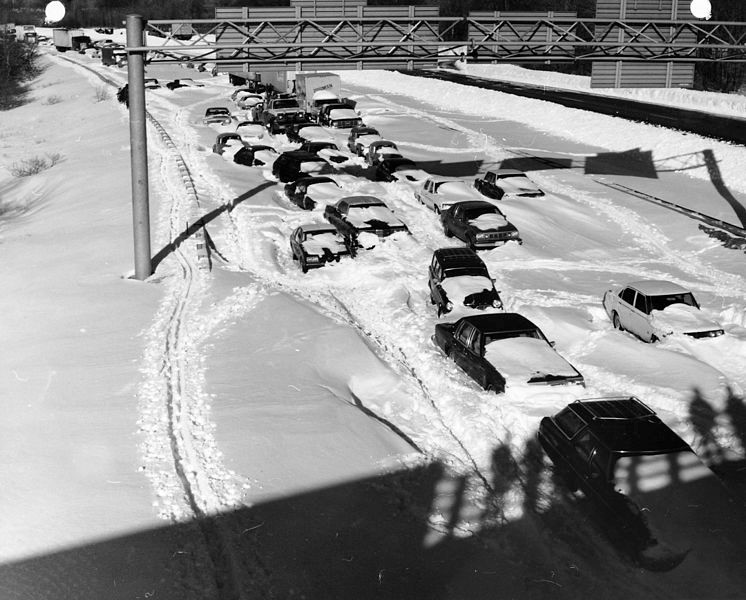
In reviewing the available scientific literature from the 1960s-’80s, it is plainly evident that there was a great deal of concern about the ongoing global cooling, which had amounted to -0.5°C in the Northern Hemisphere and -0.3°C globally between the 1940s and 1970s.
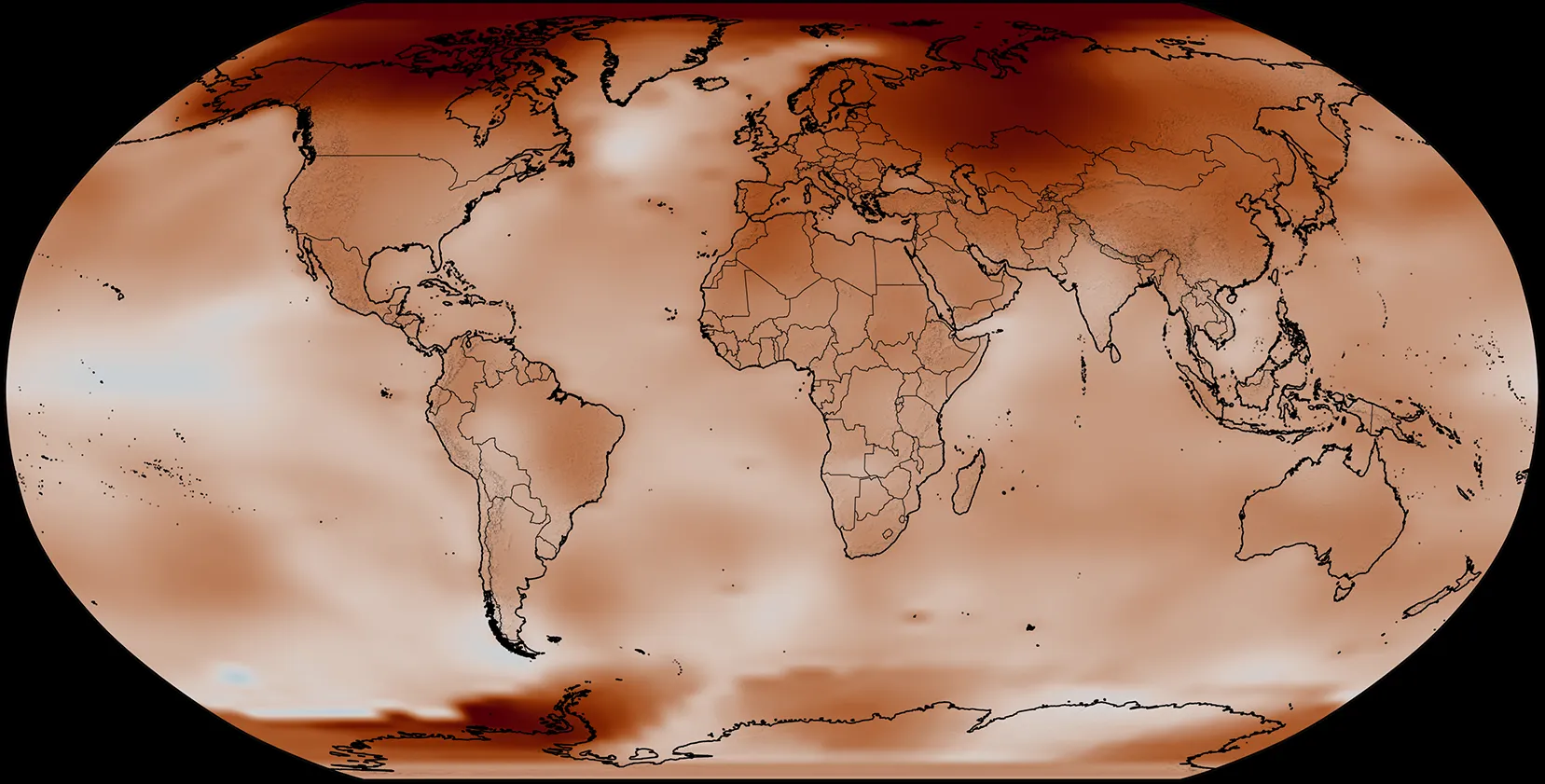
Of course, this inconvenient global-scale cooling of -0.3°C between the 1940s and 1970s has necessarily been almost completely removed from the instrumental record by NASA (GISS) and the MetOffice (HadCRUT). After all, the observations (of cooling) conflicted with climate modeling. Overseers of the surface temperature datasets (such as the MetOffice’s Phil Jones or NASA’s Gavin Schmidt) have recently adjusted the -0.3°C of cooling down to just hundredths of a degree of cooling. NASA GISS, for example, has reduced (via “adjustments”) the global cooling down to about -0.01°C between the 1940s and 1970s, as shown below. It is likely that, during the next few years of adjustments to past data, the mid-20th century global cooling period will disappear altogether and mutate into a warming period.
LINK