..and more quotes....
Historical Background
The
Whig Party, in the United States, was for most of its history concerned with promoting internal improvements, such as roads, canals, railroads, deepening of rivers, etc. This was of interest to many Westerners in this period, isolated as they were and in need of markets. Abraham Lincoln was a Whig for most of this period.
The name came into use in the 1680s in England when there was the threat of establishment of a line of Catholic Kings, starting with James II. The Protestant element, who held that Parliament could prevent such a succession, came to be called
Whigs after a radical Presbyterian group in Scotland, the Whigamores, while the party tending to the doctrine of the rights of King James II (and naturally containing Catholic as well as simply royalist elements), were called
Tories after some bands of Irish Catholics who had been driven to become outlaws due to the crusade of the English against the church they clung to.
The designation of British loyalists during the American Revolution - as Tories - is well known. And many on the revolutionary side must have identified with the English Whigs, which continued to be the party in favor of Parliament's keeping the king in check.
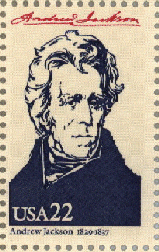
During Andrew Jackson's presidency the first really well organized political parties came into existence. The Democratic Party, with Jackson himself as the rallying point, brought about radical changes, including a presidency that for the first time threatened to overshadow Congress.
Historical Background The American Whig Party 1834-1856 - Hal Morris 1801-1900 Essays American History From Revolution To Reconstruction and beyond


 .
.