Dumbing Down: Chinese Communists at the Kazakhstan Border
Further on in this post links Wuhan Institute of Virology to the Kazahstan border.
Communist contempt and disregard is noted. From the beginning, what remained esoteric was information about all of the (rest of SARS-CoV-2 [italics]) that remained outside the Homo sapiens host. The current report from Nature fixates on Wuhan, while completely disregarding the Chinese communist expressways that link Mojiang, (source of SARS-CoV-2’s closest relative), Not far from the nasty Kunming Flower and Animal Market, etc., to Wuhan. In addition, no bats were being sold at Huanan Seafood Market, and the report is anal rentitive: it can’t seem to cough up two nucleotide differences to feed to the reader-prisoner, a la Scotland Yard, paranoid that indeed there will be lab manipulations if the information goes public.
16 Sep 2021 Nature.com. ‘Did the Coronavirus Jump From Animals Twice?’
A preliminary analysis of viral genomes suggests the COVID-19 pandemic might have multiple animal origins — but the findings still have to be peer reviewed.

www.nature.com
’....originated in multiple markets in Wuhan....two broad lineages, known as A and B, which have key genetic differences....Huanan Seafood Market in Wuhan, which also sold wild animals....the findings are “consistent with there being at least two introductions of SARS-CoV-2 into the human population,” says David Robertson, a virologist at the University of Glasgow, UK. Lineages A and B are defined by two key nucleotide differences. But some of the earliest genomes have a combination of these differences.
....
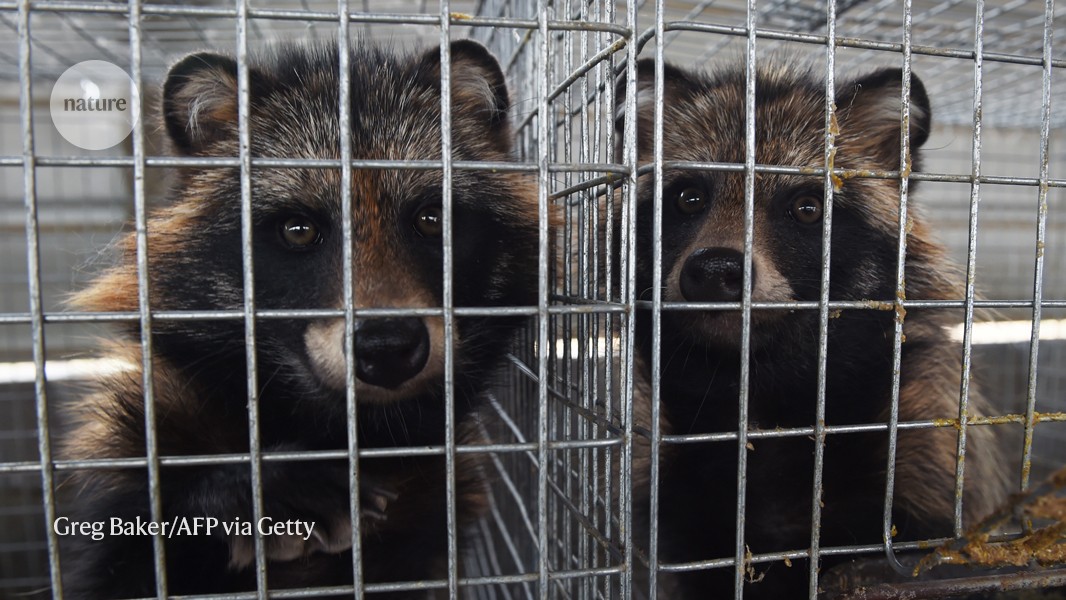
A study published in June found that live animals susceptible to SARS-CoV-2 such as raccoon dogs and mink, were sold in numerous markets in Wuhan....It’s more likely that the pandemic had its origins in the wildlife trade.’
Wuhan Institute of Virology cites this mosquito-pig report:
Vector Competence / Tritaeniorynchus / Pigs
Chittoor virus (CHITV), a mosquito-borne bunyavirus (Orthobunyavirus: Bunyaviridae) isolated in India, has been found to be antigenically close to the Batai virus (BATV), which has a wide distribution across Asia, Europe, and Africa. The latter virus causes influenza-like illness in humans and...

pubmed.ncbi.nlm.nih.gov
The only study that cites the vector competence report, above, is this one:
Feb 2021 Wuhan Institute of Virology
<span><i>Orthobunyaviruses</i> are a group of viruses with significant public and veterinary health importance. These viruses are mainly transmitted through mosquito-, midge-, and tick-vectors, and are endemic to various regions of the world. Ebinur Lake virus (EBIV), a newly identified member...
pubmed.ncbi.nlm.nih.gov