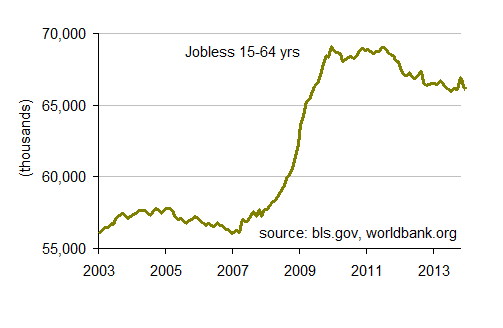
Inexpertly, Okun's Law connects GDP <----> employment; Phillips Law connects employment <----> inflation. In rough round numbers, a 2% increase in employment (-2% UE) correlates with 1% inflation, and 4% GDP growth. The "transmission" is employment, workers working buy more beers at bars, borrow to buy more cars, etc. Which may be why the new Fed Chair candidate emphasizes employment's importance, per Wikipedia. (Variations in Phillips Law could reflect interest rates, and so borrowing rates, b/c borrowing when feeling secure in employment "super-charges" spending, over-and-above income-based spending, a little like adding nitro into an engine.)