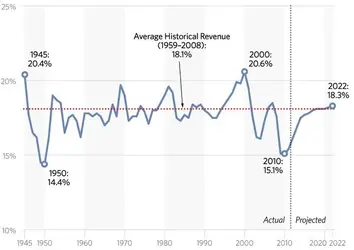
Taxes as a percent of GDP are inversely proportionate to deficits.
In 1981, taxes were 19.5% of GDP. The era of Reagan's triple digit deficts that followed was accompanied by taxes lower than that 19.5%,
and stayed below that 19.5% through Bush Sr.'s presidency and his triple digit deficits.
In Clinton's first year 1993, taxes were 17.5% of GDP. They were higher than that every year of the Clinton presidency,
a presidency accompanied by lower and lower deficits.
In 2001, with the budget balanced, taxes were back at 19.5% of GDP. They were never higher than that through the entire Bush presidency,
the presidency that brought back triple digit deficits.
By 2009, the year of the highest deficit on record, taxes were down to 15.1% of GDP. That is the lowest tax percentage since 1950.
Since then, the tax number has crept up, and the deficit has crept down.
The historical evidence is a strong argument that lower taxes, relative to GDP, are accompanied by higher deficits.
Read it all here:
Historical Federal Receipt and Outlay Summary


 if you get 18% of 120, you're better off than getting 18.5 of 100...tax reform gets us there, smart tax reform.