My parents are nature-loving atheists. Same with my brother and sister. As an 8 day old was baptized to appease my Catholic grandfather. I was the first of his 23 grandchildren. From the earliest age I enjoyed going to Mass with grandparents. I couldn't understand the litergy, but I remember the bells and singing and feeling cleansed.
I was re-inspired by the Catholic thing at my grandfather's funeral. Actually started going to my local parish. Found out later that my two cousins who died in a plane crash in 1981 were baptized there. Went through 6 months of classes to become confirmed.
I wouldn't say I've abandoned Catholicism. It has a lot of embedded paganism. My Catholic experiences are a plus to what I am now.
I hitchhiked about 5,000 miles total in my 20's. Did quite a bit of rock climbing and alpinism. Did radical forest activism. Lived in a teepee and yurt for 4 years. Backpacked 400+ miles September 2014. All these things have deepened my connection to the heavens and earth.
I'm a Christian who feels even closer to God when I'm in His creation like on a mountain, in the woods, or on the sea. But, Catholicism ISN'T Christian at all. It is as you defined, complete paganism.
As a spiritual atheist the feelings you experience are no different to mine or anyone else's.
The only difference is that you choose to ascribe them to your religion whereas I am more pragmatic and understand that they are normal, measurable trance state of mind that is common in mammals.
Not sure what you mean by spiritual atheism. Is that like Carl Sagan's sense of awe about the rarity and unlikelihood of our existence? Essentially positivism with a touch of amazement.
Certainly you could use the term "sense of awe" to describe spirituality since it is an ill defined term to begin with and that is not helped by having religions imposing their own definitions on the term too.
I prefer a more prosaic and pragmatic approach.
Scientists have measured the brain waves of people who are deeply spiritual and who claim to be able to reach a "spiritual state".
Brain Waves During Meditation - Crystalinks
The brain is an electrochemical organ (machine) using electromagnetic energy to function. Electrical activity emanating from the brain is displayed in the form of brainwaves. They range from the high amplitude, low frequency delta to the low amplitude, high frequency beta. During
meditation brain waves alter.
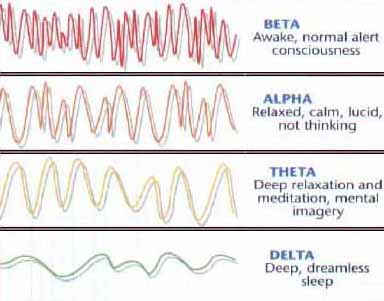
The four categories of these brainwaves:
Beta Waves or beta rhythm, is the term used to designate the frequency range of human brain activity between 12 and 30 Hz (12 to 30 transitions or cycles per second). They awaking awareness, extroversion, concentration, logical thinking, active conversation.
Alpha Waves are electromagnetic oscillations in the frequency range of 8Ð12 Hz arising from synchronous and coherent (in phase / constructive) electrical activity of thalamic pacemaker cells in humans. They are also called Berger's wave in memory of the founder of EEG.
They place the brain in states of relaxation times, non-arousal, meditation, hypnosis
Theta Waves is an oscillatory pattern in EEG signals recorded either from inside the brain or from electrodes glued to the scalp. They are found in
day dreaming, dreaming, creativity, meditation, paranormal phenomena, out of body experiences, ESP, shamanic journeys.
A person driving on a freeway, who discovers that they can't recall the last five miles, is often in a theta state - induced by the process of freeway driving. This can also occur in the shower or tub or even while shaving or brushing your hair. It is a state where tasks become so automatic that you can mentally disengage from them. The ideation that can take place during the theta state is often free flow and occurs without censorship or guilt. It is typically a very positive mental state.
Delta Waves are high amplitude brain waves with a frequency of oscillation between 0Ð4 hertz. Delta waves, like other brain waves, are recorded with an electroencephalogram (EEG) and are usually associated with the deepest stages of sleep (3 and 4 NREM), also known as slow-wave sleep (SWS), and aid in characterizing the depth of sleep.
Meditation increases activity in the left prefrontal cortex. The changes are stable over time. If you stop meditating for a while, the effect lingers.
You don't need any religion to reach this state of mind. In fact you don't even need to be human to experience theta waves.
Theta rhythm - Wikipedia, the free encyclopedia
Humans and other primates[edit]
In animals, EEG signals are usually recorded using electrodes implanted in the brain; the majority of theta studies have involved electrodes implanted in the hippocampus. In humans, because invasive studies are not ethically permissible except in some neurological patients, by far the largest number of EEG studies have been conducted using electrodes glued to the scalp. The signals picked up by scalp electrodes are comparatively small and diffuse, and arise almost entirely from the cerebral cortex—the hippocampus is too small and too deeply buried to generate recognizable scalp EEG signals. Human EEG recordings show clear theta rhythmicity in some situations, but because of the technical difficulties, it has been difficult to tell whether these signals have any relationship with the hippocampal theta signals recorded from other species.
In contrast to the situation in rats, where long periods of theta oscillations are easily observed using electrodes implanted at many sites, theta has been difficult to pin down in primates, even when intracortical electrodes have been available. Green and Arduini (
1954), in their pioneering study of theta rhythms, reported only brief bursts of irregular theta in monkeys. Other investigators have reported similar results, although Stewart and Fox (
1991) described a clear 7–9 Hz theta rhythm in the hippocampus of urethane-anesthetized macaques and squirrel monkeys, resembling the type 2 theta observed in urethane-anesthetized rats.
Most of the available information on human hippocampal theta comes from a few small studies of epileptic patients with intracranially implanted electrodes used as part of a treatment plan. In the largest and most systematic of these studies, Cantero
et al. (
2003) found that oscillations in the 4–7 Hz frequency range could be recorded from both the hippocampus and neocortex. The hippocampal oscillations were associated with REM sleep and the transition from sleep to waking, and came in brief bursts, usually less than a second long. Cortical theta oscillations were observed during the transition from sleep and during quiet wakefulness; however, the authors were unable to find any correlation between hippocampal and cortical theta waves, and concluded that the two processes are probably controlled by independent mechanisms.
In essence the ability to experience "spirituality" is common to everyone, not just those who hold religious beliefs, because it is a naturally occurring state of mind.
Religion has attempted to use this "spirituality" as "evidence" of the "existence" of their deities. However there is no "evidence" that there is any deity out there. Instead what we have is probably another aspect of the brain that requires further study to determine what purpose it serves.
As an atheist I can reach this mental state quite easily without any religious dogma and yes, I find that it comes over quite strongly when I am closest to large bodies of water. What that means I don't know either.
However when others recount similar experiences that tells me that I am experiencing the same things that they are but I just don't read into it the same things that they do.
Does that help clear this up at all?