In early 2000, glaciers in the tropics covered a total of approximately 1,900km², with 98% in the Andes between Colombia and Bolivia, predominantly in Peru (70%) and Bolivia (20%). Despite their small global volume – equivalent to less than 0.3mm of sea level rise – these glaciers are important for two reasons. First, they are excellent indicators of climate trends and variability – definitely the best indicator in the tropical zone. Second, they play a significant role in hydrology and water resources such as fresh water, power generation and irrigation. My main contribution since 1991 has consisted in achieving a network of permanently monitored glaciers, through which the evolution of these glaciers is analysed and the future of the water resource modelled. This effort was conducted by the French research institution
IRD, and a small team of French researchers within the framework of a straight cooperation with several Andean institutions in each country.
Tropical glaciers have experienced a strong decline in recent decades. However, going back several centuries and reconstructing the entire process of glacier shrinkage from the “little ice age” - the last glacial maximum occurred in this part of the Andes between the 17th and 18th centuries – Andean glaciers began to retreat around AD1730-50. However, glacier depletion has increased dramatically in the second half of the 20th century, especially after 1976. We can claim that in recent decades the glacier recession moved at a rate unprecedented for at least the last three centuries – in 30 years, they have lost between 35% and 50% of their area and volume.
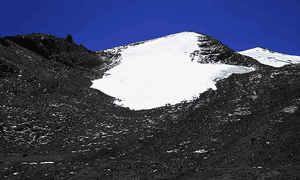
Small glaciers are the most vulnerable, and are disappearing. The consistency of this signal back from Colombia to Bolivia shows the homogeneity of the change in these low latitude mountains. The atmospheric warming is the factor that can best explain this consistency, up to ~0.7°C since 1950 and more marked since 1976, while the trend in precipitation is much less homogeneous over this area and is affected by a significant decadal variability. Regionally, the tropical Pacific – through the ENSO (El Niño Southern Oscillation) and the PDO (Pacific Decadal Oscillation) modes – controls most of this variability. The significant increase in the frequency and the intensity of warm El Niño events between 1976 and 2007 were partly responsible for the glacier depletion process, combined with global warming.
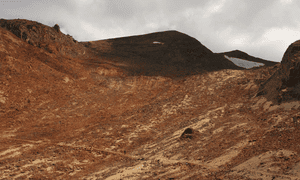 Global warming spells disaster for tropical Andes glaciers
There are villages in the Andes that have been abandoned as their summer source of water has disappeared.
Global warming spells disaster for tropical Andes glaciers
There are villages in the Andes that have been abandoned as their summer source of water has disappeared.


