Ken Blackwell hurried up and certified the electoral votes for Bush. Kerry wanted a recount but, oops, sorry, but Ohio law says once the votes are certified, there's nothing the loser can do about it.
This is why Ken Blackwell HURRIED UP and certified the votes for Bush.
During the
2004 United States elections, concerns were raised about various aspects of the voting process, including whether voting had been made accessible to all those entitled to vote, whether ineligible voters were registered, whether voters were registered multiple times, and whether the votes cast had been correctly counted. More controversial was the charge that these issues might have affected the reported outcome of the
presidential election, in which the incumbent,
Republican President George W. Bush, defeated the
Democratic challenger,
Senator John Kerry. Despite the existing controversies, Kerry conceded the election the following day on November 3.
There were also complaints about the rejection of registrations by government agencies. College students encountered difficulties in registering where they attended school.
[2] Some officials rejected voter registration forms on grounds that were contested, such as a failure to use paper of a particular weight (in
Ohio)
[3][4] or a failure to check a box on the form (
Florida).
[5]
Aside from such official actions, there were disputes about other voter registration activities. In
Nevada and
Oregon, a company hired by the
Republican National Committee solicited voter registration forms, but was accused of filing only the Republicans' forms and shredding those completed by Democrats.
State efforts to
purge voter rolls have led to disputes, notably in Florida. Before the
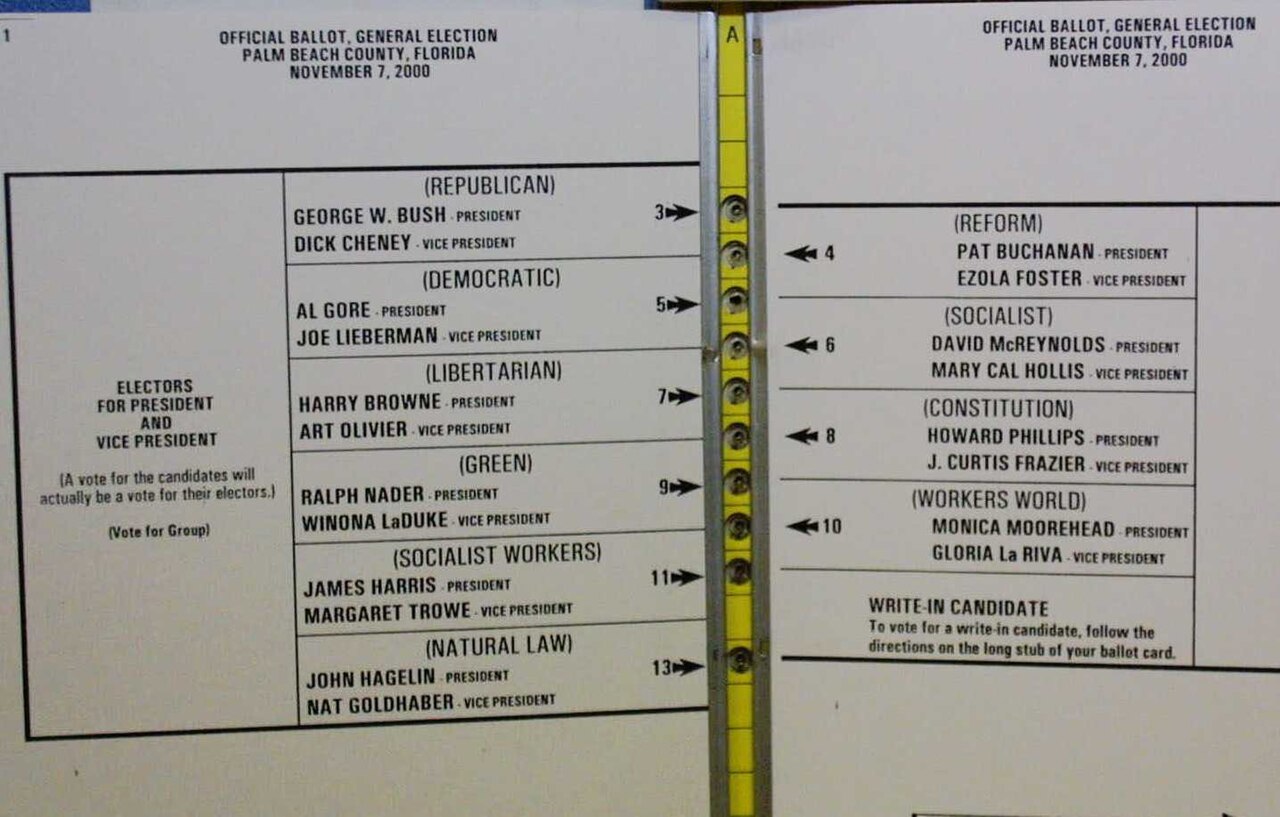
2000 election, Florida officials purged approximately 100,000 registered voters on the grounds that they were convicted felons (and therefore ineligible to vote under Florida law) or dead.
[14] Many of those whose names were purged were "false positives" (not actually felons).
Dirty tricks occurred across the state, including phony letters from Boards of Elections telling people that their registration through some Democratic activist groups were invalid and that Kerry voters were to report on Wednesday because of massive voter turnout. Phone calls to voters giving them erroneous polling information were also common.
[20]
In many places, some voters had to wait several hours to vote. Ohio voters, in particular, were plagued by this issue. A study conducted by the
Democratic National Committee in the summer of 2005 found that long lines forced three percent of the state's registered voters to abstain.
Among the factors thought to be at work were: the general increase in voter turnout; a particular increase in first-time voters whose processing required more time; and confusion about the providing of provisional ballots, which many states had never used before.
Distribution of voting machines proved to be a problem in some districts. In Ohio, some precincts had too few machines, causing long waiting times, while others had many machines per registered voters. Officials cited a late rush of registrations after voting machines had already been allocated as one source of long lines.
In 2004, the punch-card ballots were still widely used in some states.
[33] For example, most Ohio voters used punch-card ballots,
[34] and more than 90,000 ballots cast in Ohio were treated as not including a vote for President; this "undervote" could arise because the voter chose not to cast a vote or because of a malfunction of the punch-card system.
[
In 2004, there was contention over the standards for determining whether to count provisional ballots. In Ohio, Secretary of State
Ken Blackwell ruled that Ohio would not count provisional ballots
Discrepancies existed between early exit poll information and the officially reported results. These discrepancies led some, including
Tony Blair,
Prime Minister of the United Kingdom, to conclude that Kerry won the election
Some of the issues described above have created problems for voters generally. Others, however, by accident or (it is charged) by design, have disproportionately affected racial minorities. For example, the
U.S. Commission on Civil Rights determined that, in Florida in 2000, 54 percent of the ballots discarded as "spoiled" were cast by African Americans
On January 6, 2005, Senator
Barbara Boxer of
California joined
Representative Stephanie Tubbs Jones of
Ohio in filing a congressional objection to the certification of Ohio's
Electoral College votes due to alleged irregularities including disqualification of provisional ballots, alleged misallocation of voting machines, and disproportionally long waits in poor and predominantly African-American communities.