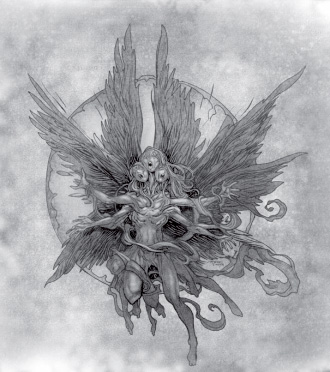
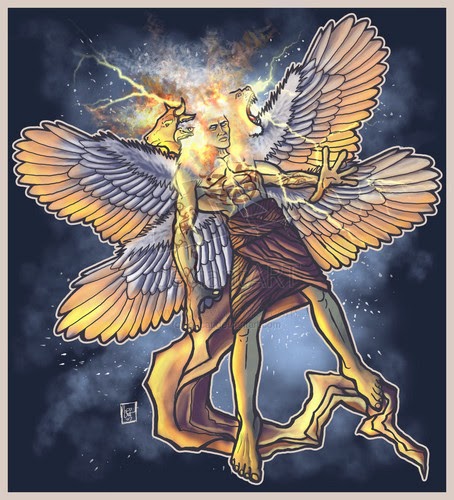
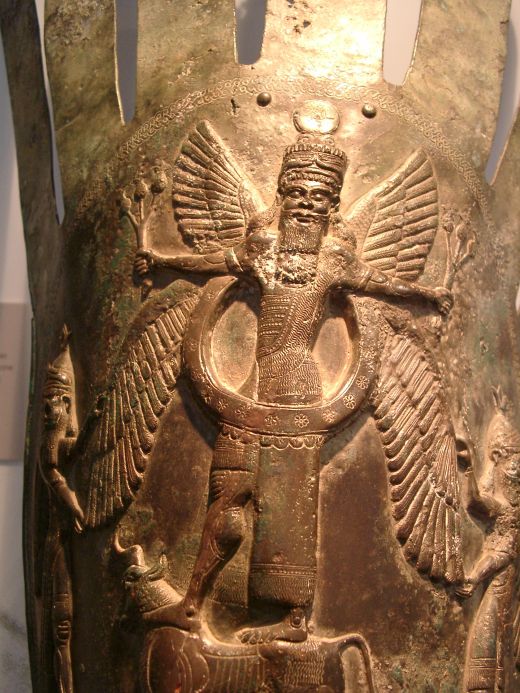
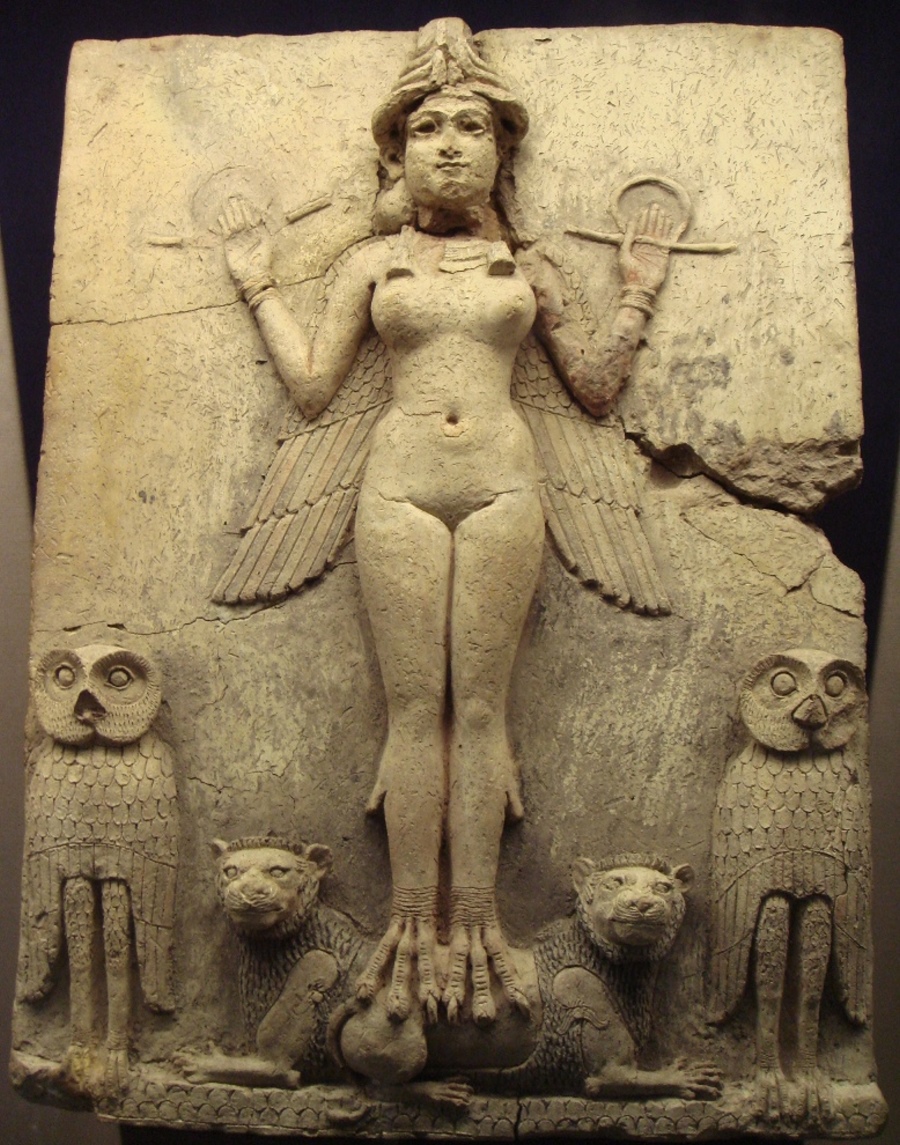
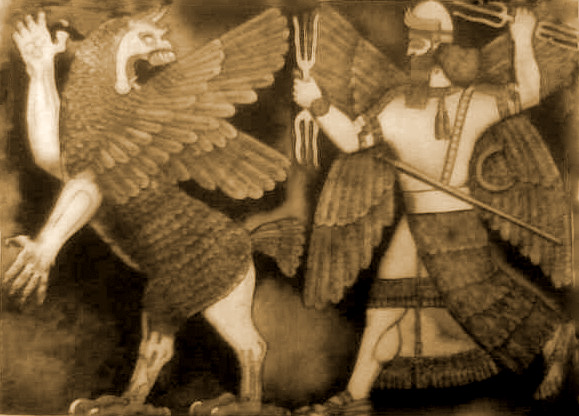
Human looking in other words? Or all beautiful and radiant? Uh no.
When reading Hebrew descriptions of Angels, keep in mind the Hebrew language uses imagery, not abstract ideas which is the basis of English and most other languages.
Radiance: They reside in the presence of God and reflect His radiant glory.
Wings: They go where they are sent instantaneously
Eyes: Their vision is much greater than ours. They see more, they see farther.
The Seraphim are said to be fiery because of their closeness to God. (They are beyond radiant.) The two wings covering their eyes depict that that the glory of God is blinding. The wings covering their feet represent they do not go where their own feet take them, but that they remain with God, or go where He sends them.
Catholic monk way back gave us much of how we think of angels compiling an encyclopedia of sorts about them. This compilation is where the traditional idea originated.
From Catholic Encyclopedia (linked at end.)
"The treatise "De Coelesti Hierarchia", which is ascribed to St. Denis the Areopagite, and which exercised so strong an influence upon the Scholastics,
treats at great length of the hierarchies and orders of the angels. It is generally conceded that this work was not due to St. Denis, but must date some centuries later. Though the doctrine it contains regarding the choirs of angels has been received in the Church with extraordinary unanimity, no proposition touching the angelic hierarchies is binding on our faith. The following passages from St. Gregory the Great (Hom. 34, In Evang.) will give us a clear idea of the view of the Church's doctors on the point:
We know on the authority of Scripture that there are nine orders of angels, viz., Angels, Archangels, Virtues, Powers, Principalities, Dominations, Throne, Cherubim and Seraphim. That there are Angels and Archangels nearly every page of the Bible tell us, and the books of the Prophets talk of Cherubim and Seraphim. St. Paul, too, writing to the Ephesians enumerates four orders when he says: 'above all Principality, and Power, and Virtue, and Domination'; and again, writing to the Colossians he says: 'whether Thrones, or Dominations, or Principalities, or Powers'. If we now join these two lists together we have five Orders, and adding Angels and Archangels, Cherubim and Seraphim, we find nine Orders of Angels.
St. Thomas (Summa Theologica I:108), following St. Denis (De Coelesti Hierarchia, vi, vii), divides the angels into three hierarchies each of which contains three orders. Their proximity to the Supreme Being serves as the basis of this division. In the first hierarchy he places the Seraphim, Cherubim, and Thrones; in the second, the Dominations, Virtues, and Powers; in the third, the Principalities, Archangels, and Angels. The only Scriptural names furnished of individual angels are Raphael, Michael, and Gabriel, names which signify their respective attributes. Apocryphal Jewish books, such as the Book of Enoch, supply those of Uriel and Jeremiel, while many are found in other apocryphal sources, like those Milton names in "Paradise Lost". (On superstitious use of such names, see above). "
CATHOLIC ENCYCLOPEDIA: Angels