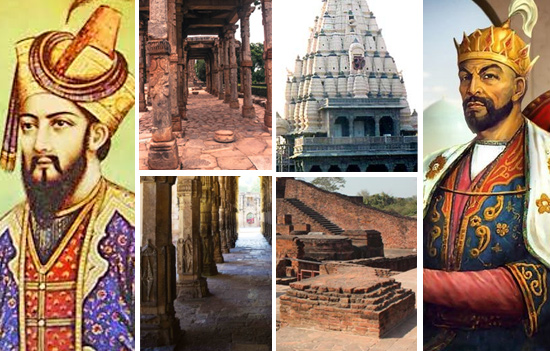
Arab Imperialism Unmasked: The Hypocrisy Behind the Anti-Israel Agenda

Do you think the term 'colonialism' applies to Arab conquests?

  • Yes

    Votes: 11 78.6%
  • No

    Votes: 2 14.3%
  • Unsure

    Votes: 1 7.1%

  • Total voters
    14
George Monastiriakos: The Middle East was shaped by Arab colonialism,
but some minorities survive despite the odds

Have you ever considered the impact of Arab colonialism on the Middle East and North Africa?

This insightful article by George Monastiriakos reveals the often-ignored history of how Arab imperialism shaped the region. Despite centuries of dominance, some resilient minority groups have managed to survive against all odds.

Prepare to be outraged by the historical double standards that have obscured the true diversity of the MENA region. It’s time to acknowledge the enduring presence and contributions of these minority communities.


Have you ever considered the impact of Arab colonialism on the Middle East and North Africa?​
Having purportedly studied history, he really should know better than to say things like

"A liberal, and democratic Jewish State exists despite endless efforts to eradicate the difference it represents, and the threat that diversity poses, to Arab hegemony."

It's far from liberal and far from democratic, if he hasn't grasped that then he's a superficial student of history. There are reams of documentation that undermine these claims of "liberal" and "democratic", he has no excuse. He writes:

Despite millennia of exile, statelessness, forced conversions, pogroms, genocide, and the 1948 Arab invasion, the Jews finally earned a tiny country of their own. Where they can pass their religion (Judaism) and language (Hebrew) on to their children free from the bullying they endured at the hands of their antisemitic oppressors in Europe and the MENA.

What is this "Arab" invasion? The British invaded Palestine after evicting the Ottomans (with lots of help from Arabs) then the British mandate ended. It was the Zionists who invaded Palestine right after the end of the British mandate, by carving over 50% of the territory, declaring independence and installing a Jew-supremacist government over a largely Arab population and then expelling 80% of said Arab population.

Here's what the Arab League wrote concerning their actions in 1948, note the word "invasion" does not appear (it is a characterization used to support Zionist "interpretations")

4. When the war ended Great Britain did not fulfil its pledges. Instead Palestine was placed under a Mandate entrusted to Great Britain. The terms of the Mandate provided for the safeguarding of the interests of the inhabitants of Palestine and their preparation for eventual independence to which they were entitled by virtue of the Covenant of the League of Nations which admitted that the inhabitants of Palestine were fit for it.

and

5. Great Britain however placed Palestine in such a position as made it possible for the Jews to flood the country with waves of immigrants and factually helped their establishment on the soil despite the saturation of the land with its population which did exceed the absorptive capacity of the country economically and otherwise, thereby neglecting the provided for interests and the rights of its lawful inhabitants. The Arabs used all means at all times to express their deep concern and anxiety at such a policy which they felt was undermining their future and their very existence. But at all such times they were met with utter disregard and harsh treatment such as jail, exile, etc.

then

10. Now that the Mandate over Palestine has come to an end, leaving no legally constituted authority behind in order to administer law and order in the country and afford the necessary and adequate protection to life and property, the Arab States declare as follows:

and

(a) The right to set up a Government in Palestine pertains to its inhabitants under the principles of self-determination recognized by the Covenant of the League of Nations as well as the United Nations Charter;

(b) Peace and order have been completely upset in Palestine, and, in consequence of Jewish aggression, approximately over a quarter of a million of the Arab population have been compelled to leave their homes and emigrate to neighbouring Arab countries. The prevailing events in Palestine exposed the concealed aggressive intentions of the Zionists and their imperialistic motives, as clearly shown in their acts committed upon those peaceful Arabs and villagers of Deer Yasheen, Tiberias, and other places, as well as by their encroachment upon the building and bodies of the inviolable consular codes, manifested by their attack upon the Consulate in Jerusalem.

(c) The Mandatory has already announced that on the termination of the Mandate it will no longer be responsible for the maintenance of law and order in Palestine except in the camps and areas actually occupied by its forces, and only to the extent necessary for the security of those forces and their withdrawal. This leaves Palestine absolutely without any administrative authority entitled to maintain, and capable of maintaining, a machinery of administration of the country adequate for the purpose of ensuring due protection of life and property. There is further the threat that this lawlessness may spread to the neighbouring Arab States where feeling is already very tense on account of the prevailing conditions in Palestine. The respective members of the Arab League, and as Members of the United Nations at the same time, feel gravely perturbed and deeply concerned over this situation.

These states acted to thwart the long planned actual invasion, an invasion by foreign Jews, Zionism and fanatical Jewish nationalism.

The entire telegram can be read here.

I don't think the lies that I see about Israel and the history of Palestine since 1900, are matched in any other era or topic.
 
Last edited:
Having purportedly studied history, he really should know better than to say things like


It's far from liberal and far from democratic, if he hasn't grasped that then he's a superficial student of history. There are reams of documentation that undermine these claims of "liberal" and "democratic", he has no excuse. He writes:


What is this "Arab" invasion? The British invaded Palestine after evicting the Ottomans (with lots of help from Arabs) then the British mandate ended. It was the Zionists who invaded Palestine right after the end of the British mandate, by carving over 50% of the territory, declaring independence and installing a Jew-supremacist government over a largely Arab population and then expelling 80% of said Arab population.

Here's what the Arab League wrote concerning their actions in 1948, note the word "invasion" does not appear (it is a characterization used to support Zionist "interpretations")


and


then


and


These states acted to thwart the long planned actual invasion, an invasion by foreign Jews, Zionism and fanatical Jewish nationalism.

The entire telegram can be read here.

I don't think the lies that I see about Israel and the history of Palestine since 1900, are matched in any other era or topic.

"Purportedly studied" what?! Did you graduate high-school?
Because you seem to get confused trying to showoff
using more words than you understand.

A state's form, has nothing to do with history,
Israel exceeds all the countries in the region,
by every OECD category - that's just fact.


However it's interesting that all your "history" starts at 1948,
because apparently you want to avoid addressing anything
about actual history of Arab imperialism, in the Levant,
North Africa and even India:

 
Last edited:
However it's interesting that all your "history" starts at 1948,
because apparently you want to avoid discussing
the bloody history of Arab imperialism.
Your questions represent the diversionary tactics favored by experienced Zionist apologists. Those tactics chiefly focus on looking into the past to identify some sinister episode that can then be massaged and masquerade as justifications for the current state of Israel and Palestine.

This is the victim mantra, backed up by the Holocaust (a by product of European Christian civilization, not Arabs) it is repeated at every opportunity in the hope that it will nullify the prospect of anyone ever questioning a Zionist. It is designed to discourage probing questions and instead predispose the listener into a false sense of trust, where Zionists can blame everyone but themselves and we must never doubt them.

"Well you can't ask him that, you know, he's Jewish, you know, the Holocaust and all that, so don't be rude, that's not a nice question to ask a Jew after all they've been through" heard it a million times when discussing the state of Israel.

This is why you post endless attempts to create more diversions, today it's "Arab Imperialism" and tomorrow it will be "Arab Fascism" and the next day some other irrelevant sideshow designed to take the spotlight off the elephant in the room - The Zionist monstrosity named Israel.
 
What is the root cause
of all conflicts in the Middle East?


What is the root cause
of all conflicts in the Middle East?

Yes, I see, I do see. The asymmetry is ever present though, such questions as "How does firing a rocket into Israel help the Palestinians in Gaza" are instructive, but it is the questions they dare not ask that we should perhaps talk about.

There are now official and weighty opinions expressed by the ICJ on the gross illegality of Israel's occupation, there are soon to be arrest warrants issued for Nazinyahu and Gallant, the UK refuses to question the findings of the ICC, the following states have recently recognized the state of Palestine: Armenia, Slovenia, Ireland, Norway, Spain, Bahamas, Trinidad, Tobago, Jamaica, Barbados. The US oil tanker Overseas Santorini cannot find a port to dock in because it carries fuel for Israeli warplanes and no EU state wants to be complicit in the (now HUGE) massacres taking place in Gaza, the UK is considering a cessation of weapons and parts supplied to Israel.

Would any of these recent changes have happened if the Palestinians and Hamas and Hezbollah and the Houthis had remained passive and not fired a single projectile?

The question every Zionist should be asked is why did it take all of this death and destruction to get this very basic progress? the answer is US hegemony, US submissiveness to Zionism and the every valuable UN veto.
 
Yes, I see, I do see. The asymmetry is ever present though, such questions as "How does firing a rocket into Israel help the Palestinians in Gaza" are instructive, but it is the questions they dare not ask that we should perhaps talk about.

There are now official and weighty opinions expressed by the ICJ on the gross illegality of Israel's occupation, there are soon to be arrest warrants issued for Nazinyahu and Gallant, the UK refuses to question the findings of the ICC, the following states have recently recognized the state of Palestine: Armenia, Slovenia, Ireland, Norway, Spain, Bahamas, Trinidad, Tobago, Jamaica, Barbados. The US oil tanker Overseas Santorini cannot find a port to dock in because it carries fuel for Israeli warplanes and no EU state wants to be complicit in the (now HUGE) massacres taking place in Gaza, the UK is considering a cessation of weapons and parts supplied to Israel.

Would any of these recent changes have happened if the Palestinians and Hamas and Hezbollah and the Houthis had remained passive and not fired a single projectile?

The question every Zionist should be asked is why did it take all of this death and destruction to get this very basic progress? the answer is US hegemony, US submissiveness to Zionism and the every valuable UN veto.

And for that opinion, they needed a Lebanese judge?
That's exactly the hypocrisy of Arab imperialism.

Now all your mental gymnastic to compensate for that, only contradict the premise, admitting that Israel's re-constitution, and any specific detail of her conduct are removed from the cause of issuing such opinions. Raising a rather bigger question about the conduct of ICJ, not only being politicized, but the connection of compromised judges with Hamas, and other militant arms of Arab imperialism.

Therefore it's not only about Israel, which is why she must withstand the bullying.
Because if Arab imperialists turn international law into a populist shell of an
argument of power, then it means all other minorities have no change for
independence from the yoke of Arab imperialism in the MENA region.
And that means - there's no justice.

But that's not the case of course,
humanity won't submit to Islamism,
for a permission to do what's morally just.
Which is exactly why Israel can only win,
as the bridge without which the polarities of the world,
those clashing civilizations cannot essentially communicate.
Even atheists understand that - you cannot translate that with China.


Unveiling the History of Arab Imperialism in India

Have you ever delved into the brutal history of Arab imperialism in India?
This compelling article uncovers the violent and oppressive tactics used by Islamic rulers to dominate the region, challenging the sanitized versions often presented in mainstream narratives.

This eye-opening read will make you question the historical double standards and the true nature of imperialism in the region.

Major Gaurav Arya ROASTS Rashida Tlaib

This fresh episode of The Chanakya Dialogues,
unfolds the Rashida Tlaib-Hamas link.

During the US visit, Israeli PM Benjamin Netanyahu addressed the US Congress where he gave a scathing speech. While Bibi was addressing, Rashida Tlaib, a vocal critic of Israel's actions in Gaza, held up a placard reading 'War criminal'.

Calling Rashida a traitor, Major says that she should be in prison as she is a fraud. Going further, Major unfolds her links with Hamas as reported by the canary mission. She belongs to Gaza and not the US, adds Major Gaurav Arya.

Watch the full video to find out more and ask your questions...

 
Whats your point? there is slavery all over the world unfortunately including in the UK where i live, over the years there have been many cases.

Notice how easily and without hesitation,
will Hamas supporters justify slavery.

And that's what they're all about.
So much for "Free Palestine"...

 
Last edited:
Notice how easily and without hesitation,
will Hamas supporters justify slavery.

And that's what they're all about.
So much for "Free Palestine"...


Don't put words in my mouth, i don't support slavery i am giving you the facts.
 

Islamic and Arab Imperialism and Irredentism is driving the conflict between the river and the sea

The prevailing paradigm concerning the conflict over the land from the Jordan to the Mediterranean runs roughly as follows. Israel is the last manifestation of Western imperialism and colonialism, the most pernicious and pervasive imperialism the world has ever known, something Western democracies renounced after World War II. They came in the 20th century, displaced the natives and stole their land. Palestinian violence against Israelis is fully justified in response to this terrible offense.

Michael Merriman-Lotze articulates it clearly in comparing the violence that comes from the Israeli and the Arab side:

in short it is my opinion that Israeli violence is the violence that must be exercised to maintain a neo-colonial military occupation and apartheid-like inequality. Palestinian violence is the inevitable response to that occupation and apartheid-like inequality. Violence therefore will only end when the occupation and Israeli apartheid end.

Although I think this narrative, and the justification it gives to some otherwise unimaginable behavior, is mistaken, both empirically and morally, I think it has every right to be articulated in the public sphere and taken seriously. I don’t, however, think it’s appropriate for this point of view to demand from its audience that they not familiarise themselves with alternative analyses. Here is my serious response.

Consider the imperial-colonial paradigm and the insight it offers us in understanding how imperial and colonial impulses have contributed to this enduring conflict. There is no question that the thirst for dominion and supremacy play a key role in many wars, usually resolved by a battle in which one side destroys the other’s military and establishes its dominion. The pattern of hardened warriors coming from the margins of a society, committed to a supra-moral solidarity (my side right or wrong), defeating an empire gone soft with success, becoming in a few generations soft in turn, and victim to another hungry tribe, inspired the social historian Ibn Khaldoun, to take it as a law of political behavior.

But empires are not merely militarily superior, they have a cultural force that is best observed in the colonial aspect of their activities, their day-to-day superiority over their conquered peoples. When Western progressives oppose ā€˜colonial imperialism’ they oppose cultures whose sense of superiority over others is so great that they have the right to subject them and exploit them under threat of destroying them. And as any progressive can tell you, these are things we categorically reject.
But were progressive anti-imperialists to acknowledge that their (ā€˜Western’) culture is – so far – the only imperial culture to renounce the right of dominion, and to consider that observation’s implications, they would realise a fundamental conceptual error: in renouncing dominion, the West (at the height of its military hegemony), rejected an international norm that had governed international culture the world over for millennia. Thus, exotic ā€˜others’ like the populations and cultures of the Orient, have always, and still play by la raison du plus fort est toujours la meilleure. Rule or be ruled. Do onto others before they do onto you.

3198787074.jpg

ARAB-MUSLIM IMPERIAL-COLONIALISM

However, thinking that the West is the only imperial force worth discussing (and condemning), progressive historians have a marked tendency to ignore the millennium and a half-long history of Islamic and Arab imperialism. And yet, that is precisely the path of thought and analysis that leads to a progressive resolution to the profound conflict.

Of all the ancient empires that rose and fell, the most enduring was the last, the monotheistic empire of Islam. In Muhammad’s day, Arabs were warrior tribes, primarily based in the Saudi peninsula. And yet, within a century of his teachings, Islam had spread and covered the area from Iran to Spain. For both extent and durability, it was the most stunning imperial conquest in the history of the world.

One of the most important indicators of the penetration of a conquest concerns its impact on language. Take England. When Angles and Saxons invaded in the 6th and 7th centuries, they chased out the Celtic inhabitants and replaced their tongue with a Germanic one (Anglo-Saxon). When Scandinavians invaded in the 9th-11th centuries, they had limited impact on the English tongue. When post-millennial Europeanised Normans invaded in 1066, the language war between their aristocratic French and native commoner English went on for centuries, eventually producing a marriage of tongues that made English one of the richest languages known.

In the case of the two extreme points of Muslim conquest, Arabic did not dominate. Shi’i Iran kept its language and much of its culture; and in Spain the conquest was turned around beginning in the 11th century, leaving a limited mark on the language of the natives. But from Iraq to Morocco something much more colonial and invasive occurred. Arabs came in as victorious Muslims, and dominated so thoroughly every aspect of this vast swath of cultures and languages that their language (and many mores) dominated everywhere, largely suppressing and replacing almost all the local ones (cf. Berbers).

I note this because it’s important to understand the remarkable continuity between this conquest and the Arab world today. Indeed, the similarity between the attitudes of Arabs in modern times, and in the early Middle Ages are remarkable on key points:

  1. Tribal loyalties: the clan structure has shown great durability in Arab culture: us-them loyalties (my side right or wrong), self-help justice, vendettas.
  2. Importance of Warrior Honor: one is not a man without killing another man, inflicting humiliation a source of honor, shame is social death, blackened honor is bleached in blood.
  3. Alpha Male dominance: gender roles are governed by the male need to assert honor by controlling the sexuality of his women. According to some readings, Muhammad opposed honor-killings, and yet they prevail in most Arab and Muslim cultures (Pakistan, Afghanistan) today.
  4. Strong horse politics: power and the ability to instill fear and inspire loyalty with violence are coin of the realm. Power relations constantly disrupted by power-challenges and vendettas.
  5. Triumphalist Religiosity: a form of religious belief that insists on public displays of its superiority, it’s honor, over all other religions. Triumphalists feel the need for public signs of respect for their superiority over others. Right up to Westphalia (1648), Christian triumphalism had legitimated wars, including on civilians. The US constitution constitutes the first time in the history of Christianity, that the winners chose tolerance.
  6. Monotheistic Imperialism: Triumphalist religiosity is a widespread phenomenon among the nations. Certainly, the Greeks had no doubt of their cultural superiority and expected everyone to acknowledge it in the places they conquered. But monotheism takes imperialism to new heights, with its political formula ā€˜One God, one ruler, one faith,’ and its doctrinal claims to a monopoly on salvation for all mankind.
The unimaginable success of the imperial expansion of the first century of Islam fed this triumphalist strain among followers of the Prophet. It led to the division of the world into dar al Islam and dar al Harb: where Muslims rule is the realm of submission, where they do not, is the realm of the sword where infidels who have yet to submit to Islam are harbi – destined to the sword.

Read more -​

 
15th post

The Legacy of the Arab Slave Trade

Did you know that the Arab slave trade has left a lasting legacy that continues to affect millions today, including those in Hamas ruled in Gaza.

The Arab slave trade, which began centuries before the transatlantic slave trade, was responsible for the forced migration and enslavement of millions of Africans. This dark chapter of history has left deep scars, not only in Africa but also in the Middle East.

  • Fact 1: The Arab slave trade spanned over a millennium, with an estimated 17 million Africans enslaved and transported across the Arab world.
  • Fact 2: The legacy of this trade is still evident today, with discriminatory practices and social hierarchies persisting in various Arab countries.


One striking example is the Al Jalla'a district of Gaza, where at least 11,000 Africans live in a neighborhood called ā€œAl Abeed,ā€ which means slaves in Arabic. This name starkly reveals the deep-seated racism driving the Arab-Palestinian agenda today that many prefer to ignore.

How does the historical legacy of the Arab slave trade affect modern-day perceptions of human rights in the Middle East? What does the continued use of names like "Al Abeed" tell us about the real agenda of those who exploit the African American narrative for Arab imperialism?


29 Nigerian Girls Rescued From Domestic Slavery In Lebanon

After months of agitations and negotiation between the Federal government and the Government of Lebanon, about twenty-nine Nigerian girls held captive for forced domestic labour have finally arrived in the country.


Islamic and Arab Imperialism and Irredentism is driving the conflict between the river and the sea

The prevailing paradigm concerning the conflict over the land from the Jordan to the Mediterranean runs roughly as follows. Israel is the last manifestation of Western imperialism and colonialism, the most pernicious and pervasive imperialism the world has ever known, something Western democracies renounced after World War II. They came in the 20th century, displaced the natives and stole their land. Palestinian violence against Israelis is fully justified in response to this terrible offense.

Michael Merriman-Lotze articulates it clearly in comparing the violence that comes from the Israeli and the Arab side:

in short it is my opinion that Israeli violence is the violence that must be exercised to maintain a neo-colonial military occupation and apartheid-like inequality. Palestinian violence is the inevitable response to that occupation and apartheid-like inequality. Violence therefore will only end when the occupation and Israeli apartheid end.

Although I think this narrative, and the justification it gives to some otherwise unimaginable behavior, is mistaken, both empirically and morally, I think it has every right to be articulated in the public sphere and taken seriously. I don’t, however, think it’s appropriate for this point of view to demand from its audience that they not familiarise themselves with alternative analyses. Here is my serious response.

Consider the imperial-colonial paradigm and the insight it offers us in understanding how imperial and colonial impulses have contributed to this enduring conflict. There is no question that the thirst for dominion and supremacy play a key role in many wars, usually resolved by a battle in which one side destroys the other’s military and establishes its dominion. The pattern of hardened warriors coming from the margins of a society, committed to a supra-moral solidarity (my side right or wrong), defeating an empire gone soft with success, becoming in a few generations soft in turn, and victim to another hungry tribe, inspired the social historian Ibn Khaldoun, to take it as a law of political behavior.

But empires are not merely militarily superior, they have a cultural force that is best observed in the colonial aspect of their activities, their day-to-day superiority over their conquered peoples. When Western progressives oppose ā€˜colonial imperialism’ they oppose cultures whose sense of superiority over others is so great that they have the right to subject them and exploit them under threat of destroying them. And as any progressive can tell you, these are things we categorically reject.
But were progressive anti-imperialists to acknowledge that their (ā€˜Western’) culture is – so far – the only imperial culture to renounce the right of dominion, and to consider that observation’s implications, they would realise a fundamental conceptual error: in renouncing dominion, the West (at the height of its military hegemony), rejected an international norm that had governed international culture the world over for millennia. Thus, exotic ā€˜others’ like the populations and cultures of the Orient, have always, and still play by la raison du plus fort est toujours la meilleure. Rule or be ruled. Do onto others before they do onto you.

3198787074.jpg

ARAB-MUSLIM IMPERIAL-COLONIALISM

However, thinking that the West is the only imperial force worth discussing (and condemning), progressive historians have a marked tendency to ignore the millennium and a half-long history of Islamic and Arab imperialism. And yet, that is precisely the path of thought and analysis that leads to a progressive resolution to the profound conflict.

Of all the ancient empires that rose and fell, the most enduring was the last, the monotheistic empire of Islam. In Muhammad’s day, Arabs were warrior tribes, primarily based in the Saudi peninsula. And yet, within a century of his teachings, Islam had spread and covered the area from Iran to Spain. For both extent and durability, it was the most stunning imperial conquest in the history of the world.

One of the most important indicators of the penetration of a conquest concerns its impact on language. Take England. When Angles and Saxons invaded in the 6th and 7th centuries, they chased out the Celtic inhabitants and replaced their tongue with a Germanic one (Anglo-Saxon). When Scandinavians invaded in the 9th-11th centuries, they had limited impact on the English tongue. When post-millennial Europeanised Normans invaded in 1066, the language war between their aristocratic French and native commoner English went on for centuries, eventually producing a marriage of tongues that made English one of the richest languages known.

In the case of the two extreme points of Muslim conquest, Arabic did not dominate. Shi’i Iran kept its language and much of its culture; and in Spain the conquest was turned around beginning in the 11th century, leaving a limited mark on the language of the natives. But from Iraq to Morocco something much more colonial and invasive occurred. Arabs came in as victorious Muslims, and dominated so thoroughly every aspect of this vast swath of cultures and languages that their language (and many mores) dominated everywhere, largely suppressing and replacing almost all the local ones (cf. Berbers).

I note this because it’s important to understand the remarkable continuity between this conquest and the Arab world today. Indeed, the similarity between the attitudes of Arabs in modern times, and in the early Middle Ages are remarkable on key points:

  1. Tribal loyalties: the clan structure has shown great durability in Arab culture: us-them loyalties (my side right or wrong), self-help justice, vendettas.
  2. Importance of Warrior Honor: one is not a man without killing another man, inflicting humiliation a source of honor, shame is social death, blackened honor is bleached in blood.
  3. Alpha Male dominance: gender roles are governed by the male need to assert honor by controlling the sexuality of his women. According to some readings, Muhammad opposed honor-killings, and yet they prevail in most Arab and Muslim cultures (Pakistan, Afghanistan) today.
  4. Strong horse politics: power and the ability to instill fear and inspire loyalty with violence are coin of the realm. Power relations constantly disrupted by power-challenges and vendettas.
  5. Triumphalist Religiosity: a form of religious belief that insists on public displays of its superiority, it’s honor, over all other religions. Triumphalists feel the need for public signs of respect for their superiority over others. Right up to Westphalia (1648), Christian triumphalism had legitimated wars, including on civilians. The US constitution constitutes the first time in the history of Christianity, that the winners chose tolerance.
  6. Monotheistic Imperialism: Triumphalist religiosity is a widespread phenomenon among the nations. Certainly, the Greeks had no doubt of their cultural superiority and expected everyone to acknowledge it in the places they conquered. But monotheism takes imperialism to new heights, with its political formula ā€˜One God, one ruler, one faith,’ and its doctrinal claims to a monopoly on salvation for all mankind.
The unimaginable success of the imperial expansion of the first century of Islam fed this triumphalist strain among followers of the Prophet. It led to the division of the world into dar al Islam and dar al Harb: where Muslims rule is the realm of submission, where they do not, is the realm of the sword where infidels who have yet to submit to Islam are harbi – destined to the sword.

Read more -​


THE ROLE OF ARAB-MUSLIM IMPERIAL-COLONIALISM ON THE CURRENT CONFLICT WITH THE JEWS

The reason why the Arab world, and the Muslim-Arab world in particular, find Israel categorically unacceptable goes back to the doctrine of Dar al Harb, Dar al Islam. The land between the river and sea became a key part of the exploding Arab-Muslim empire – Dar al Islam – in the 7th century. Fast forward some 14 centuries, and the dissolution of the Caliphate in 1924 (the first ā€˜Nakba’) put an end to Dar al Islam formally. In the eyes of the West, Islam, the millennia-long foe, had been put in its place.

But this triumphalist vision of a world ultimately entirely submitted to Allah (through Islam) lived on, taking on a more modern form, more powerful and effective than the Ottoman basket case. Hassan al-Banna formed the Muslim Brotherhood (1927), a multi-generational plan to revive true Islam, fight the forces of secular modernity making inroads in the Arab world whose progress al-Banna saw as a regression to the ā€˜Jahaliyya,’ i.e. the ā€˜Ignorance’ of the pre-Islamic Arab world. He sought a long-term, multi-generational goal of a new salvific and eventually global Caliphate in which Muslims ruled according to Sharia: Where there was Dar al Harb, there shall be Dar al Islam.

For al-Banna, his triumphalist followers and sympathisers, the demotion of Islam in the eyes of the nations that had occurred through the military and cultural success of Western imperial-colonialists, threatened the very religion itself: ā€˜a declaration of war on all shapes of Islam.’ For them, Islam must dominate. Few forces today that seek global hegemony are so open about their imperial ambitions.

In the minds of supremacists like al Banna, therefore, the creation of Israel was a further catastrophe in this long war on Islam, the loss of territory in the heart of what was and should be dar al Islam, and a denial of Muslim imperial claims. The core of the Arab-Muslim irredentist demand that Israel be destroyed, is a direct expression of this imperialist Islam from its first century. Free infidels are anathema to Islam’s triumphalist sovereignty. ā€˜We cannot concede a grain of sand to Jews.’ For Abul A’la al-Maududi, the most systematic thinker of modern Islam explained, Jews must exist in the state of submission. ā€˜The purpose for which the Muslims are required to fight is … to put an end to their sovereignty and supremacy.’[1] To have the dissolution of the Caliphate followed two decades later by a Jewish state in the heart of what should be Dar al Islam was a continuation of the same war ā€˜against all shapes of Islam.’ For triumphalist Muslims like al-Banna, Islam necessitated dominion. Its demotion on the world stage was an existential threat. Hence, losing the battle with the Jews threatened to be an unmitigated disaster, utter humiliation on a global scale in response to which, in complete confidence in their impending victory, the Arab League promised historic massacres. To lose would fatally wound triumphalist Islam’s need for visible dominion. To Muslims such as these, Israel was a blasphemy against the Prophet (PBUH). An intolerable degradation. Another nakba. Indeed, The Muslim Brotherhood, initially a weak movement, only came into its own in the fight against Zionism.[2]

THE NAKBA

This hard zero-sum mentality – if you win (anything) I lose; in order for me to win you must lose (everything) – has characterised one of the dominant currents in Arab attitudes towards Jews in the modern period. It’s not that more egalitarian, mutually respectful relations didn’t exist. The large influx of both Jews and Arabs in the first half of the 20th century, with far greater growth where Jews and Arabs lived together (Haifa) than where Arabs lived alone (and dominant), attests to the possibility of civil, voluntary relations between the two populations.[3] The current situation in Israeli hospitals is a rare case of a large Muslim minority integrated into the workings of professional democratic institutions. Israel has better relations with its Arab-Muslim citizens than any European country currently, despite having twice as large a population as any other democracy.

The Zionists put great importance on that reciprocity, and unlike European imperialism (which they saw themselves as explicitly rejecting), they purchased and worked the land, and played by the prevailing rules rather than conquering and then settling the land of displaced populations. They understood that their ability to live in the (former) Dar al Islam (i.e. among Muslim-majority nations), depended on that civil, demotic model of non-coercive, contractual relations prevailing. Their declaration of independence makes it clear that they operated in the liberal-progressive tradition of egalitarianism and self-determination rather than authoritarian imperialism.

The Great Arab Revolt of 1936-39, in which the Muslim Brotherhood played an important role, asserted the hard zero-sum triumphalist position. People who participated in the assault on both the British imperialists and the Zionists, did so to restore Arab honor. The Peel Commission made a point of asking Arab rioters how come, if things had so dramatically improved since the arrival of the Zionists, were they attacking Jews? Responded one rioter: ā€˜You say we are better off: you say my house has been enriched by the strangers who have entered it. But it is my house, and I did not invite the strangers in, or ask them to enrich it. Better a mat of my own than a shared house.’ In other words, ā€˜I prefer poverty as a member of the dominant group, to sharing in wealth’. One might call it a lose-lose: I can only ā€˜win’ (live in poverty) if you lose.

What we have here is a good example of what, mutatis mutandis, became of the spirit of Muslim imperial-colonialism over the many centuries in the land between the river and the sea. By the later Ottoman period, this was a classic case of so many prime-divider societies where the ruling elites dominate the vast majority of commoners living in poverty, and the backwater of a failing system: Muslim peasants – fellahin – and other commoners were in dire shape, impoverished by natural conditions, Bedouin raids, exploitative absentee landlords, and heavy state taxation, living at the edge of subsistence.

Their condition was far from the glorious triumphalism of their ancestors, but that apparently did not mean they renounced the proud sense of superiority appropriate to the conquest, but now threadbare … A mat of my own. When the Muslim Brotherhood and the Arab Nationalists denounced Western imperial-colonial aggression, they did so accurately: both sides were engaged in la raison du plus fort. But what they opposed to that aggression was their own, robust, millennia-long, imperial-colonialism, the so-called ā€˜resistance’ was imperial competition for dominion.

This framework clarifies the Muslim stakes in Israel’s creation. Nothing could be more catastrophic than the Jews, historically the weakest and most cowardly of the dhimmi, establishing an autonomous state in the heart of (what should be) Dar al Islam. (Scholars of shame-honor cultures note that as long as a humiliating fact [e.g. a wife’s infidelity] isn’t made public, it is bearable.) A Jewish state in Palestine was just such a public announcement of Muslim impotence.

And yet, that is precisely what happened. And the response to the catastrophe was to imprison the refugees from Palestine in ā€˜refugee camps’ (where most still live) and swear eternal enmity to the ā€˜Zionist entity.’ Here one finds the key triumphalist response among Arabs to Israel’s inexplicable and blasphemous success, a response that has dominated Arab leaders with few exceptions, to present: make your own people suffer as a way to promote the war you won’t admit you lost. Hamas explains:

The day the enemies conquer some part of the Muslim land, jihad becomes a personal duty of every Muslim. In the face of the Jewish occupation of Palestine, it is necessary to raise the banner of jihad. This requires the propagation of Islamic consciousness among the masses, locally [in Palestine], in the Arab world and in the Islamic world. It is necessary to instill the spirit of jihad in the nation, engage the enemies and join the ranks of the jihad fighters.

Read more:

Flag-of-Palestine.jpg
 

New Topics

Back
Top Bottom