Of course I did, hence why i asked if you read the link to whar ABC reported, and I questioned you because you seem to leave out the part where ABC said they reengaged their mission?? I did read it, did you not?
ABC were reporting on what a source said, and then on the following line the article says:
"The second strike on the boat has led to criticism from some members of Congress that it may have constituted a war crime. They said there were violations of international law that protect enemy combatants no longer in the fight -- and of the maritime law guiding the rescue of persons shipwrecked at sea."
And how do they know who they were communicating with and the reasons for? If they were shipwrecked, could they not have been calling for help? Because, you know, they were on a damaged boat, and 8 of their buddies were dead? When you say they were trying to salvage the drugs, that is what I'm asking, Is there any proof of that? It cerntainly doesn't make sense, logically? Do you think it makes sense that after they suffered a drone strike which killed 80 percent of them, and damaged their boat, that they were worried about salvaging the drugs and continuing onwards to America?
And we are learning more about these strike. And the fact the administration is trying to distance themselves from it, does not make a good look for your case:
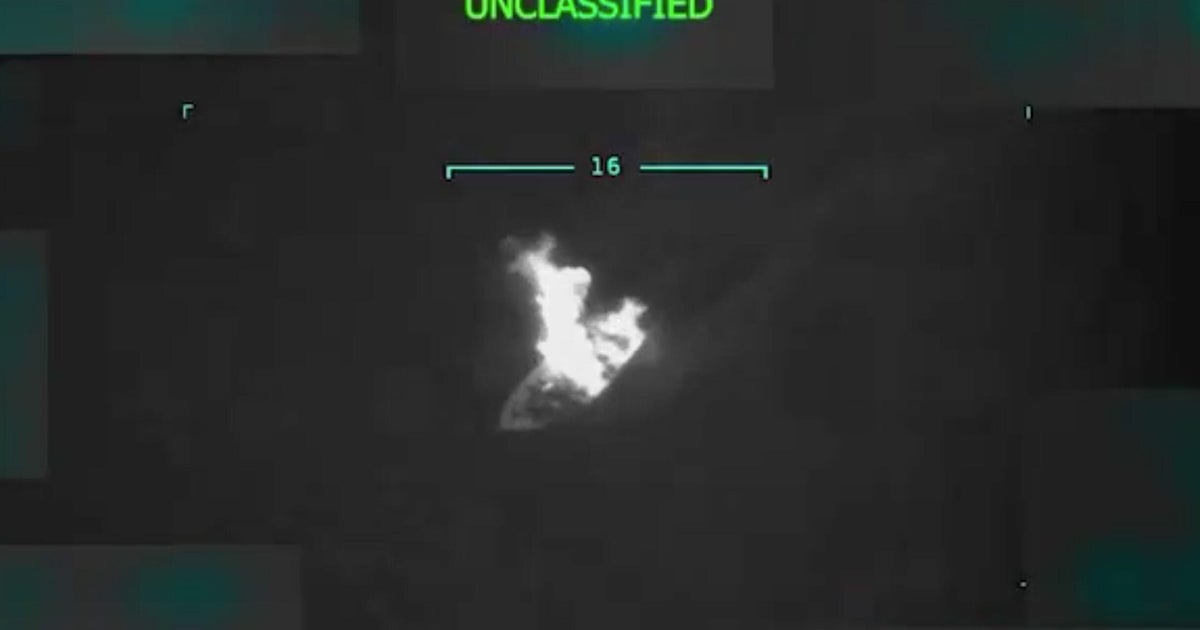
Survivors of Sept. 2 boat strike were waving before second attack, sources say
Two people who survived an early September U.S. attack on an alleged drug boat were waving overhead before they were killed in a now-controversial second strike, according to two sources.www.cbsnews.com
"Two people who survived an early September U.S. attack on an alleged drug boat in the Caribbean were waving overhead before they were killed in a now-controversial second strike, according to two sources familiar with a video that was shown to lawmakers this week."
Himes, a Connecticut Democrat, told reporters after the briefing that "what I saw in that room was one of the most troubling things I've seen in my time in public service."
"You have two individuals in clear distress without any means of locomotion, with a destroyed vessel, who are killed by the United States," Himes said.
Navigation
Install the app
How to install the app on iOS
Follow along with the video below to see how to install our site as a web app on your home screen.
Note: This feature may not be available in some browsers.
More options
Style variation
You are using an out of date browser. It may not display this or other websites correctly.
You should upgrade or use an alternative browser.
You should upgrade or use an alternative browser.
ABC News Confirms September Caribbean Strike by Trump Administration Was Lawful
- Thread starter excalibur
- Start date
Of course I did, hence why i asked if you read the link to whar ABC reported, and I questioned you because you seem to leave out the part where ABC said they reengaged their mission?? I did read it, did you not?
ABC were reporting on what a source said, and then on the following line the article says:
"The second strike on the boat has led to criticism from some members of Congress that it may have constituted a war crime. They said there were violations of international law that protect enemy combatants no longer in the fight -- and of the maritime law guiding the rescue of persons shipwrecked at sea."
And how do they know who they were communicating with and the reasons for? If they were shipwrecked, could they not have been calling for help? Because, you know, they were on a damaged boat, and 8 of their buddies were dead? When you say they were trying to salvage the drugs, that is what I'm asking, Is there any proof of that? It cerntainly doesn't make sense, logically? Do you think it makes sense that after they suffered a drone strike which killed 80 percent of them, and damaged their boat, that they were worried about salvaging the drugs and continuing onwards to America?
And we are learning more about these strike. And the fact the administration is trying to distance themselves from it, does not make a good look for your case:
Survivors of Sept. 2 boat strike were waving before second attack, sources say
Two people who survived an early September U.S. attack on an alleged drug boat were waving overhead before they were killed in a now-controversial second strike, according to two sources.
"Two people who survived an early September U.S. attack on an alleged drug boat in the Caribbean were waving overhead before they were killed in a now-controversial second strike, according to two sources familiar with a video that was shown to lawmakers this week."
Himes, a Connecticut Democrat, told reporters after the briefing that "what I saw in that room was one of the most troubling things I've seen in my time in public service."
"You have two individuals in clear distress without any means of locomotion, with a destroyed vessel, who are killed by the United States," Himes said.

Concerned American
Diamond Member
And ^^^ therein lies your fallacy. The high seas is not the US. I know it torques your democrat butt that you cannot obstruct pro American activities on the high seas, but there it is. Run along noob.It's mostly about the legality surrounding these strikes, and what it can lead to. There is a lot of legal issues with these boat strikes, even disregarding this boat strike that was the double tap.
Your same argument could be used against people on US soil. Would you be happy enough if they were conducting air strikes against buildings/positions on US soil that were believed to be drug related?
RedrickTheCoat
Gold Member
- Sep 13, 2025
- 401
- 239
- 173
Strikes on the high seas still have laws. And the arguments being made to bypass those laws are some of the same arguments that could also technically be used to bypass some of the rules of striking drug cartel terrorists (now that they are defined as terrorists) on US soil.And ^^^ therein lies your fallacy. The high seas is not the US. I know it torques your democrat butt that you cannot obstruct pro American activities on the high seas, but there it is. Run along noob.
Sure, they would have more restrictions to bypass to do that on US soil. But then are you saying, they can bypass laws when you think it's ok? And should laws be something that become subjective to the point that they can just ignore them if they think it shouldn't be the law? And should the determination of the validity of those laws be interpreted by whoever is President?
The facts are:
1. The U.S. has never treated purely criminal drug traffickers as terrorists to justify military force.
2. No U.S. president has used offensive military force against drug criminals without Congressional authorization.
3. The U.S. has never initiated military strikes on non-state actors without claiming an imminent threat or self-defense.
4. It is the first time the U.S. has used lethal force on the high seas against drug traffickers without attempting arrest/interdiction first.
5. It is unprecedented for the U.S. to rely on a newly invented legal category (“narcotics terrorism”) to justify lethal force.
6. It’s the first time the justification used abroad could be directly applied to U.S. soil.
International Law of the SEA:
A state cannot use military force against another state or on the territory of another state except in two circumstances:
- Self-defense against an armed attack (Article 51)
- With explicit U.N. Security Council authorization
On the high seas:
- All states have freedom of navigation.
- A state may only interfere with foreign vessels under very specific conditions (piracy, slavery, stateless vessels, illegal broadcasting).
- Force must be necessary and proportionate, and normally must be preceded by interdiction, boarding, or inspection.
Concerned American
Diamond Member
A lot of BS, with no source. Take it down the road. LOL. Like most of your democrat ilk, you run your mouth about things you have no knowledge of because------TRUMP.Strikes on the high seas still have laws. And the arguments being made to bypass those laws are some of the same arguments that could also technically be used to bypass some of the rules of striking drug cartel terrorists (now that they are defined as terrorists) on US soil.
Sure, they would have more restrictions to bypass to do that on US soil. But then are you saying, they can bypass laws when you think it's ok? And should laws be something that become subjective to the point that they can just ignore them if they think it shouldn't be the law? And should the determination of the validity of those laws be interpreted by whoever is President?
The facts are:
1. The U.S. has never treated purely criminal drug traffickers as terrorists to justify military force.
2. No U.S. president has used offensive military force against drug criminals without Congressional authorization.
3. The U.S. has never initiated military strikes on non-state actors without claiming an imminent threat or self-defense.
4. It is the first time the U.S. has used lethal force on the high seas against drug traffickers without attempting arrest/interdiction first.
5. It is unprecedented for the U.S. to rely on a newly invented legal category (“narcotics terrorism”) to justify lethal force.
6. It’s the first time the justification used abroad could be directly applied to U.S. soil.
International Law of the SEA:
A state cannot use military force against another state or on the territory of another state except in two circumstances:
- Self-defense against an armed attack (Article 51)
- With explicit U.N. Security Council authorization
On the high seas:
- All states have freedom of navigation.
- A state may only interfere with foreign vessels under very specific conditions (piracy, slavery, stateless vessels, illegal broadcasting).
- Force must be necessary and proportionate, and normally must be preceded by interdiction, boarding, or inspection.
RedrickTheCoat
Gold Member
- Sep 13, 2025
- 401
- 239
- 173
So if I provide the sources for each point I stated in my comment, and those sources are valid from a legal perspective, you will agree with me?A lot of BS, with no source. Take it down the road. LOL. Like most of your democrat ilk, you run your mouth about things you have no knowledge of because------TRUMP

Oh, now you are listening to ABC News, any other time you call them fake news.And another one bites the dust.
Aren't you leftoids tired of jumping on the fake news bandwagon?
ABC News has confirmed that the Sept. 2 strike against a cartel-linked cocaine vessel in the Caribbean Sea was legally justified and targeted active threats, countering earlier claims that the operation constituted a "double-tap" attack or war crime.The operation, intended to prevent a major shipment of cocaine from reaching the United States, resulted in the deaths of 11 designated narco-terrorists.Initial reports suggested two men survived the strike, but ABC cited sources familiar with the operation indicating the men reboarded the vessel, attempted to recover narcotics and maintained communication with other smuggling assets, confirming their status as active combatants.The strike was part of a coordinated U.S. military effort to disrupt narcotics trafficking near American waters.Officials emphasized that the operation was conducted under strict legal oversight, with a Judge Advocate General (JAG) officer providing guidance to ensure compliance with federal law and established rules of engagement....

ABC News Vindicates Trump Admin With Crushing Blow to Left’s Smear Campaign
They're big mad.resistthemainstream.com

hjmick
Diamond Member
- Mar 28, 2007
- 31,472
- 17,387
- 1,915
You can't trust the liberal media.
I'm serious.
Unless of course they say things you like... then there are none more trustworthy, no matter how much you ran them down previously...
Not the way I play.Unless of course they say things you like... then there are none more trustworthy, no matter how much you ran them down previously...
Concerned American
Diamond Member
Provide the sources and we'll see.So if I provide the sources for each point I stated in my comment, and those sources are valid from a legal perspective, you will agree with me?

Dragonlady
Designing Woman
And another one bites the dust.
Aren't you leftoids tired of jumping on the fake news bandwagon?
ABC News has confirmed that the Sept. 2 strike against a cartel-linked cocaine vessel in the Caribbean Sea was legally justified and targeted active threats, countering earlier claims that the operation constituted a "double-tap" attack or war crime.
The operation, intended to prevent a major shipment of cocaine from reaching the United States, resulted in the deaths of 11 designated narco-terrorists.
Initial reports suggested two men survived the strike, but ABC cited sources familiar with the operation indicating the men reboarded the vessel, attempted to recover narcotics and maintained communication with other smuggling assets, confirming their status as active combatants.
The strike was part of a coordinated U.S. military effort to disrupt narcotics trafficking near American waters.
Officials emphasized that the operation was conducted under strict legal oversight, with a Judge Advocate General (JAG) officer providing guidance to ensure compliance with federal law and established rules of engagement.
...
ABC News Vindicates Trump Admin With Crushing Blow to Left’s Smear Campaign
They're big mad.
Meaningless drivel. ABC News isn’t a court of law or a legal administrator. They’re innno position to opine whether this is legal.

excalibur
Diamond Member
- Mar 19, 2015
- 29,420
- 59,643
- 2,290
- Thread starter
- #73
Meaningless drivel. ABC News isn’t a court of law or a legal administrator. They’re innno position to opine whether this is legal.
LOL
No one said they [ABC News] were a court of la, but this will never reach an American court of law.
And the DoD IG has cleared it as well.
Bye.

M14 Shooter
The Light of Truth
Unless, of course you like their opinion.Meaningless drivel. ABC News isn’t a court of law or a legal administrator. They’re innno position to opine whether this is legal.
Then they speak Gospel.
All you do is lie.

Admiral Rockwell Tory
Diamond Member
Ron Desantis was once the JAG for SEAL Team One.Why would they have a JAG there for real time advice?

M14 Shooter
The Light of Truth
When did we do this?International Law of the SEA:
A state cannot use military force against another state or on the territory of another state except in two circumstances:
These boats qualify as "stateless vessels"On the high seas:
- All states have freedom of navigation.
- A state may only interfere with foreign vessels under very specific conditions (piracy, slavery, stateless vessels, illegal broadcasting).
Just to be clear:
- Force must be necessary and proportionate, and normally must be preceded by interdiction, boarding, or inspection.
Under your interpretation, if a boat runs, force can be used to halt it.
Right?

- Dec 16, 2017
- 24,262
- 13,244
- 1,290
Huh???Mmm, buttercrap on my cornhole, now I'm all set for my Christmas dinner!!!

Similar threads

- Replies
- 5
- Views
- 517


- Replies
- 17
- Views
- 293


- Replies
- 16
- Views
- 318

- Replies
- 10
- Views
- 431


- Replies
- 2
- Views
- 506

New Topics
-

-

-
US military says it struck 10 targets in Iran as ceasefire is strained by 2nd day of attacks
- Started by Doc7505
- Replies: 12
-


