Captain Creeper
Diamond Member
- Oct 13, 2025
- 3,202
- 3,654
- 1,918
CRT is about speech codesFree speech includes talking about CRT. But your side shut that down.
Follow along with the video below to see how to install our site as a web app on your home screen.
Note: This feature may not be available in some browsers.
CRT is about speech codesFree speech includes talking about CRT. But your side shut that down.

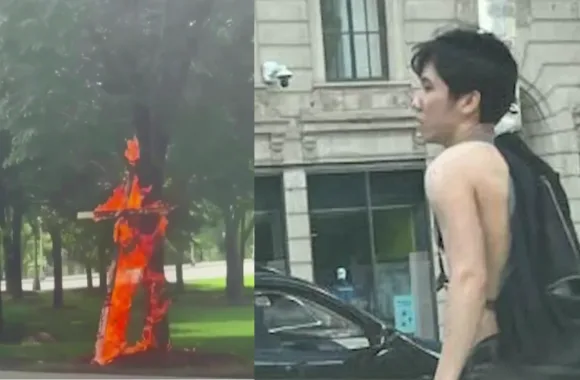
 www.thecollegefix.com
Actually, if you had a penny, you wouldn't get to a dollar. White racists love denying the amount of white racism that actually exists. That burning cross was no hoax. Just because it was done by an Asian does not make it any less real.
Anti-blackness in Asian and Asian-American Communities
To understand the anti-blackness in Asian-American communities, we need to begin by looking at the historical role played by white supremacy in its creation. One of the earliest cases of pitting Asian Americans against African Americans was during the post Civil War era, when Southern plantation owners replaced former slaves with Chinese laborers in an attempt to create competition. Plantation owners argued that the Chinese laborers were “docile, submissive and hard-working, unlike African Americans.”[3] Moon-Ho Jung, associate professor of history at the University of Washington, explains that this hardly reflected the reality of what was happening, but nevertheless, the rhetoric was pushed—at the expense of two minority groups, and for the benefit of exploitative white plantation owners.
The next major tool of division was crafted in the post-WWII era: the “model minority” myth, which persists today. Asian Americans have been designated to be the example for other racial groups of how not only to overcome discrimination, but also to achieve success, through their “solid two-parent family structures,” strong and supportive social networks, and complete dedication to education.[4] This kind of generalizing rhetoric inevitably pits Asian Americans against other racial minorities by “making a flawed comparison between Asian Americans and other groups, particularly Black Americans, to argue that racism, including more than two centuries of black enslavement, can be overcome by hard work and strong family values.”[5]
The Asian-American community is by no means the homogenous, seamless group it is often portrayed as, so it’s crucial to note who exactly this minority myth applies to and who is excluded. The myth is mainly applicable to newly immigrated Indian and East Asians, the predominant groups associated with high household incomes and academic success, and also the groups that dominate popular perceptions of Asian Americans.[6] Filipino, Vietnamese, and other South and Southeast Asians on the other hand, although making up an equal proportion of the Asian population in America, often face exclusion and discrimination from and within the community. They have expressed sentiments that they don’t feel “welcomed and included” by the community dominated by light-skinned East Asian Americans.[7] E.J.R. David, a Filipino American and professor of psychology at the University of Alaska-Anchorage, explains that “Filipinos and other non-East Asians get pulled into the Asian American umbrella when [they are] needed.”
Just in case you try taking about blacks attacking Asians to try justifying things:
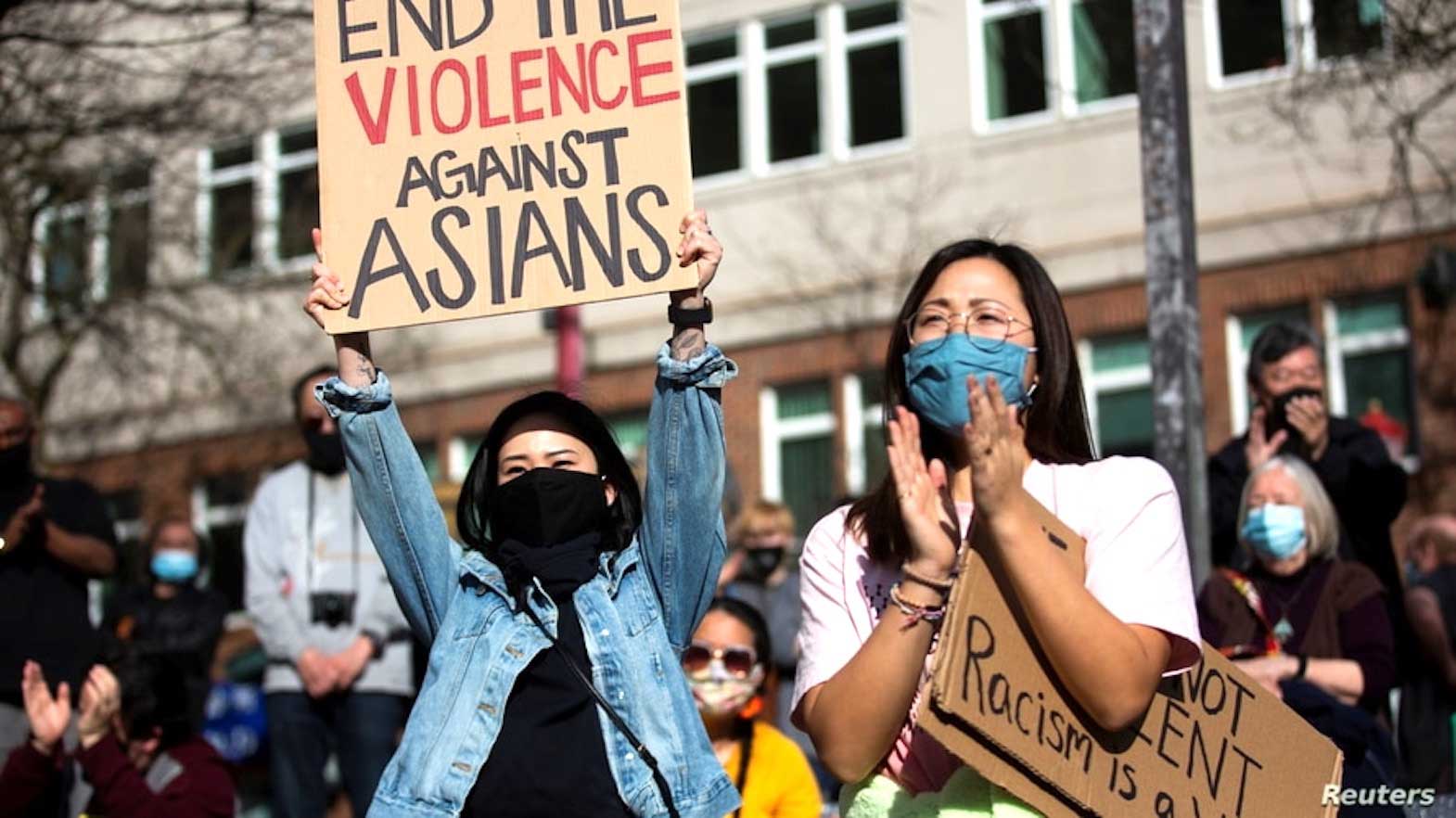
Most anti-Asian attacks committed by whites – new study
“Misconceptions about who perpetrates anti-Asian hate incidents can have long-term consequences for racial solidarity."usa.inquirer.net

Oops!
Another flame out thread from the queen of flame out threads IM2.
Asian Chicago college student admits to burning cross as part of Trump protest | The College Fix
Another day, another hoax.


Actually, if you had a penny, you wouldn't get to a dollar. White racists love denying the amount of white racism that actually exists. That burning cross was no hoax. Just because it was done by an Asian does not make it any less real.
Anti-blackness in Asian and Asian-American Communities
To understand the anti-blackness in Asian-American communities, we need to begin by looking at the historical role played by white supremacy in its creation. One of the earliest cases of pitting Asian Americans against African Americans was during the post Civil War era, when Southern plantation owners replaced former slaves with Chinese laborers in an attempt to create competition. Plantation owners argued that the Chinese laborers were “docile, submissive and hard-working, unlike African Americans.”[3] Moon-Ho Jung, associate professor of history at the University of Washington, explains that this hardly reflected the reality of what was happening, but nevertheless, the rhetoric was pushed—at the expense of two minority groups, and for the benefit of exploitative white plantation owners.
The next major tool of division was crafted in the post-WWII era: the “model minority” myth, which persists today. Asian Americans have been designated to be the example for other racial groups of how not only to overcome discrimination, but also to achieve success, through their “solid two-parent family structures,” strong and supportive social networks, and complete dedication to education.[4] This kind of generalizing rhetoric inevitably pits Asian Americans against other racial minorities by “making a flawed comparison between Asian Americans and other groups, particularly Black Americans, to argue that racism, including more than two centuries of black enslavement, can be overcome by hard work and strong family values.”[5]
The Asian-American community is by no means the homogenous, seamless group it is often portrayed as, so it’s crucial to note who exactly this minority myth applies to and who is excluded. The myth is mainly applicable to newly immigrated Indian and East Asians, the predominant groups associated with high household incomes and academic success, and also the groups that dominate popular perceptions of Asian Americans.[6] Filipino, Vietnamese, and other South and Southeast Asians on the other hand, although making up an equal proportion of the Asian population in America, often face exclusion and discrimination from and within the community. They have expressed sentiments that they don’t feel “welcomed and included” by the community dominated by light-skinned East Asian Americans.[7] E.J.R. David, a Filipino American and professor of psychology at the University of Alaska-Anchorage, explains that “Filipinos and other non-East Asians get pulled into the Asian American umbrella when [they are] needed.”
Just in case you try taking about blacks attacking Asians to try justifying things:
Most anti-Asian attacks committed by whites – new study
“Misconceptions about who perpetrates anti-Asian hate incidents can have long-term consequences for racial solidarity."
Actually, if you had a penny, you wouldn't get to a dollar. White racists love denying the amount of white racism that actually exists. That burning cross was no hoax. Just because it was done by an Asian does not make it any less real.
Anti-blackness in Asian and Asian-American Communities
To understand the anti-blackness in Asian-American communities, we need to begin by looking at the historical role played by white supremacy in its creation. One of the earliest cases of pitting Asian Americans against African Americans was during the post Civil War era, when Southern plantation owners replaced former slaves with Chinese laborers in an attempt to create competition. Plantation owners argued that the Chinese laborers were “docile, submissive and hard-working, unlike African Americans.”[3] Moon-Ho Jung, associate professor of history at the University of Washington, explains that this hardly reflected the reality of what was happening, but nevertheless, the rhetoric was pushed—at the expense of two minority groups, and for the benefit of exploitative white plantation owners.
The next major tool of division was crafted in the post-WWII era: the “model minority” myth, which persists today. Asian Americans have been designated to be the example for other racial groups of how not only to overcome discrimination, but also to achieve success, through their “solid two-parent family structures,” strong and supportive social networks, and complete dedication to education.[4] This kind of generalizing rhetoric inevitably pits Asian Americans against other racial minorities by “making a flawed comparison between Asian Americans and other groups, particularly Black Americans, to argue that racism, including more than two centuries of black enslavement, can be overcome by hard work and strong family values.”[5]
The Asian-American community is by no means the homogenous, seamless group it is often portrayed as, so it’s crucial to note who exactly this minority myth applies to and who is excluded. The myth is mainly applicable to newly immigrated Indian and East Asians, the predominant groups associated with high household incomes and academic success, and also the groups that dominate popular perceptions of Asian Americans.[6] Filipino, Vietnamese, and other South and Southeast Asians on the other hand, although making up an equal proportion of the Asian population in America, often face exclusion and discrimination from and within the community. They have expressed sentiments that they don’t feel “welcomed and included” by the community dominated by light-skinned East Asian Americans.[7] E.J.R. David, a Filipino American and professor of psychology at the University of Alaska-Anchorage, explains that “Filipinos and other non-East Asians get pulled into the Asian American umbrella when [they are] needed.”
Just in case you try taking about blacks attacking Asians to try justifying things:
Most anti-Asian attacks committed by whites – new study
“Misconceptions about who perpetrates anti-Asian hate incidents can have long-term consequences for racial solidarity."
+++++++In that NCVS-based estimate, Black offenders accounted for a somewhat larger share of violent crimes against Asian victims than White offenders, and because Black Americans were a smaller share of the U.S. population, the implied offender rate per capita was substantially higher. The exact magnitude is uncertain because of sampling error and methodological limitations.

Wrong. Again, whites like you ned to stop lying to yourselves.What bullshit. You guys hate asians because they are more successful than your community. They are more successful than whites, but we don't teach our children to hate success.

 www.easternstandardtimes.com
^racismWrong. Again, whites like you ned to stop lying to yourselves.
View attachment 1269831
Asians have been opening businesses in Black communities in the United States since Chinese-owned stores sold groceries to newly emancipated Black Americans in the South during Reconstruction. It’s a dynamic that has often pitted the two groups against each other, and, at worst, erupted into violence and tragedy. But this dynamic didn’t just come about – it has been manufactured for over a century with policies, laws, and conditioning. Understanding what caused this tension might be the first step to undoing it.
Asian immigrants’ experiences once they arrive in the US are as diverse as the reasons they left, but almost all are forced into the country’s complex racial dynamics. Starting in the 1960s, Asians looking to start businesses in America found themselves blocked from opening in white neighborhoods, mostly by banks that refused to give them loans anywhere near the wealth of those communities. Instead, banks offered loans for new businesses in Black communities, which most Asians, driven by a need to build a new life in a new country, accepted. Banks had deemed these neighborhoods ‘high risk’ for loans as part of redlining, the discriminatory banking practice of classifying neighborhoods worthy of investment based on the racial makeup of the people who lived there. While banks were open to working with Asian business owners as long as it was in the right place, they usually refused to even consider giving loans to Black people in these same neighborhoods hoping to start businesses of their own.
EST Articles | The Cost of Asian-Owned Businesses in Black Neighborhoods
How the United States’ long history of racism against Asian business owners and Black neighborhoods ended up pitting the two against each other.
You people know what you have done. Then you have the nerve to say the garbage that you posted. This is why whites like you are called the lineage of evil by some in the black community.
There aren’t burning crosses in gop run cities, just Chicago these daysRepublicans only want blacks for votes. Th is no policy Republicans offer that addresses the issues we face. In fact, anything we try doing for ourselves, Republicans file lawsuits claiming that we are discriminating against whites.
Per Capita is nonsense. It is an invalid measure used by white racists to deny your problem. Your type never uses it unless you are trying to deny or excuse anything whites do wrong.Yeah....give us the per capita race based crime.....and you can't. The article you link to doesn't give any actual numbers or sources. I would say that this is because they can't back it up with numbers...or the numbers likely show that per captia, blacks commit more race based crime against Asians.....
Also, from Chat GPT, Violent crime against asians...
+++++++
Using approximate 2018 population shares:
Then:
- White (non-Hispanic): ~60%
- Black: ~13%
Comparing those indices:
- White: 24.1 ÷ 60 ≈ 0.40
- Black: 27.5 ÷ 13 ≈ 2.12
So, based on those particular estimates, Black offenders were represented among offenders against Asian victims at a rate roughly 5 times higher per capita than White offenders.
- 2.12 ÷ 0.40 ≈ 5.
Therefore, the most accurate way to state the finding is:
+++++++
You can stop lying about that since most Asian businesses are in black communities because:Asians have every right to be "racist" against Black Americans who target their communities for robbery and commit insane levels of disproportional violence against them.
www.easternstandardtimes.com
usa.inquirer.net
Trump restored the funding Trump signs bill restoring funding for black collegesIncorrect. Trump tried to zero out funds for HBCUS in his first term, but the CBC stopped him. Biden provided 16 billion. Black unemplyment began faling dung Obama an it was Obama's policies that created the low black unemployment.
Trump just happened to be sitting in theoval office when it happened. His policy-opportunity zones failed, they went mostly to white rural communities. Biden set the record for low black unemployment, and right now black unemployment is high because of Trumps policies.
In short, Trump hasn't done anything for blacks. Stop being white thinking you can tell us what Trump has done for us. He's hurting you guys and you're too stupid and racist to see it.
Well that’s cause you idiots believed SmolettTrump has done a very good job at dividing the country far more than Smolett. Smolett can't get a job. You sphincters gave Trump a second Presidential term.