Zone1 A Basic Minimum Income Supplement and the percentage of women who choose abortion?

A 500 dollar monthly B. M. I. would likely cause what percentage of women to reject abortion?

  • Zero to ten percent would choose life if B. M. I supplement was instituted

    Votes: 2 66.7%
  • Eleven to twenty percent of women would likely choose life a B. M. I. was in place

    Votes: 0 0.0%
  • Twenty one percent to thirty percent of women would likely choose life if B. M. I. was instituted.

    Votes: 0 0.0%
  • Thirty one percent to forty percent of women would likely choose life if B. M. I was in place.

    Votes: 1 33.3%
  • More than forty one percent of women would likely choose life if a B. M. I. was in place.

    Votes: 0 0.0%
  • Abortions must be stopped through legislation, not prevented by a B. M. I.

    Votes: 0 0.0%

  • Total voters
    3

DennisPTate

Gold Member
Joined
Nov 6, 2025
Messages
3,178
Reaction score
1,235
Points
163
In a high percentage of cases where a woman chooses to have an abortion, money and obtaining an education and getting a better career in the future are cited as being major reasons for choosing to have an abortion.

An Unconditional but Taxable Basic Minimum Income for all citizens of the USA and Canada would almost certainly result in a significant percentage of women deciding instead to give birth to their baby, [even if they were to give their baby up for adoption, a less scary economy for the USA and Canada would impact pregnant women so that they would be less pessimistic about the future]?

I believe that active members of the Pro-Life Community should study the proposal put forward by Economist Milton Friedman because it certainly would shift the "Choose Life" formula?

Let's use an example of a rather low Unconditional Basic Minimum Income Supplement of five hundred dollars per month in the USA and in Canada. To what degree do you suspect that a B. M. I. of this nature might likely influence more women to choose life, and NOT have an abortion?

In my opinion the Pro-Life community should become aware of certain aspects of USA and Canadian history and they should also know about Economist Milton Friedman?

x. The Distribution of IncomeFriedman examines the progressive income tax, introduced in order to redistribute income to make things more fair, and finds that, in fact, the rich take advantage of numerous loopholes, nullifying the redistributive effects. It would be far more fair just to have a uniform flat tax with no deductions, which could meet the 1962 tax revenues with a rate only slightly greater than the lowest tax bracket at that time.

xi. Social Welfare MeasuresThough well-intentioned, many social welfare measures don't help the poor as much as some think. Friedman focuses on Social Security as a particularly large and unfair system.

xii. Alleviation of PovertyFriedman regarded welfare programs as misguided and inefficient. To replace them, he advocates a negative income tax, giving everyone a guaranteed minimum income.


There are also important parts of USA and Canadian history that related directly to this option that is in front of us now with a special urgency?


This article by Mr. Alain Pilote is very relevant as well.


[Alain Pilote]
The happiest population
franklin.jpg
Benjamin Franklin
We are in 1750. The United States of America does not yet exist; it is the 13 Colonies of the American continent, forming “New England”, a possession of the motherland, England. Benjamin Franklin wrote about the population of that time: “Impossible to find a happier and more prosperous population on all the surface of the globe.” Going over to England to represent the interests of the Colonies, Franklin was asked how he accounted for the prosperous conditions prevailing in the Colonies, while poverty was rife in the motherland:
“That is simple,” Franklin replied. “In the Colonies we issue our own money. It is called Colonial Scrip. We issue it in proper proportion to make the products pass easily from the producers to the consumers. In this manner, creating ourselves our own paper money, we control its purchasing power, and we have no interest to pay to no one.”
The English bankers, being informed of that, had a law passed by the British Parliament prohibiting the Colonies from issuing their own money, and ordering them to use only the gold or silver debt-money that was provided in insufficient quantity by the English bankers. The circulating medium of exchange was thus reduced by half.
“In one year,” Franklin stated, “the conditions were so reversed that the era of prosperity ended, and a depression set in, to such an extent that the streets of the Colonies were filled with unemployed.”
Then the Revolutionary War was launched against England, and was followed by the Declaration of Independence in 1776. History textbooks erroneously teach that it was the tax on tea that triggered the American Revolution. But Franklin clearly stated:
“The Colonies would gladly have borne the little tax on tea and other matters, had it not been the poverty caused by the bad influence of the English bankers on the Parliament: which has caused in the Colonies hatred of England, and the Revolutionary War.”
The Founding Fathers of the United States, bearing all these facts in mind, and to protect themselves against the exploitation of the International Bankers, took good care to expressly declare, in the American Constitution, signed at Philadelphia, in 1787, Article 1, Section 8, paragraph 5:
“Congress shall have the power to coin money and to regulate the value thereof.”

The bank of the bankers
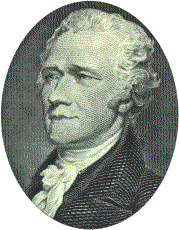
hamilton.gif
Alexander Hamilton
But the bankers did not give up. Their agent, Alexander Hamilton, was named Secretary of Treasury in George Washington's cabinet, and advocated the establishment of a federal bank to be owned by private interests, and the creation of debt-money with false arguments like: “A national debt, if it is not excessive, will be to us a national blessing... The wisdom of the Government will be shown in never trusting itself with the use of so seducing and dangerous an expedient as issuing its own money.” Hamilton also made them believe that only the debt-money issued by private banks would be accepted in dealing abroad.
Thomas Jefferson, the Secretary of State, was strongly opposed to that project, but President Washington was finally won over by Hamilton's arguments. A federal bank was thus created in 1791, the “Bank of the United States”, with a 20 years' charter. Although it was termed “Bank of the United States”, it was actually the “bank of the bankers”, since it was not owned by the nation, but by individuals holding the bank's stocks, the private bankers. This name of “Bank of the United States” was purposely chosen to deceive the American population and to make them believe that they were the owners of the bank, which was not the case. The charter for the Bank of the United States ran out in 1811, and Congress voted against its renewal, thanks to the influence of Thomas Jefferson and Andrew Jackson:
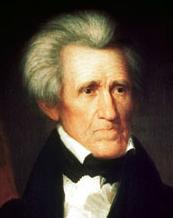
jackson-andrew.jpg
Andrew Jackson​
“If Congress,” Jackson said, “has a right under the Constitution to issue paper money, it was given them to use by themselves, not to be delegated to individuals or corporations.”
Thus ended the history of the first Bank of the United States. But the bankers did not play their last card.


Last edited:
Let's use an example of a rather low Unconditional Basic Minimum Income Supplement of five hundred dollars per month in the USA and in Canada. To what degree do you suspect that a B. M. I. of this nature might likely influence more women to choose life, and NOT have an abortion?

$500 a month isn't going to do anything meaningful for anybody. Are you going to cancel all the other gov't assistance programs in exchange for UBI, or is it in addition to what people already get? Medicare? Medicaid? SSA? Food Stamps? And every other welfare program? If it's an add-on deal, we're talking a few trillion dollars on top of the $2 tril deficit we're running now.
 
$500 a month isn't going to do anything meaningful for anybody. Are you going to cancel all the other gov't assistance programs in exchange for UBI, or is it in addition to what people already get? Medicare? Medicaid? SSA? Food Stamps? And every other welfare program? If it's an add-on deal, we're talking a few trillion dollars on top of the $2 tril deficit we're running now.

True, but for a family of four that would give them two thousand dollars per month which could take every family of four out of a situation of homelessness!

Economist Milton Friedman did feel that some aspects of Welfare should eventually be cancelled, [but what he really meant was be replaced by a better way of doing a social safety net that would NOT create the need for a whole lot of bureaucracy].
 
True, but for a family of four that would give them two thousand dollars per month which could take every family of four out of a situation of homelessness!

Don't bet on that, depends on where you live. First of all, $500 for every person is a lot more expensive that just for each adult, just about doubles the cost. We're talking closer to $4 trill/year now, maybe more. And absent all the other welfare programs, it ain't enough income to cover rent, food, utilities, healthcare, and everything else.

So, are you proposing to add another $4 tril on top of the $2 tril deficits we're running now? Do you think that's feasible?
 
Last edited:
Don't bet on that, depends on where you live. First of all, $500 for every person is a lot more expensive that just for each adult, just about doubles the cost. We're talking closer to $4 trill/year now, maybe more. And absent all the other welfare programs, it ain't enough income to cover rent, food, utilities, healthcare, and everything else.

So, are you proposing to add another $4 tril on top of the $2 tril deficits we're running now? Do you think that's feasible?

No, I am not proposing to add anything to the national debt..... I am proposing that first the USA and Canadian federal deficit be decreased by the amount of income tax that will be paid on that extra twenty billion dollars or so Canadian that will go into the economy of Canada each month, and by the income tax paid on the one hundred and seventy five billion dollars or so that would go into the USA economy monthly, IF WE WOULD HAVE ENOUGH SENSE TO EMULATE THE PRESIDENT LINCOLN GREENBACK Monetary Policy Experiment?

Proving that we could have been doing this all along will be an eye opener to all forty five million Canadians and to all three hundred and fifty million Americans?


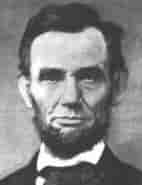
[Melvin Sickler, Lincoln, Kennedy] :
Abraham Lincoln


Lincoln

During the Civil War (1861-1865), President Lincoln needed money to finance the War from the North. The Bankers were going to charge him 24% to 36% interest. Lincoln was horrified and went away greatly distressed, for he was a man of principle and would not think of plunging his beloved country into a debt that the country would find impossible to pay back.


Eventually President Lincoln was advised to get Congress to pass a law authorizing the printing of full legal tender Treasury notes to pay for the War effort. Lincoln recognized the great benefits of this issue. At one point he wrote:

"... (we) gave the people of this Republic the greatest blessing they have ever had -- their own paper money to pay their own debts..."

Lincoln printed 400 million dollars worth of Greenbacks (the exact amount being $449,338,902), money that he delegated to be created, a debt-free and interest-free money to finance the War. It served as legal tender for all debts, public and private. He printed it, paid it to the soldiers, to the U.S. Civil Service employees, and bought supplies for war.
Shortly after that happened, "The London Times" printed the following: "If that mischievous financial policy, which had its origin in the North American Republic, should become indurated down to a fixture, then that Government will furnish its own money without cost. That govern-ment must be destroyed, or it will destroy every monarchy on the globe." In retaliation

After this was published in "The London Times", the British Government, which was controlled by the London and other European Bankers, moved to support the Confederate South, hoping to defeat Lincoln and the Union, and destroy this government which they said had to be destroyed.

The Czar of Russia sent a portion of the Russian navy to the United States with orders that its admiral would operate under the command of Abraham Lincoln. These ships of the Russian navy then became a threat to the ships of the British navy which had intended to break the blockade and help the South.

The North won the War, and the Union was preserved. America remained as one nation.

Of course, the Bankers were not going to give in that easy, for they were determined to put an end to Lincoln's interest-free, debt-free Greenbacks. He was assassinated by an agent of the Bankers shortly after the War ended.

Thereafter, Congress revoked the Green-back Law and enacted, in its place, the National Banking Act. The national banks were to be privately owned and the national bank notes they issued were to be interest bearing. The Act also provided that the Greenbacks should be retired from circulation as soon as they came back to the Treasury in payment of taxes.

In 1972, the United States Treasury Department was asked to compute the amount of interest that would have been paid if that 400 million dollars would have been borrowed at interest instead of being issued by Abraham Lincoln. They did some computations, and a few weeks later, the United States Treasury Department said the United States Government saved 4 billion dollars in interest because Lincoln had created his own money.

The Federal Reserve Act


No, I am not proposing to add anything to the national debt..... I am proposing that first the USA and Canadian federal deficit be decreased by the amount of income tax that will be paid on that extra twenty billion dollars or so Canadian that will go into the economy of Canada each month, and by the income tax paid on the one hundred and seventy five billion dollars or so that would go into the USA economy monthly, IF WE WOULD HAVE ENOUGH SENSE TO EMULATE THE PRESIDENT LINCOLN GREENBACK Monetary Policy Experiment?

Proving that we could have been doing this all along will be an eye opener to all forty five million Canadians and to all three hundred and fifty million Americans?

I take it that you are proposing to print or create more money to cover the $4 tril cost of UBI on top of the $2 tril deficit we're currently running in the US. I don't know about what's going on in Canada and have no comment about that, but in this country I have no doubt that that much new money introduced into the US economy would increase inflation to ridiculous proportions. IMHO, this country would have to default on it's national debt cuz no investor or country would believe such deficits are sustainable.

UBI has been tried several times in different places, but they are usually temporary and focused on small populations. I do not believe it has ever been instituted on a national scale with anywhere near 326 million people. Usually, it's only for adults and usually it concludes after a trial run. Nobody has ever made it permanent on a national scale unless maybe they have a huge amount of revenue coming in from oil/gas or some such. And it might not be constitutional if some people get UBI but others don't.

So - with respect to abortion, I do not believe abortion rates would be reduced due to a UBI program even if one was implemented here. One might suppose that the extra money might fund more abortions than before cuz more women could now afford to do that.
 
I take it that you are proposing to print or create more money to cover the $4 tril cost of UBI on top of the $2 tril deficit we're currently running in the US. I don't know about what's going on in Canada and have no comment about that, but in this country I have no doubt that that much new money introduced into the US economy would increase inflation to ridiculous proportions. IMHO, this country would have to default on it's national debt cuz no investor or country would believe such deficits are sustainable.

UBI has been tried several times in different places, but they are usually temporary and focused on small populations. I do not believe it has ever been instituted on a national scale with anywhere near 326 million people. Usually, it's only for adults and usually it concludes after a trial run. Nobody has ever made it permanent on a national scale unless maybe they have a huge amount of revenue coming in from oil/gas or some such. And it might not be constitutional if some people get UBI but others don't.

So - with respect to abortion, I do not believe abortion rates would be reduced due to a UBI program even if one was implemented here. One might suppose that the extra money might fund more abortions than before cuz more women could now afford to do that.
Yes, but the method that Economist Milton Friedman advocated of doing it for all citizens and legal residents in an equal manner that is not linked to their income, would mean that this could be done with very little bureaucracy.

If the advice of Economist Milton Friedman is followed this would produce an economic boom because the existing Welfare State penalizes people for finding a job or two.

Economist Milton Friedman knew that the USA and Canadian Dollars are backed up by the PRODUCTIVITY of American and Canadian workers so he did not want to punish American and Canadian workers for being highly productive.


Here in Canada three economists got together and pooled their reputations to make the ludicrous nature of what Ottawa was doing rather obvious for all who would do their homework...

Their names are Economist John Hotson, Economist Harold Chorney and Economist Mario Seccareccia. When you search for their names together an interesting article or two or three comes up.

My belief is that the rather brilliant Bank of Canada policy of 1938 to 1974 can likely be traced back to the Greenback Monetary Policy Experiment done by President Lincoln. I have read that idea from others and I believe that they are correct.


Yes, but the method that Economist Milton Friedman advocated of doing it for all citizens and legal residents in an equal manner that is not linked to their income, would mean that this could be done with very little bureaucracy.

If the advice of Economist Milton Friedman is followed this would produce an economic boom because the existing Welfare State penalizes people for finding a job or two.

Economist Milton Friedman knew that the USA and Canadian Dollars are backed up by the PRODUCTIVITY of American and Canadian workers so he did not want to punish American and Canadian workers for being highly productive.


Here in Canada three economists got together and pooled their reputations to make the ludicrous nature of what Ottawa was doing rather obvious for all who would do their homework...

Their names are Economist John Hotson, Economist Harold Chorney and Economist Mario Seccareccia. When you search for their names together an interesting article or two or three comes up.

My belief is that the rather brilliant Bank of Canada policy of 1938 to 1974 can likely be traced back to the Greenback Monetary Policy Experiment done by President Lincoln. I have read that idea from others and I believe that they are correct.


Possibly I missed it, but you have not yet explained how a UBI for all citizens (326 million) will be paid for. All I can see is higher taxes for everybody including a VAT. Or you're going to print/create more money, otherwise known as monetizing the debt. Do you intend to abolish all of the welfare programs, including healthcare?
 
Possibly I missed it, but you have not yet explained how a UBI for all citizens (326 million) will be paid for. All I can see is higher taxes for everybody including a VAT. Or you're going to print/create more money, otherwise known as monetizing the debt. Do you intend to abolish all of the welfare programs, including healthcare?


Just the same as most money is created as a blob of electronic energy on a database..... [or a few years ago as a debit or credit on a ledger], so also all money is created by Banks at the stroke of a pen, [or now by the hitting of a few keys on a computer].

"We never should have privatized our debt and turned it over to the
private banks, we should have kept it in the hands of the Bank of Canada,
at least a major part of it, because then we would have been paying
interest back to ourselves
." (NDP Leader Jack Layton)


It is common knowledge that the national debts of the USA and Canada are created by the effect of Compound Interest Owing Over Time. We do have options as President Lincoln did prove that we had.
 
In a high percentage of cases where a woman chooses to have an abortion, money and obtaining an education and getting a better career in the future are cited as being major reasons for choosing to have an abortion.

An Unconditional but Taxable Basic Minimum Income for all citizens of the USA and Canada would almost certainly result in a significant percentage of women deciding instead to give birth to their baby, [even if they were to give their baby up for adoption, a less scary economy for the USA and Canada would impact pregnant women so that they would be less pessimistic about the future]?

I believe that active members of the Pro-Life Community should study the proposal put forward by Economist Milton Friedman because it certainly would shift the "Choose Life" formula?

Let's use an example of a rather low Unconditional Basic Minimum Income Supplement of five hundred dollars per month in the USA and in Canada. To what degree do you suspect that a B. M. I. of this nature might likely influence more women to choose life, and NOT have an abortion?

In my opinion the Pro-Life community should become aware of certain aspects of USA and Canadian history and they should also know about Economist Milton Friedman?


There are also important parts of USA and Canadian history that related directly to this option that is in front of us now with a special urgency?


This article by Mr. Alain Pilote is very relevant as well.


There are any number of social benefits to people having more money, supplied through borrowing and printing by the Treasury Department. No doubt about that.

But we have to also look at the consequences, particularly inflation, which is a hidden tax on all people who conduct transactino in U.S. currency, and fiscal strain on an already nearing insolvency federal government.

Otherwise, why not make it a thousand per month, or five thousand?
 
Just the same as most money is created as a blob of electronic energy on a database..... [or a few years ago as a debit or credit on a ledger], so also all money is created by Banks at the stroke of a pen, [or now by the hitting of a few keys on a computer].


IOW, you're proposing creating new money and adding it to the economy. Do you believe that can be done without a massive increase in inflation? Cuz I do not. You're talking about approx $300 billion every month.
 
There are any number of social benefits to people having more money, supplied through borrowing and printing by the Treasury Department. No doubt about that.

But we have to also look at the consequences, particularly inflation, which is a hidden tax on all people who conduct transactino in U.S. currency, and fiscal strain on an already nearing insolvency federal government.

Otherwise, why not make it a thousand per month, or five thousand?

I am using a small number at first because within a decade or so there will be demands for much higher B. M. I supplements. Once this "Big Cat Idea" is out of the bag, it will not voluntarily go back into that bag!


I love the Milton Friedman Ph. D. idea because in the hands of the wealthy it would be less useful to them because they would presumably be paying a higher percentage of it as income tax, [or sales tax due to rich people doing more spending].

A B. M. I. of five hundred for month in the hands of the working poor could prevent them from losing their homes partly due the fact that they are paying such a small percentage of their total income as income tax. The working poor would get to spend most of their B. M. I. on things that they actually need, [ or at least think that they need].
 
IOW, you're proposing creating new money and adding it to the economy. Do you believe that can be done without a massive increase in inflation? Cuz I do not. You're talking about approx $300 billion every month.

That is an excellent question. The governments of the USA and Canada decreased inflation during WWII by selling "Victory Bonds" to citizens. The actual goal was not so much to finance building ships and tanks and weapons and artillery but..... instead was a way to take money out of the hands of Canadians and Americans who were still in the USA and Canada, and encourage them to SAVE as opposed to spending, [because spending can be inflationary but savings tend to not be inflationary].

Paying off debt tends to be anti-inflationary and a certain percentage of recipients of that proposed B. M. I. would pay down or even pay off their credit card debt in order to perhaps finance a cottage in the country or second home as an investment?

If a significant percentage of that B. M. I. goes into real estate, then yes the real estate industry will tend to boom, [which is a lot better than a Bear Market].

I do believe that there are now a number of courageous people in places of political power who will begin to promote this obvious truth and this discussion could encourage some of them.

Here is a quotation that may inspire a small percentage of the Pro-Life Community.

[Rick Joyner]:
"The Lord is now preparing courageous leaders who
will be willing to fight a spiritual civil war in order to set men free.
The main issue, as in the American Civil War, will be slavery versus
freedom. The secondary issue, which will be the primary issue for some, will be money.

Just as the American Civil War at time looked like it would destroy the entire
nation, that which is coming upon the church will sometimes appear as if it will
bring the end of the church. However, just as the United States not only
survived but went on to become the most powerful nation on earth, the same
is going to happen to the church. The church will not be destroyed, but the institutions
and doctrines that have kept men in spiritual slavery will be" (Rick Joyner, The Vision, page 39)
 
I am using a small number at first because within a decade or so there will be demands for much higher B. M. I supplements. Once this "Big Cat Idea" is out of the bag, it will not voluntarily go back into that bag!


I love the Milton Friedman Ph. D. idea because in the hands of the wealthy it would be less useful to them because they would presumably be paying a higher percentage of it as income tax, [or sales tax due to rich people doing more spending].

A B. M. I. of five hundred for month in the hands of the working poor could prevent them from losing their homes partly due the fact that they are paying such a small percentage of their total income as income tax. The working poor would get to spend most of their B. M. I. on things that they actually need, [ or at least think that they need].

A small number? At the city or state level, I believe a few places have tried it or looked at it and then dropped the whole idea. At the federal level, aside from being unconstitutional I can't see how all those senators and congresspersons are going to vote for a program that gives federal taxdollars to somebody else's constituents. Yeah, it's great for the few who get the money, but the rest of us are not going to be happy about that.


I am using a small number at first because within a decade or so there will be demands for much higher B. M. I supplements. Once this "Big Cat Idea" is out of the bag, it will not voluntarily go back into that bag!

yeah, no kidding.


Philosophically, I don't like it. Some people get free money while most others don't, and that ain't equal outcomes or equal opportunity. My guess is that while some people (a few) might use the extra money to upgrade their marketable skills in some fashion, I suspect that most people are going to spend it and eventually be right back where they were before the UBI happened.

I subscribe to the notion that you should get what you earn but also earn what you get. Most people do not like the idea of free riders living off their dime.
 
A small number? At the city or state level, I believe a few places have tried it or looked at it and then dropped the whole idea. At the federal level, aside from being unconstitutional I can't see how all those senators and congresspersons are going to vote for a program that gives federal taxdollars to somebody else's constituents. Yeah, it's great for the few who get the money, but the rest of us are not going to be happy about that.


I am using a small number at first because within a decade or so there will be demands for much higher B. M. I supplements. Once this "Big Cat Idea" is out of the bag, it will not voluntarily go back into that bag!

yeah, no kidding.


Philosophically, I don't like it. Some people get free money while most others don't, and that ain't equal outcomes or equal opportunity. My guess is that while some people (a few) might use the extra money to upgrade their marketable skills in some fashion, I suspect that most people are going to spend it and eventually be right back where they were before the UBI happened.

I subscribe to the notion that you should get what you earn but also earn what you get. Most people do not like the idea of free riders living off their dime.
Good points, even modern replica's of the Worgl Austria Local Money Experiment have tended to fail due to human nature. Specifically our greed and tendency to not honour our commitments over the long term.

I know of one particular L.E.T.S. that was successful because one dentist, wanted to figure out a way to treat everybody, even the poor. So the L.E.T.S. that he organized was successful, [until that one dentist moved to a different location].

Michael Linton may have originated the term "local exchange trading system" in 1983, for a time running the Comox Valley LETSystems in Courtenay, British Columbia.<a href="Local exchange trading system - Wikipedia"><span>[</span>4<span>]</span></a> The system he designed was intended as an adjunct to the national currency, rather than a replacement for it.<a href="Local exchange trading system - Wikipedia"><span>[</span>5<span>]</span></a> He called the currency "green dollars" and it was mostly used by a local dentist, but dwindled when he moved away. Linton started at least four more versions, with varying degrees of success, such as the "Community Way Dollars" in 2008. The system's turnover in the first two years amounted to green $500,000. There were 5 LETS in Great Britain in 1992. In 1995 this number increased to 350 with 30,000 membership and 2 million turnover.<a href="Local exchange trading system - Wikipedia"><span>[</span>6<span>]</span></a> In 2018 the University of Victoria undertook to research his archives as a demonstration of how people react to new ideas that are outside the norms of society. Linton thought that he had failed to communicate his idea adequately.<a href="Local exchange trading system - Wikipedia"><span>[</span>7<span>]</span></a> LETS is a new type of money which makes it easy to pursue a new livelihood without the previous wholesale transformation of Capitalism. It is thus regarded as an alternative currency movement, and as a form of political protest.<a href="Local exchange trading system - Wikipedia"><span>[</span>8<span>]</span></a> After flourishing in the 1990s, the LETS movement waned. Interest in local currency moved on to other designs such as time-based currency and dollar-backed local voucher schemes

 
That is an excellent question. The governments of the USA and Canada decreased inflation during WWII by selling "Victory Bonds" to citizens. The actual goal was not so much to finance building ships and tanks and weapons and artillery but..... instead was a way to take money out of the hands of Canadians and Americans who were still in the USA and Canada, and encourage them to SAVE as opposed to spending, [because spending can be inflationary but savings tend to not be inflationary].

What you are proposing is to dramatically increase the national debt by selling US bonds, treasuries, and the like. First of all, what if some or most people don't buy the bonds? What if they just go out and buy shit until they spent it all? The other problem is supply and demand for US gov't securities; when you increase the supply, the value goes down. And that means the US Gov't has to increase the interest rates to get investors both here and abroad to buy trillions more of those securities. IMHO, a UBI would acerbate our debt problem and hasten the day when the shit hits the fan (default).


Paying off debt tends to be anti-inflationary and a certain percentage of recipients of that proposed B. M. I. would pay down or even pay off their credit card debt in order to perhaps finance a cottage in the country or second home as an investment?

Could be. But here's the thing: if you give 326 million people $500 every month and some of them pay down their debt, that's great but the new money is still added to the economy and that is inflationary. We recently went through that with the relief checks that the gov't sent out in 2008 and 2009; I don't believe that many people invested money in US securities or in the stockmarket.


If a significant percentage of that B. M. I. goes into real estate, then yes the real estate industry will tend to boom, [which is a lot better than a Bear Market].

Interesting question, will the % of the UBI going into real estate be significant? Housing prices have been going up pretty good over the past few years as it is; what happens when demand goes up but the housing supply doesn't? Prices go up -> inflation. I'm not sure a boom in real estate is a sure thing. Would mortgage lenders include UBI as an income source if it was temporary and narrowly focused on a certain few?


I do believe that there are now a number of courageous people in places of political power who will begin to promote this obvious truth and this discussion could encourage some of them.

My guess is that those courageous people live in deep blue districts and states where they ain't worried about getting re-elected. You say it's an obvious truth but I question that and so will a larger number of senators and congressperson who live in red or purple states/districts.

Another interesting question: if the day comes when the democrats own the Congress and the white House, then would they abolish the Senate filibuster and do as they please? Specifically, would they pass a UBI that gets through the Supreme Court? Ain't gonna happen otherwise.
 
15th post
What you are proposing is to dramatically increase the national debt by selling US bonds, treasuries, and the like. First of all, what if some or most people don't buy the bonds? What if they just go out and buy shit until they spent it all? The other problem is supply and demand for US gov't securities; when you increase the supply, the value goes down. And that means the US Gov't has to increase the interest rates to get investors both here and abroad to buy trillions more of those securities. IMHO, a UBI would acerbate our debt problem and hasten the day when the shit hits the fan (default).


Could be. But here's the thing: if you give 326 million people $500 every month and some of them pay down their debt, that's great but the new money is still added to the economy and that is inflationary. We recently went through that with the relief checks that the gov't sent out in 2008 and 2009; I don't believe that many people invested money in US securities or in the stockmarket.


Interesting question, will the % of the UBI going into real estate be significant? Housing prices have been going up pretty good over the past few years as it is; what happens when demand goes up but the housing supply doesn't? Prices go up -> inflation. I'm not sure a boom in real estate is a sure thing. Would mortgage lenders include UBI as an income source if it was temporary and narrowly focused on a certain few?


My guess is that those courageous people live in deep blue districts and states where they ain't worried about getting re-elected. You say it's an obvious truth but I question that and so will a larger number of senators and congressperson who live in red or purple states/districts.

Another interesting question: if the day comes when the democrats own the Congress and the white House, then would they abolish the Senate filibuster and do as they please? Specifically, would they pass a UBI that gets through the Supreme Court? Ain't gonna happen otherwise.
No, I am proposing to set in motion the paying off of the Canadian and USA federal deficit and soon begin to pay down the national debts of Canada and the USA because they are significantly practical jokes being played on ninety nine, point nine, nine, nine, nine percent of us by a handful of extremely wealthy people who have hired some of the best minds on this earth to keep all of us divided against each other and squabbling with each other.

Back home in Nova Scotia, Dr. Moses Coady managed to confince fishermen, farmers and forestry workers to begin credit unions that altered the economy of the little town of Canso, Nova Scotia rapidly.

All of us are in a similar situation to the fishermen of Canso, N. S., Canada a century ago.

Coady’s appointment to organize Maritime fishermen into an association to maximize their buying power and set up cooperatives allowed him to put ideas into practice. He organized for 10 months and then convened the United Maritime Fishermen’s [UMF] inaugural convention in Halifax on June 25 and 26, 1930. His fisheries project helped to lay the foundation for the Extension Department’s future success.

Rt. Rev. Dr. Moses M. CoadyFrom 1930, Coady and his Extension colleagues developed a variety of techniques to initiate local community action. Wherever they operated, the Extension Department staff used existing parish networks to call mass meetings where the idea of the study club was introduced. Coady often spoke at those meetings and frequently lectured the community about its failings; he then challenged them to ask key questions: What do we need and how can we get it? Study clubs leading to co-operative economic action was the answer. First and foremost Coady was always the teacher. He was an outstanding orator as well as a prodigious letter, article and speech writer who expressed his views in an earthy, animated, and logical manner.

During the early 1930s as the global depression worsened, the local community cooperative organizations created by the St.F.X. Extension Department staff in Antigonish gained momentum. Between 1932 and 1935, study clubs increased in number from 179 to 650, membership from 1,500 to 10,650, and credit unions from 8 to 45. From 1935 to 1939, the Movement continued to grow in both influence and reputation.

In 1939, he published his only book entitled Masters of Their Own Destiny that gave an excellent account of his pragmatic vision of adult education and the work of the Extension Department in executing it. At the same time, World War II caused problems for the Extension Department as it diverted precious manpower and financial resources. The Extension staff was always over-taxed, forcing them to rely on short courses over fieldwork. The 1950s was a personally trying time for Coady. Although the Vatican had honoured him with the title of Monsignor in 1946—which he did not relish and believed could be detrimental to his work—he experienced health issues and witnessed a stall in the growth of the Antigonish Movement.

Rt. Rev. Dr. Moses M. Coady


By the late 1930s, Coady had contemplated helping people in underdeveloped nations. After World War II, increasing numbers of people interested in the co-op movement were coming to St.F.X. They were mostly Catholic clergy and leaders from third world countries in Latin America and Southeast Asia. The high profile of the Antigonish Movement and the renewed interest from abroad attracted some attention from the American government that saw it as a promising means to combat communism in the Cold War era.

A heart attack in February 1952 forced Coady’s resignation as Director of the Extension Department. Unwilling to totally relinquish his important work and characteristic work horse tendencies he remained active in his retirement years writing many letters, giving numerous speeches and conceiving new community development strategies. Accolades poured in from around the world, testifying to how Coady had affected many lives personally and had made the world a better place.

 
I am using a small number at first because within a decade or so there will be demands for much higher B. M. I supplements. Once this "Big Cat Idea" is out of the bag, it will not voluntarily go back into that bag!

I love the Milton Friedman Ph. D. idea because in the hands of the wealthy it would be less useful to them because they would presumably be paying a higher percentage of it as income tax, [or sales tax due to rich people doing more spending].
If your only argument is that Milton Friedman Ph. D came up with the idea, we really have nothing to debate. It would be like debating a Justin Bieber fan about the musical benefits of singing into an autotuner.
A B. M. I. of five hundred for month in the hands of the working poor could prevent them from losing their homes partly due the fact that they are paying such a small percentage of their total income as income tax. The working poor would get to spend most of their B. M. I. on things that they actually need, [ or at least think that they need].
Yes, I understand the concept, and it certainly did not originate with Milton Friedman.

Poor people know what they want. If they had been knowing what they need, they would not now be poor.

People who have no or very low income and have children to raise are making poor decisions in the long-term including the present, or else they have made so many poor decisions in the past that they are unable to recover from them, even if they began to make the right decision. That second option is highly unlikely, by the way. Nearly anyone could begin now to make good decisions and soon see their condition improve.

Anyway, the most efficient way to actually help - rather than enable - the poor is to sponsor group homes in which they can be housed, fed, clothed, trained in a skill, and helped to find work and provided on-sight daycare. Equally as important they can be supervised so that they can have their poor decisions mitigated for themselves and their children.

Giving them a check is perhaps the worst thing we can do, unless we actually bought the drugs and alcohol and gave that directly to them.
 
If your only argument is that Milton Friedman Ph. D came up with the idea, we really have nothing to debate. It would be like debating a Justin Bieber fan about the musical benefits of singing into an autotuner.

Yes, I understand the concept, and it certainly did not originate with Milton Friedman.

Poor people know what they want. If they had been knowing what they need, they would not now be poor.

People who have no or very low income and have children to raise are making poor decisions in the long-term including the present, or else they have made so many poor decisions in the past that they are unable to recover from them, even if they began to make the right decision. That second option is highly unlikely, by the way. Nearly anyone could begin now to make good decisions and soon see their condition improve.

Anyway, the most efficient way to actually help - rather than enable - the poor is to sponsor group homes in which they can be housed, fed, clothed, trained in a skill, and helped to find work and provided on-sight daycare. Equally as important they can be supervised so that they can have their poor decisions mitigated for themselves and their children.

Giving them a check is perhaps the worst thing we can do, unless we actually bought the drugs and alcohol and gave that directly to them.
But all of that requires lots of bureaucracy and we are in a situation where we need a solution that requires very little bureaucracy. An Unconditional but Taxable Basic Minimum Income Supplement to all citizens is just about the only type of proposal that a majority of people might agree on, [and actually here in Canada a majority of about thirty percent can put somebody into the office of Prime Minister].


What this is all about is educating people about how the elected officials were lured or conned or pressured into acting as if they were the ones who owned the USA Dollar and the Canadian Dollar, but here in Canada the citizens of Canada definitely are the owners of the Bank of Canada, [which is why Prime Minister Pierre E. Trudeau was somehow convinced to stop us from using that bank as we had done for several decades]. If he was pressured or blackmailed into that decision in 1974, then in a way that would make the decision not fully legal.
 
$500 a month isn't going to do anything meaningful for anybody. Are you going to cancel all the other gov't assistance programs in exchange for UBI, or is it in addition to what people already get? Medicare? Medicaid? SSA? Food Stamps? And every other welfare program? If it's an add-on deal, we're talking a few trillion dollars on top of the $2 tril deficit we're running now.


You are absolutely correct that five hundred dollars is like nothing but this idea sets the stage for the question of whether or not the Pro-Life Community might just be willing to AGREE with and support the people who support an Unconditional but Taxable Basic Minimum Income Supplement?

The timing certainly is correct for there to be at least some level of agreement across partly lines both in Canada as well as in the USA, under our extreme set of circumstances.
 
Back
Top Bottom