"The money we make is not enough,” he says. “We cannot afford to buy enough food because at the end of the month, sometimes even at the end of the week, Thursday or Friday, the refrigerator is almost empty or sometimes completely empty. We cannot afford to have meat or different things. We have basic things like beans, rice, milk, eggs. We want to have something else like a little treat. It is not possible." The federal nutritional "food stamp" assistance program, or SNAP, helps the Gutierrez family with some basics. A report released earlier this month by the White House Council of Economic Advisers showed that the program is highly effective in reducing food insecurity.
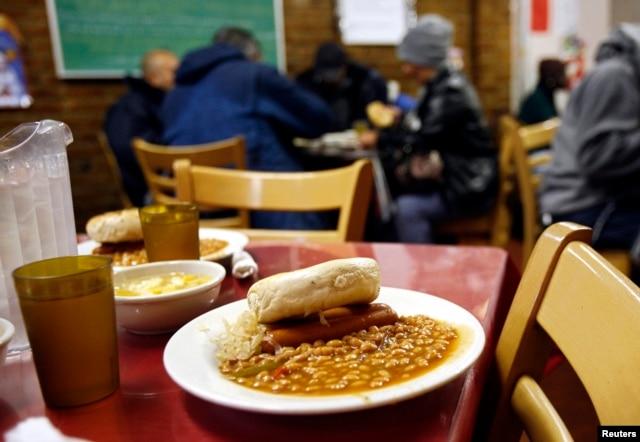
A meal is served in a New York City soup kitchen.
However, more than 48 million people in the United States live in food-insecure households, including more than 15 million children, according to the advocacy group World Hunger.Org. In New York City alone, 1.5 million residents cannot adequately feed themselves and their families, reports show. And, with the potential for significant cuts looming in the federal budget, some fear a nutritious diet may be a thing of the past for more and more of the country’s working poor.
Working ‘not enough’
"Even though they are working, they still need food stamps because it's not enough,” says Philomena Acebedo, coordinator for the New York City Coalition Against Hunger. “Whatever they earn, they have to pay their rent, and, whatever they have left, it's not enough to put on their table." In West Harlem, the poor and the hungry line up outside the Food Bank for New York City's community kitchen and food pantry.
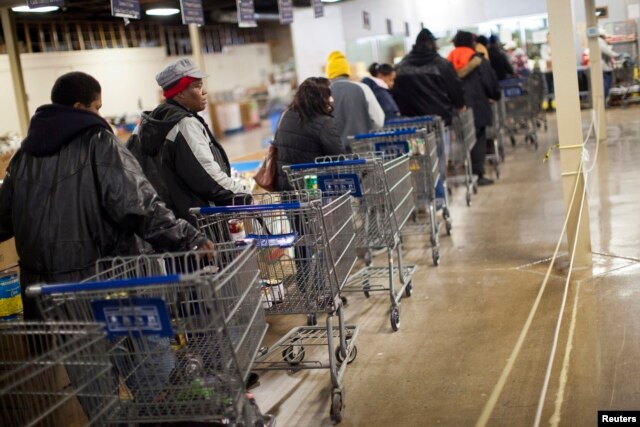
Clients wait in line to shop for food at the St. Vincent de Paul food pantry in Indianapolis, Indiana
"We serve families,” says Margarette Purvis, president and CEO of the food bank. “And to be in the city, most of those families are going to have to work, and they do. They work every day. They work hard for their living. Unfortunately, they don't make enough to actually cover the rent and the food and the child care expenses." Across the city, Food Bank for New York City distributes 120 free meals every minute. Previous cuts to the federal nutrition program two years ago cost the city 5.3 meals a month. Many of those meals were targeted for working families.
Tough choices ahead