Zilawe lives in a dilapidated homestead outside Norton, a town 40 kilometers from Harare, the Zimbabwean capital. His bedroom is a thatched mud hut that sits near 12 mounds marking the remains of his wife and children. "My sons, who became illegal gold miners, also suffered from AIDS before they died. You can see the graves here; the additional one belongs to my wife, who also died some two years ago, leaving me to look after our orphaned grandchildren," said Zilawe, 76.
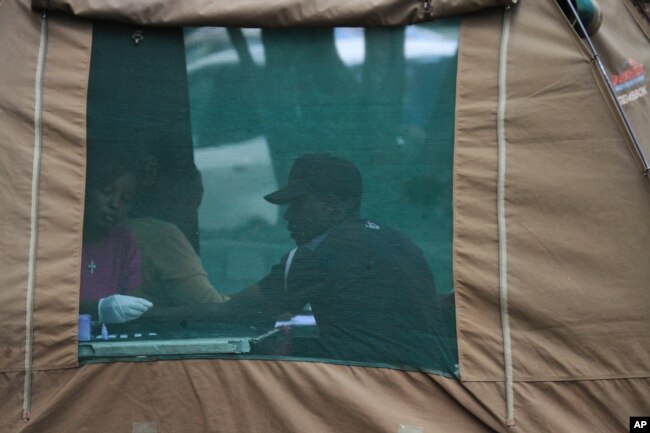
A man has his blood taken before being tested for HIV in Harare, Zimbabwe
Nearby, some of his grandchildren wrestled over a pot of leftover porridge. None is in school; instead, like their grandfather, each child passes the day at the homestead, idling and seeking a spot to bask in the sunshine. Some of the little ones fall ill — regularly, said Zilawe, who didn't know whether any carried the virus that had killed their parents. "I don't know anything about my grandchildren's HIV status; maybe they have the disease or maybe not," he said.
Ailing caregivers
His life is tough. Yet many other Zimbabweans in Zilawe's age bracket are not just caregivers but are also coping with AIDS diagnoses of their own. "It's sad. It's worrying when you look at the rate of HIV/AIDS amongst aged persons here. The percentage of elderly persons aged 60 years and above living with HIV is around 15.3 percent," said Marck Chikanza, national coordinator of the National Age Network of Zimbabwe (NANZ), an organization that caters to older people's needs. NANZ said more than 115,000 older people are living with HIV and AIDS in Zimbabwe, one in 10 of the 1.2 million Zimbaweans who the United Nations says are living with HIV/AIDS. "There has been a decline in the rate of people living with HIV across all age groups except in the 50+ age group, where there has been a rise from 13.8 percent to around 14.3 percent," said Tadiwa Pfupa-Nyatanga of the NAC organization, which coordinates the government's response to HIV/AIDS.
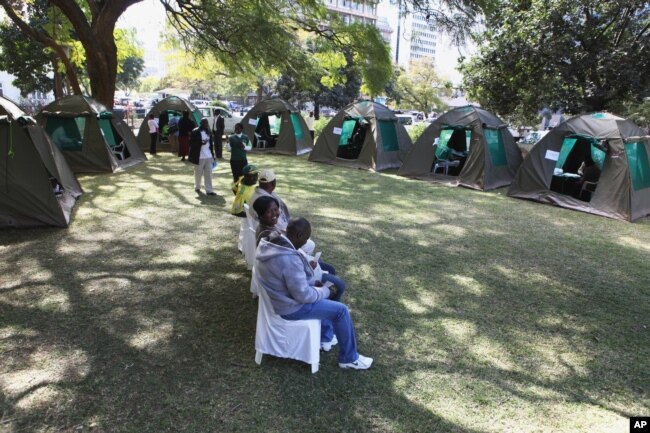
Members of the public wait to be tested for HIV and AIDS in Harare, Zimbabwe
According to 2016 official statistics, about 185,000 AIDS-orphaned Zimbabwean children are living under the guardianship of their grandparents — people like Zilawe, who struggle to cope. "Most aged persons here hardly have the capacity to produce or buy food on their own. And most of the orphaned kids they look after are far too young to be working to produce food for their families. And the burden, at the end of the day, rests with the grandparents — who, in a true sense, are also dependents," Anatalia Mabeza, who chairs an HIV/AIDS support group in Norton, told the Thomson Reuters Foundation. Some orphaned children say their grandparents offer little or no medical help for the health problems they inherited. "I was openly told by my mother before she died that I was born with the HIV/AIDS condition, but now as I live with my grandmother, who is in her 60s, she has never bothered to monitor my condition," said Lillian Muranda, 14, who lives in Caledonia informal settlement, 25 kilometers east of Harare.
'I was bewitched'