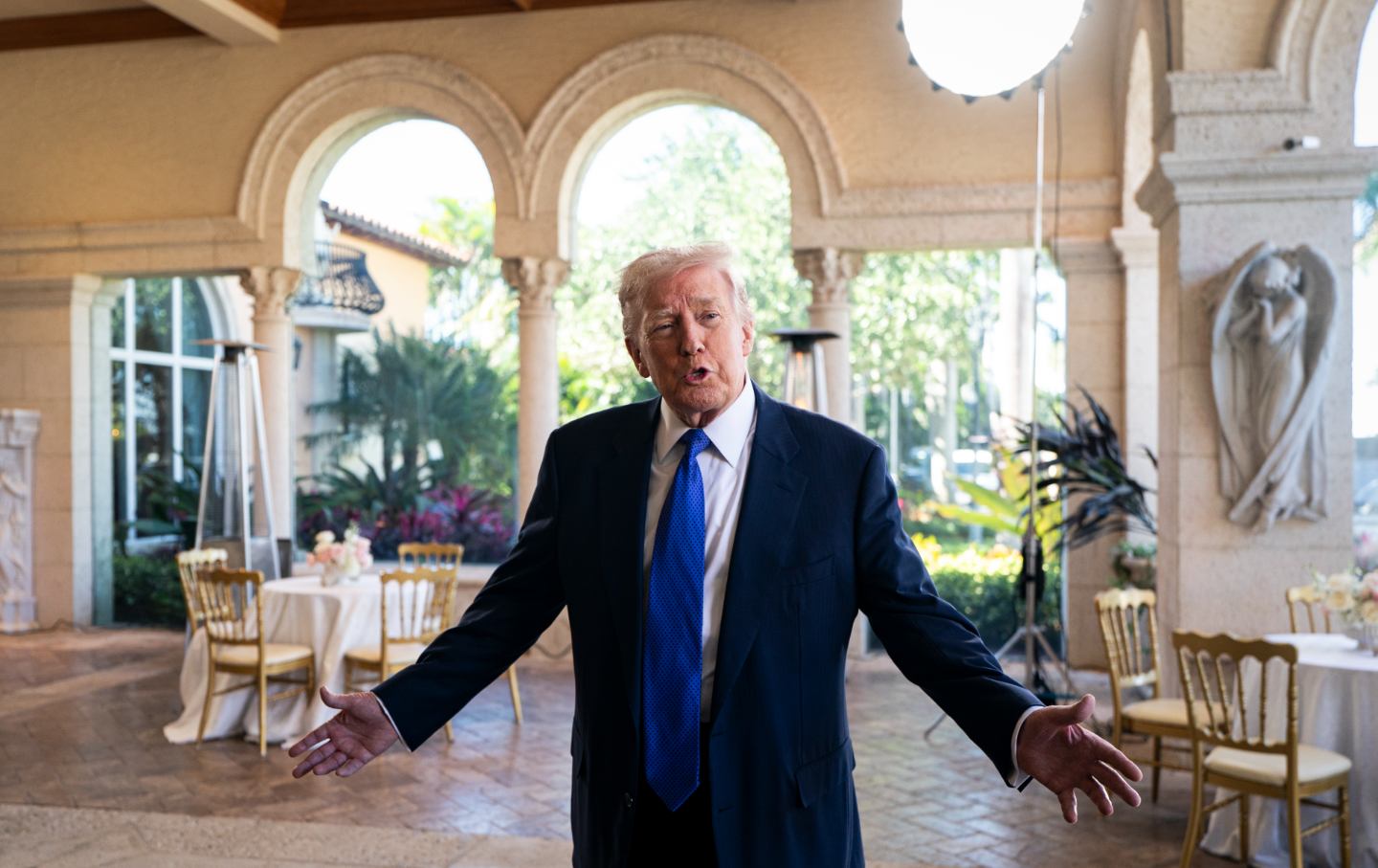
Karoline Leavitt referred to specific words and phrases and characterized them as beyond the pale. They’re the same words and phrases the president has used.
www.ms.now
I guess you can't blame White House Barbie for supporting her boss, if she wants to keep her job, but trying to publicly fight Laura Loomer for the job of First Lady is a bit much!
You can't take the worst president in any country and turn him into a silk purse with lies and bluster. He starts illegal wars, ignores the Constitution, only supports Americans who "like" him, profits exorbitantly from being president and weaponizes the Justice Department and FBI to go after his enemies, for starters. He tries to steal elections and wants to be a dictator.
He is the pinnacle of evil in any country ever!
Bigly!!!
I saw that press conference yesterday, I was stunned at the total lack of self-awareness. But then I realized, it all is a ploy to stifle dissent. In every case, from the charge of Fascism to the label of threat to Democracy, there never was an attempt to deny the allegations. It was like, you can't say that because people will turn to violence.
And yes, Trump himself has used many of those same categorizations. And yes, people were actually killed. I mean I don't know what happened to the decency of political discourse. A little more than 50 years ago the infamous "Daisy Girl ad" ran for the Johnson campaign. ONCE. Officially, one time.
One of the pivotal moments in modern American political campaigning was a
sixty-second-long television commercial that officially only aired once. The “Daisy” ad was
created by Lyndon B. Johnson’s 1964 presidential campaign in an attack against Republican
candidate Barry Goldwater. Airing during the heat of the Cold War, at the height of the American
public’s fear of nuclear weapons, and less than two years after the Cuban Missile Crisis, the ad
was meant to stoke Americans’ fear by painting Goldwater as a radical ready to launch nuclear
weapons at the drop of a hat. The Daisy commercial helped revolutionize the future of American
politics by ushering in a new era of attack ads and polarization. Even today, much of America’s
political divisiveness can be traced back to this ad, run just once, nearly sixty years ago.
Enough already.