In 1967, after defending itself against another war of annihilation, the Israeli government accepted UN Resolution 242 and voted unanimously to return the vast majority of territories it had captured (the Sinai Desert, Golan Heights, Gaza Strip and West Bank) in exchange for peace. The Arab response was unequivocal: no peace with Israel, no recognition of Israel, no negotiations with it.
In 2000, Israel made a series of two-state proposals which (contrary to popular myth) eventually included almost all of the West Bank (plus additional territory from Israel proper), the entire Gaza strip, Palestinian control over East Jerusalem, and a $30 billion solution for the Palestinian refugees. Palestinian leader Yasser Arafat not only refused he made no counter-offer, abandoned negotiations, and immediately began planning the Al-Aqsa Intifada. Arafat was heavily criticized for this, both by the American mediators and by fellow Arabs and Palestinians.
Those Arab countries that eventually came to accept Israels existence Egypt (1979, despite widespread Arab opposition) and Jordan (1994) signed peace treaties which have been mutually honored to this day.


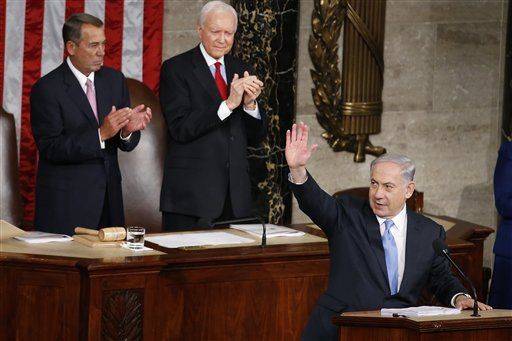
 (as crass as it comes) and the repubs welcomed him
  w/open arms