Hamas’s long-term objectives of expanding beyond the Gaza Strip and taking over the West Bank are often discussed, but Hamas’s role in Iran’s grand strategic vision, of building a multi-front threat of firepower against the Jewish state, receives less attention.
It is well established at this stage that Hamas has no intention of making do with its control of Gaza, which it rules with an iron fist, but to also dominate the West Bank and wrest control away from its internal Palestinian rival, Fatah, and to become the new leader of Palestinians in Ramallah and Jenin, not just in the Strip.
This is one of the key reasons why Hamas regularly seeks to ignite both Jerusalem and the West Bank with violence and instability.
But Hamas’s leadership is also committed to a fundamental longer-term goal, and that is the eventual elimination of the State of Israel and replacing it with a Palestinian – Islamic state. It is a goal that is shared by Iran, creating the basis for lengthy cooperation between the Sunni Palestinian terror faction and the Shi’ite Islamic Republic.
Iran’s support for its partner, Hamas, as well as its proxy, the Palestinian Islamic Jihad organization (Gaza’s second largest armed faction which fought a three-day conflict with Israel in August while Hamas sat on the sidelines), is extensive.
Ninety percent of the know-how for Hamas and PIJ’s production of rockets, drones, and other capabilities originates in Iran. Tehran transfers this know-how to Gaza’s armed factions because it wants to give them the ability to challenge Israel on a regular basis in the short-term.
In the long-term, Iran’s Islamic Revolutionary Guards Corps hopes that Hamas and PIJ can one day join Hezbollah in Lebanon, the Houthis in Yemen, and Shi’ite militias in Syria and Iraq to rain down waves of fire from multiple directions on Israel so fierce that they would challenge the feasibility of the Jewish state.
Iran’s nuclear program is, in fact, designed to one day provide a nuclear umbrella over this ring of firepower that Iran hopes to surround Israel with.
This is precisely why pushing Iran out of the vicinity of Israel’s neighborhood, particularly in Syria, has emerged as a top strategic objective for Israel’s defense establishment, since the more Iran is present in the area, the greater the instability.
It is Iran that taught Hamas how to build rocket propellant out of ingredients like castor oil, aluminum dust, and iron oxide. Hamas’s practice of taking normal salt and turning into it into a rocket propellant through a chemical process also comes from Iran.
This transfer of knowledge has gained little to none international attention or condemnation thus far.
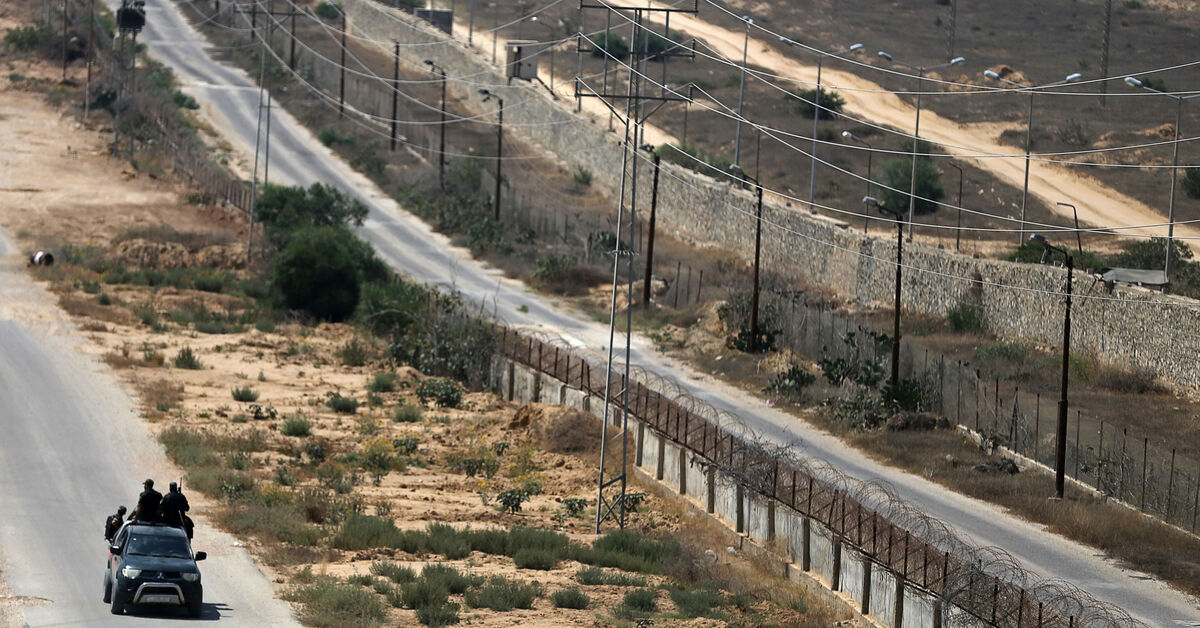
Over the years, Hamas imported 107 mm and 122 mm rockets from Iran (projectiles that later learned how to build by itself, with Iranian training and assistance). Before Egypt sealed the border with Gaza, the Iranians also smuggled Fajr 4 and Fajr 5 mid-range rockets, which place central Israel in range, into Hamas’s rocket inventory.
Hamas’s memorial tribute that it held in Gaza for the late Iranian Quds Force commander, Qassem Soleimani, in January 2022, to mark two years since his assassination in Baghdad in a U.S. drone strike, is a reflection not only of the shared interests and ideological overlap when it comes to Israel, but also Hamas’s ongoing dependence on Iran.
According to Israeli intelligence estimates, Iran provides 150 million dollars a year in funding to Hamas and PIJ combined – a significant fund that goes directly to mass rocket production, tunnel digging activities, and other capabilities.
Yet, over the years, it has also become clear that Hamas’s core identity as a Sunni Islamist movement has, and could in future, present obstacles to the ambitions for unity with the Iranian radical Shi’ite axis.
(full article online)
Hamas’s long-term objectives of expanding beyond the Gaza Strip and taking over the West Bank are often discussed..

israel-alma.org