Litwin
Diamond Member
yes, I think too that its his grand - strategy.. Trump will drill and ease regulations. Price of energy will fall and Putin won’t have enough money to keep funding the war machine.
Will it work this time as well ?
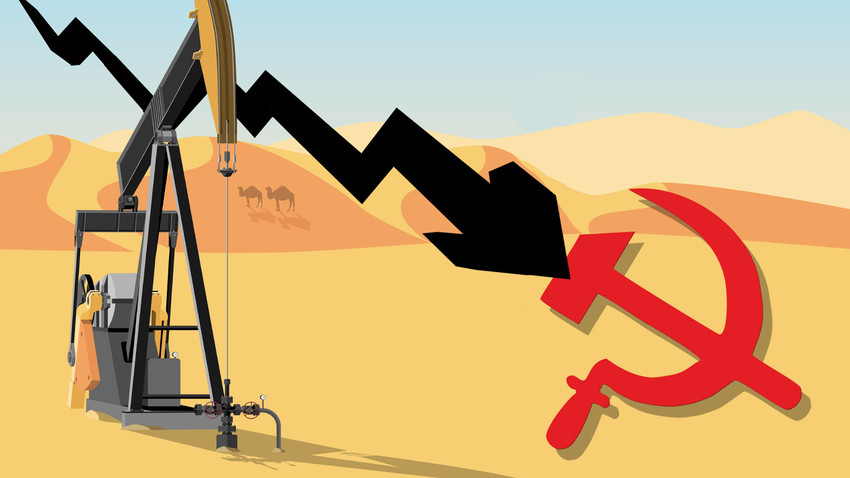
How Saudi Arabia’s oil policy triggered the collapse of the USSR
Saudi Arabia has recently launched an oil price war that affects the global economy. Previously, the same measures contributed to the collapse of the...
In four months, Saudi extraction rose from two million to 10 million barrels a day, and prices plummeted from $32 a barrel to $10. For the USSR’s economy - already accustomed to exorbitant incomes from its oil, this was a death blow. in 1986 alone, the USSR lost more than $20 billion (approximately 7.5% of the USSR’s annual income), and it already had a budget deficit.
But Saudi Arabia’s economy was also punished because of the low prices! Why did they do it? Allen’s opinion is that Casey offered the sheiks financial reparations in exchange for the move; this opinion is backed up by the fact that in 1986, 80% of Saudi oil was sold through Exxon, Mobil, Texaco, and Chevron – all American companies.
The Soviet Union plunged into recession following the 1985-1986 oil crisis. It was enough for the already unhealthy, command-style Soviet economy to crumble. In 1986, USSR’s external loans were about $30 billion; by 1989 they had reached $50 billion.
Saudi Arabian oil prices gradually recovered until the early 2000s when they finally reached profitability again, but the Saudi government didn’t seem to care much, as they likely had massive sovereign funds saved from the hyper profitable 1970s. The US predictably profited: in 1986, American gas stations even gave away free petrol for advertising.
The oil crisis significantly helped the US win the Cold War against the USSR: the economic recession led Mikhail Gorbachev to make hugely unpopular political decisions. An attempt to reform the governmental system (known as Perestroika) was largely hopeless due to the lack of funds. Gorbachev’s populist rhetoric didn’t play well with an impoverished population. They demanded responsibility for the government’s short-sighted actions, and that’s when Boris Yeltsin came in with his harsh critique of the Soviet system at large. By the end of the 1980s, the collapse of the Soviet Union was all but inevitable.
 STATE TV: "We lost (Cold War) a third of our empire. It is a defeat. But we will take back/ We won't make a deal to stop its war.
 victory strategy . 1. he wants to stop the war- war (giving Moscow empire 20% of Ukraine ) . 2. Moscow occupation will not be recognized by UN . 3. Trump will make with KSA ( like