Were the Confederates traitors

Were the Confederates traitors?

  • yes

    Votes: 12 28.6%
  • no

    Votes: 24 57.1%
  • other

    Votes: 6 14.3%

  • Total voters
    42

longly

Gold Member
Joined
Dec 25, 2013
Messages
1,229
Reaction score
560
Points
198
Today, the political left considers the rebels who participated in the American Civil War—also known as the War Between the States—as traitors.

My opinion is that people think this way because they are not true Americans; they are imperialists. They believe in the right to rule and own other people.

Our country is different from most others in the world in that sovereignty does not rest in a king or a government, but in the people. In our country, the people are sovereign.

In the United States, the people are organized in two ways: by states and as a collection of states forming a nation. The nation itself is sovereign. The government of the United States is sovereign because it derives its sovereignty from the people.

Likewise, the people of each state are sovereign, and the state governments are sovereign because they also derive their authority from the people.

I believe—though I’m likely in the minority—that the treason clause in the Constitution refers to individuals, not states. After all, the Founders did the same thing with the Declaration of Independence, and I don't believe they saw themselves as traitors. For the Declaration to be accepted, it had to be ratified by a majority of the states—each a sovereign unit. States cannot commit treason because they are sovereign, and the Founders, acting as agents of those sovereign states, were not traitors. I don't think the Founders saw themselves as traitors.

Likewise, the individuals who voted for secession were not traitors, because as a collective—acting as sovereign states—they were exercising a sovereign right.

You can’t be a traitor against yourself.
 
The Confederacy was a separate nation that declared war on the United States.
The only nation to start a war to prove they were better than slaves and lose it.
 
  • Fact
Reactions: IM2
Today, the political left considers the rebels who participated in the American Civil War—also known as the War Between the States—as traitors.

My opinion is that people think this way because they are not true Americans; they are imperialists. They believe in the right to rule and own other people.

Our country is different from most others in the world in that sovereignty does not rest in a king or a government, but in the people. In our country, the people are sovereign.

In the United States, the people are organized in two ways: by states and as a collection of states forming a nation. The nation itself is sovereign. The government of the United States is sovereign because it derives its sovereignty from the people.

Likewise, the people of each state are sovereign, and the state governments are sovereign because they also derive their authority from the people.

I believe—though I’m likely in the minority—that the treason clause in the Constitution refers to individuals, not states. After all, the Founders did the same thing with the Declaration of Independence, and I don't believe they saw themselves as traitors. For the Declaration to be accepted, it had to be ratified by a majority of the states—each a sovereign unit. States cannot commit treason because they are sovereign, and the Founders, acting as agents of those sovereign states, were not traitors. I don't think the Founders saw themselves as traitors.

Likewise, the individuals who voted for secession were not traitors, because as a collective—acting as sovereign states—they were exercising a sovereign right.

You can’t be a traitor against yourself.
The opening words of the Declaration of Independence:

"When in the Course of human events, it becomes necessary for one people to dissolve the political bands which have connected them with another, and to assume among the Powers of the earth, the separate and equal station to which the Laws of Nature and of Nature's God entitle them, a decent respect to the opinions of mankind requires that they should declare the causes which impel them to the separation. . ."

Followed was the list of grievances that justified the secession from England.

South Carolina was the first state to secede from the Union. It's declaration of secession:

"[T]he State of South Carolina having resumed her separate and equal place among nations, deems it due to herself, to the remaining United States of America, and to the nations of the world, that she should declare the immediate causes which have led to this act…."

And followed the grievances that prompted South Carolina to leave the union.

Georgia:
"The people of Georgia having dissolved their political connection with the Government of the United States of America, present to their confederates and the world the causes which have led to the separation. . ."

And on it goes with each of the seceding states.

Traitors? Or it it the unalienable right of humankind to leave an oppressive government and establish the government they want to have? The confederacy did not rise up against Washington DC. They did not demand that the government be overthrown or that any state must leave it. Each state chose to leave the union so that they could have the government they wanted to have.

I find nothing traitorous in that.

I stopped being a Democrat when the Party no longer represented my values, my principles, what I believe to be right and wrong. I am not a traitor to the Democrat Party. I didn't leave it. It left me.

The southern states felt the same way about the treatment they were receiving from the rest of the country.
 
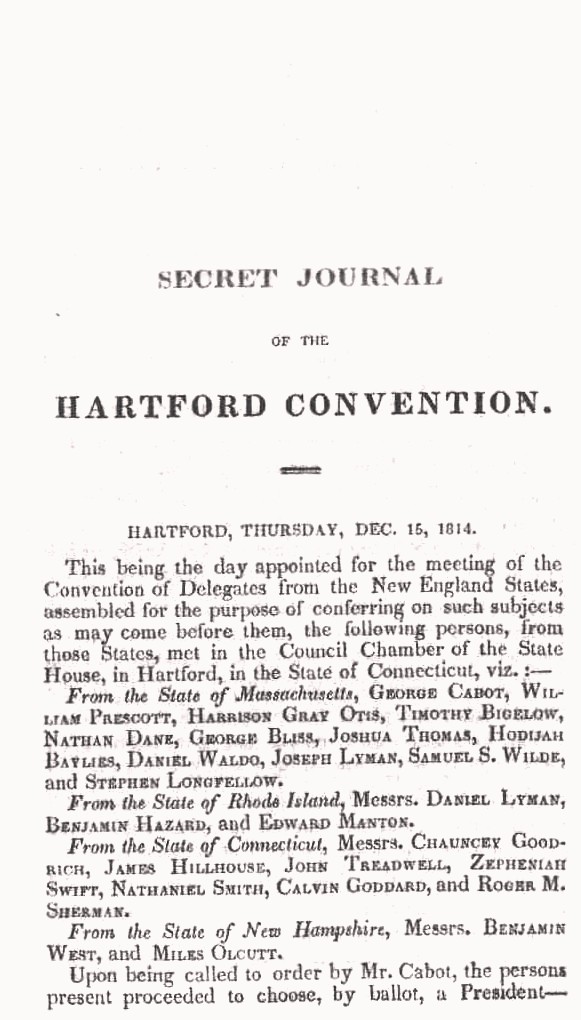
They were all Americans. Bottom Line. However, the first serious attempts at succession happened in the North, but that history gets whitewashed.


correct. Some New England states at the Fairfield convention (if memory serves) had people who wanted to leave the Union during the War of 1812. Never got anywhere but there was an attempt made.
 
Today, the political left considers the rebels who participated in the American Civil War—also known as the War Between the States—as traitors.

My opinion is that people think this way because they are not true Americans; they are imperialists. They believe in the right to rule and own other people.

Our country is different from most others in the world in that sovereignty does not rest in a king or a government, but in the people. In our country, the people are sovereign.

In the United States, the people are organized in two ways: by states and as a collection of states forming a nation. The nation itself is sovereign. The government of the United States is sovereign because it derives its sovereignty from the people.

Likewise, the people of each state are sovereign, and the state governments are sovereign because they also derive their authority from the people.

I believe—though I’m likely in the minority—that the treason clause in the Constitution refers to individuals, not states. After all, the Founders did the same thing with the Declaration of Independence, and I don't believe they saw themselves as traitors. For the Declaration to be accepted, it had to be ratified by a majority of the states—each a sovereign unit. States cannot commit treason because they are sovereign, and the Founders, acting as agents of those sovereign states, were not traitors. I don't think the Founders saw themselves as traitors.

Likewise, the individuals who voted for secession were not traitors, because as a collective—acting as sovereign states—they were exercising a sovereign right.

You can’t be a traitor against yourself.

First of all, it is not just liberals who think the Confederates were traitors. Quite a few conservatives also think the Confederates were traitors.

Second, no, I do not think the Confederates were traitors. The Union and the Confederacy had an honest difference of opinion about the right of secession and about the scope of the federal government's power to act against a group of states who found a federal law/action unacceptable. Generally speaking, the founding fathers recognized the right of secession, but they hoped it would never be used.

The Deep South states could not have chosen a worse time to invoke the right of secession. They had a constitutional duty to honor the results of the 1860 election, but they refused to do so.

The Confederacy could not have chosen a worse leader than Jefferson Davis. It was Davis who made the disastrous, hot-heated decision to fire on Fort Sumter, which made any peaceful compromise impossible and inflamed Northern public opinion in favor of using force against the seceded states. Lincoln, who had been trying to avoid a violent confrontation, had no choice to but to respond with force to the attack on Fort Sumter.
 
Today, the political left considers the rebels who participated in the American Civil War—also known as the War Between the States—as traitors.

My opinion is that people think this way because they are not true Americans; they are imperialists. They believe in the right to rule and own other people.

Our country is different from most others in the world in that sovereignty does not rest in a king or a government, but in the people. In our country, the people are sovereign.

In the United States, the people are organized in two ways: by states and as a collection of states forming a nation. The nation itself is sovereign. The government of the United States is sovereign because it derives its sovereignty from the people.

Likewise, the people of each state are sovereign, and the state governments are sovereign because they also derive their authority from the people.

I believe—though I’m likely in the minority—that the treason clause in the Constitution refers to individuals, not states. After all, the Founders did the same thing with the Declaration of Independence, and I don't believe they saw themselves as traitors. For the Declaration to be accepted, it had to be ratified by a majority of the states—each a sovereign unit. States cannot commit treason because they are sovereign, and the Founders, acting as agents of those sovereign states, were not traitors. I don't think the Founders saw themselves as traitors.

Likewise, the individuals who voted for secession were not traitors, because as a collective—acting as sovereign states—they were exercising a sovereign right.

You can’t be a traitor against yourself.
If they were traitors, so were the founding fathers.
 
If they were traitors, so were the founding fathers.
The founding fathers were traitors to the British Empire.

The confederates were traitors to the United States of America.

See the difference?
 
15th post
Today, the political left considers the rebels who participated in the American Civil War—also known as the War Between the States—as traitors.

My opinion is that people think this way because they are not true Americans; they are imperialists. They believe in the right to rule and own other people.

Our country is different from most others in the world in that sovereignty does not rest in a king or a government, but in the people. In our country, the people are sovereign.

In the United States, the people are organized in two ways: by states and as a collection of states forming a nation. The nation itself is sovereign. The government of the United States is sovereign because it derives its sovereignty from the people.

Likewise, the people of each state are sovereign, and the state governments are sovereign because they also derive their authority from the people.

I believe—though I’m likely in the minority—that the treason clause in the Constitution refers to individuals, not states. After all, the Founders did the same thing with the Declaration of Independence, and I don't believe they saw themselves as traitors. For the Declaration to be accepted, it had to be ratified by a majority of the states—each a sovereign unit. States cannot commit treason because they are sovereign, and the Founders, acting as agents of those sovereign states, were not traitors. I don't think the Founders saw themselves as traitors.

Likewise, the individuals who voted for secession were not traitors, because as a collective—acting as sovereign states—they were exercising a sovereign right.

You can’t be a traitor against yourself.

They were traitors to the Union during the war but were forgiven mostly as part of the reunification process.
 

New Topics

Back
Top Bottom