Navigation
Install the app
How to install the app on iOS
Follow along with the video below to see how to install our site as a web app on your home screen.
Note: This feature may not be available in some browsers.
More options
Style variation
You are using an out of date browser. It may not display this or other websites correctly.
You should upgrade or use an alternative browser.
You should upgrade or use an alternative browser.
US Marines Dying For Fascist Ukraine
- Thread starter Deadstick
- Start date
Don't mess with Russia.
So.... the fact that some of them have been killed in a war, is a sign, in your mind of Russian Strength?
They think they are entitled to be terrorists in another Country, they have a mental disorder.
They went there to fight to defend Ukraine and the Ukrainian people.
That's not terrorism. That's not even really being a merc. It's more an old fashioned "Adventure".
Just telling you how it is, no fantasy, the ones living in fantasy land are those clowns who went to Ukraine to kill Russian people.
Errr, on the one hand, you are imagining what other people are thinking and making very self serving assumptions to put them down.
THey on the other hand, decided to go join a war. I assume they had gave some thought to the risk of death and decided to do it anyways.
Young men have been doing stuff like that, forever. Since as long as humans have been humans, from raiding, to wars of conquest, to fighting communism, ect.
That some of them don't come back, has always been part of the process.
Did you not know this?

Ringo
Platinum Member
Ringo
Platinum Member
Ringo
Platinum Member
PeterPilot
Diamond Member
- Jan 17, 2023
- 4,922
- 3,287
- 1,938
The Talmud declares the same about Gentiles. It seems the Kyiv government is run by Talmudic Jews. Bibi likes that.
Ringo
Platinum Member

I have just the one finger salute for Russia. Russia wants all of Ukraine and we must not participate in letting Russia have Ukraine.Looks like they are not happy on the Putin side of things either.
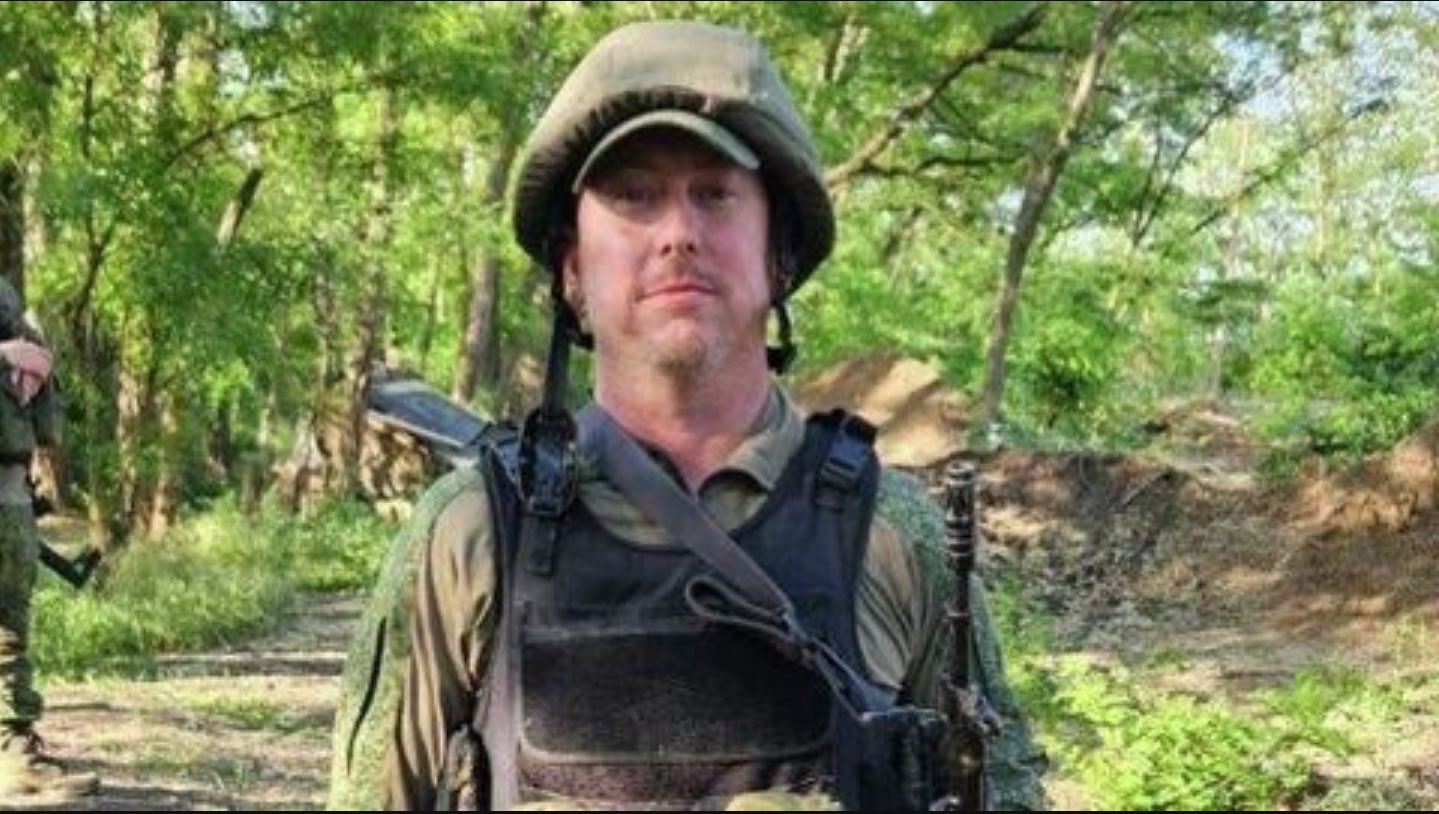
Texas man joins Russian army to "earn respect," gets lied to as he is sent to front line instead of welding job - Euromaidan Press
Derek Huffman, a Texas man who relocated his family to Russia in 2025 seeking "traditional values," has been sent to combat in Ukraine despite assurances he would serve in a non-combat role.euromaidanpress.com
American Derek Huffman thought he’d found the perfect solution. Move his family from Texas to Russia for “traditional values.” Join the military for fast-track citizenship. Work as a welder, not a fighter.
Instead, he’s heading to Ukraine’s front lines after three weeks of training despite assurances he would serve in a non-combat role.
Some Americans move to Russia seeking what they view as “traditional values”—conservative...


ThunderKiss1965
Diamond Member
Dude do you not know history ? Russia has been doing that sort of shit for centuries. The only saving grace for the country has been the horrible weather that invaders seem to ignore and Russia's leadership never caring about the civilian population.That's what the Ukrainian media say i wouldn't believe a word they say for anything they are serial liars, and why would Russia throw a half trained civilian into any front line they wouldn't be any use?
Ringo
Platinum Member
You, obviously, don'tDude do you not know history ?
ThunderKiss1965
Diamond Member
Russia has survived because of bad weather and warm bodies to throw at an enemy.You, obviously, don't
Ringo
Platinum Member
There is an American saying, “Do or die.” In Russia, a similar expression sounds like this: “Die, but do.”Russia has survived because of bad weather and warm bodies to throw at an enemy.
Can you feel the difference? In Russia, there is no choice; even death is no excuse. For brainwashed russophobes, this is a sign of the evil nature of russians. For russians, it is a historical condition of the country's existence.
Richard Nixon, in one of his speeches as US president, wholeheartedly echoed André Malraux's idea that the United States of America is the only country that became a great power without making any effort whatsoever. And in this, the French writer and the American president are undoubtedly right.
Complete security throughout history from external invasions, a vast territory acquired through the relatively effortless extermination of the Indians, fertile lands, a favorable climate, rich and diverse mineral resources, and, finally, the fact that in both world wars America captured the lion's share of the fruits of victory at little cost in blood — all this serves as the basis for the official thesis of the divine election of the American people and is a source of national pride.
But here is another country, the antithesis of America. The 19th-century Polish historian Waliszewski, who was least inclined toward Russophilia, made an apt observation about the reforms of Russian Tsar Peter I that applies to Russian history in general: "... There will be a huge waste of wealth, labor, and even human lives. However, the strength of Russia and the secret of its destiny lie largely in the fact that it has always had the will and the power to ignore waste when it came to achieving a goal once set."
Behind this characteristic feature of Russia lies a powerful factor that is completely unknown to the United States: in the 13th, 14th, 15th, 16th, 17th, and 18th centuries, as well as later in the era of Peter I — in the 19th and 20th centuries — Russian lands were subjected to devastating invasions at least once a century, and quite often from several sides at once.
In order to repel the encroaching enemies, the state that arose on this land had to demand from its people as much wealth, labor, and lives as were necessary for victory, and the latter, if they wanted to defend their political independence, had to give all this without counting the cost. This is how certain national habits developed and were reinforced by repeated practice, giving rise to the national character.
According to estimates by XIXth russian historian V. O. Klyuchevsky, during its formation over a period of 234 years (1228–1462), russian nation fought 160 foreign wars.
In the 16th century, Muscovy fought for 43 years in the northwest and west against the Polish-Lithuanian Commonwealth, the Livonian Order, and Sweden, without interrupting for a single year its struggle against the Tatar hordes on its southern, southeastern, and eastern borders.
In the 17th century, Russia fought for 48 years, and in the 18th century, for 56 years.
Overall, for Russia in the 13th–18th centuries, peace was rather an exception, and war was a cruel rule.
So what were these wars?
In the 13th–15th centuries, it was a struggle for the Russian people's very existence in the most literal and precise sense of the word.
Placed by fate on the border between two continents, Rus shielded Europe from the invasion of the savage Tatar-Mongol hordes and, in gratitude, received blows in the back.
No sooner had news of Batu's terrible pogrom of the Russian lands spread to the West than its spiritual leader, the Pope, declared a crusade against the “Russian schismatics” in order to push them into the arms of the Catholic Church at the point of a sword.
When the hopes placed on the swedish crusaders and the Teutonic Order collapsed, Pope Alexander IV (1255) sent a letter to the “Lithuanian king” with permission to “wage war on Russia” and annex its territories to his possessions.
The main threat to Rus during this period came from the East, where the struggle was for life itself. But the West (Sweden and the Order) also threatened enslavement or, at the very least (in the form of Lithuania), the loss of political independence. Not yet having formed a solid ethnic core, Great Russia had to take up a circular defense.
In the 15th century, Russia, having thrown off the Tatar-Mongol yoke, went on the offensive on all fronts.
Until the end of the 18th century, it used the sword to eliminate the direct and indirect foreign policy consequences of the Mongol invasion and domination:
It gathered the ancient russian lands captured by Lithuania and Poland within the borders of a single state;
overcame economic isolation and opened trade routes to the Baltic and Black Seas;
repopulated the devastated southern russian lands and brought to an end the struggle with the Tatar khanates, the remnants of the Golden Horde — Kazan, Astrakhan, Siberia, and Crimea.
Whether defending itself or attacking, Russia as a whole waged just and inevitable wars during that period: it had no other choice. If the country wanted to live and develop, it had to put aside its sheaths as unnecessary and prove to its neighbors its right to life and development with the sword for five centuries. In a sense, these wars were people's wars with the constant and active participation of the people's armed forces, the cossacks.
Bourgeois historians, who love to contrast Russia and the West on the basis of insignificant characteristics or those that exist only in their imagination, do not want to notice this very important feature of russian history, which truly sets Russia apart from all Western European countries, with one exception.
That exception is Spain. Like Russia, which stood guard on the eastern borders of Europe, it held back the pressure of nomadic Africa in the far west.
The Spanish Reconquista, like the russian advance into the steppes, was a nationwide undertaking — its driving forces, along with the feudal class, were the cities and the peasantry. And this same factor, the role of a border outpost on a turbulent frontier, set Spain, like Russia, apart from the general flow of European history.
Last edited:
There is an American saying, “Do or die.” In Russia, a similar expression sounds like this: “Die, but do.”
Can you feel the difference? In Russia, there is no choice; even death is no excuse. For brainwashed russophobes, this is a sign of the evil nature of russians. For russians, it is a historical condition of the country's existence.
Richard Nixon, in one of his speeches as US president, wholeheartedly echoed André Malraux's idea that the United States of America is the only country that became a great power without making any effort whatsoever. And in this, the French writer and the American president are undoubtedly right.
Complete security throughout history from external invasions, a vast territory acquired through the relatively effortless extermination of the Indians, fertile lands, a favorable climate, rich and diverse mineral resources, and, finally, the fact that in both world wars America captured the lion's share of the fruits of victory at little cost in blood — all this serves as the basis for the official thesis of the divine election of the American people and is a source of national pride.
But here is another country, the antithesis of America. The 19th-century Polish historian Waliszewski, who was least inclined toward Russophilia, made an apt observation about the reforms of Russian Tsar Peter I that applies to Russian history in general: "... There will be a huge waste of wealth, labor, and even human lives. However, the strength of Russia and the secret of its destiny lie largely in the fact that it has always had the will and the power to ignore waste when it came to achieving a goal once set."
Behind this characteristic feature of Russia lies a powerful factor that is completely unknown to the United States: in the 13th, 14th, 15th, 16th, 17th, and 18th centuries, as well as later in the era of Peter I — in the 19th and 20th centuries — Russian lands were subjected to devastating invasions at least once a century, and quite often from several sides at once.
In order to repel the encroaching enemies, the state that arose on this land had to demand from its people as much wealth, labor, and lives as were necessary for victory, and the latter, if they wanted to defend their political independence, had to give all this without counting the cost. This is how certain national habits developed and were reinforced by repeated practice, giving rise to the national character.
According to estimates by XIXth russian historian V. O. Klyuchevsky, during its formation over a period of 234 years (1228–1462), russian nation fought 160 foreign wars.
In the 16th century, Muscovy fought for 43 years in the northwest and west against the Polish-Lithuanian Commonwealth, the Livonian Order, and Sweden, without interrupting for a single year its struggle against the Tatar hordes on its southern, southeastern, and eastern borders.
In the 17th century, Russia fought for 48 years, and in the 18th century, for 56 years.
Overall, for Russia in the 13th–18th centuries, peace was rather an exception, and war was a cruel rule.
So what were these wars?
In the 13th–15th centuries, it was a struggle for the Russian people's very existence in the most literal and precise sense of the word.
Placed by fate on the border between two continents, Rus shielded Europe from the invasion of the savage Tatar-Mongol hordes and, in gratitude, received blows in the back.
No sooner had news of Batu's terrible pogrom of the Russian lands spread to the West than its spiritual leader, the Pope, declared a crusade against the “Russian schismatics” in order to push them into the arms of the Catholic Church at the point of a sword.
When the hopes placed on the swedish crusaders and the Teutonic Order collapsed, Pope Alexander IV (1255) sent a letter to the “Lithuanian king” with permission to “wage war on Russia” and annex its territories to his possessions.
The main threat to Rus during this period came from the East, where the struggle was for life itself. But the West (Sweden and the Order) also threatened enslavement or, at the very least (in the form of Lithuania), the loss of political independence. Not yet having formed a solid ethnic core, Great Russia had to take up a circular defense.
In the 15th century, Russia, having thrown off the Tatar-Mongol yoke, went on the offensive on all fronts.
Until the end of the 18th century, it used the sword to eliminate the direct and indirect foreign policy consequences of the Mongol invasion and domination:
It gathered the ancient russian lands captured by Lithuania and Poland within the borders of a single state;
overcame economic isolation and opened trade routes to the Baltic and Black Seas;
repopulated the devastated southern russian lands and brought to an end the struggle with the Tatar khanates, the remnants of the Golden Horde — Kazan, Astrakhan, Siberia, and Crimea.
Whether defending itself or attacking, Russia as a whole waged just and inevitable wars during that period: it had no other choice. If the country wanted to live and develop, it had to put aside its sheaths as unnecessary and prove to its neighbors its right to life and development with the sword for five centuries. In a sense, these wars were people's wars with the constant and active participation of the people's armed forces, the cossacks.
Bourgeois historians, who love to contrast Russia and the West on the basis of insignificant characteristics or those that exist only in their imagination, do not want to notice this very important feature of russian history, which truly sets Russia apart from all Western European countries, with one exception.
That exception is Spain. Like Russia, which stood guard on the eastern borders of Europe, it held back the pressure of nomadic Africa in the far west.
The Spanish Reconquista, like the russian advance into the steppes, was a nationwide undertaking — its driving forces, along with the feudal class, were the cities and the peasantry. And this same factor, the role of a border outpost on a turbulent frontier, set Spain, like Russia, apart from the general flow of European history.
Your argument actually makes the point that the other poster was making, ie that Russia has a history of throwing untrained men into the fire.
So, making a bid deal out of this guy being used, is historically ignorant.

Deadstick
Platinum Member
- Thread starter
- #97
Great post, the Morons suffering from Russophrenia have to have matters simple for their simple minds, Democracy v Communists, the US has never been invaded and under direct threat of being destroyed like Russia was in WW2, when that is the case people make whatever sacrifice they have to in order for the Country to survive, not all the Russians who fought the Nazis after Barbarossa would have been fanatical communists, but once the existence and survival of the Nation is at stake all that goes out of the window to defend the Country, of course there are always some who cave in like Vlasov and Kaminski but they just become a greasy spot on History.There is an American saying, “Do or die.” In Russia, a similar expression sounds like this: “Die, but do.”
Can you feel the difference? In Russia, there is no choice; even death is no excuse. For brainwashed russophobes, this is a sign of the evil nature of russians. For russians, it is a historical condition of the country's existence.
Richard Nixon, in one of his speeches as US president, wholeheartedly echoed André Malraux's idea that the United States of America is the only country that became a great power without making any effort whatsoever. And in this, the French writer and the American president are undoubtedly right.
Complete security throughout history from external invasions, a vast territory acquired through the relatively effortless extermination of the Indians, fertile lands, a favorable climate, rich and diverse mineral resources, and, finally, the fact that in both world wars America captured the lion's share of the fruits of victory at little cost in blood — all this serves as the basis for the official thesis of the divine election of the American people and is a source of national pride.
But here is another country, the antithesis of America. The 19th-century Polish historian Waliszewski, who was least inclined toward Russophilia, made an apt observation about the reforms of Russian Tsar Peter I that applies to Russian history in general: "... There will be a huge waste of wealth, labor, and even human lives. However, the strength of Russia and the secret of its destiny lie largely in the fact that it has always had the will and the power to ignore waste when it came to achieving a goal once set."
Behind this characteristic feature of Russia lies a powerful factor that is completely unknown to the United States: in the 13th, 14th, 15th, 16th, 17th, and 18th centuries, as well as later in the era of Peter I — in the 19th and 20th centuries — Russian lands were subjected to devastating invasions at least once a century, and quite often from several sides at once.
In order to repel the encroaching enemies, the state that arose on this land had to demand from its people as much wealth, labor, and lives as were necessary for victory, and the latter, if they wanted to defend their political independence, had to give all this without counting the cost. This is how certain national habits developed and were reinforced by repeated practice, giving rise to the national character.
According to estimates by XIXth russian historian V. O. Klyuchevsky, during its formation over a period of 234 years (1228–1462), russian nation fought 160 foreign wars.
In the 16th century, Muscovy fought for 43 years in the northwest and west against the Polish-Lithuanian Commonwealth, the Livonian Order, and Sweden, without interrupting for a single year its struggle against the Tatar hordes on its southern, southeastern, and eastern borders.
In the 17th century, Russia fought for 48 years, and in the 18th century, for 56 years.
Overall, for Russia in the 13th–18th centuries, peace was rather an exception, and war was a cruel rule.
So what were these wars?
In the 13th–15th centuries, it was a struggle for the Russian people's very existence in the most literal and precise sense of the word.
Placed by fate on the border between two continents, Rus shielded Europe from the invasion of the savage Tatar-Mongol hordes and, in gratitude, received blows in the back.
No sooner had news of Batu's terrible pogrom of the Russian lands spread to the West than its spiritual leader, the Pope, declared a crusade against the “Russian schismatics” in order to push them into the arms of the Catholic Church at the point of a sword.
When the hopes placed on the swedish crusaders and the Teutonic Order collapsed, Pope Alexander IV (1255) sent a letter to the “Lithuanian king” with permission to “wage war on Russia” and annex its territories to his possessions.
The main threat to Rus during this period came from the East, where the struggle was for life itself. But the West (Sweden and the Order) also threatened enslavement or, at the very least (in the form of Lithuania), the loss of political independence. Not yet having formed a solid ethnic core, Great Russia had to take up a circular defense.
In the 15th century, Russia, having thrown off the Tatar-Mongol yoke, went on the offensive on all fronts.
Until the end of the 18th century, it used the sword to eliminate the direct and indirect foreign policy consequences of the Mongol invasion and domination:
It gathered the ancient russian lands captured by Lithuania and Poland within the borders of a single state;
overcame economic isolation and opened trade routes to the Baltic and Black Seas;
repopulated the devastated southern russian lands and brought to an end the struggle with the Tatar khanates, the remnants of the Golden Horde — Kazan, Astrakhan, Siberia, and Crimea.
Whether defending itself or attacking, Russia as a whole waged just and inevitable wars during that period: it had no other choice. If the country wanted to live and develop, it had to put aside its sheaths as unnecessary and prove to its neighbors its right to life and development with the sword for five centuries. In a sense, these wars were people's wars with the constant and active participation of the people's armed forces, the cossacks.
Bourgeois historians, who love to contrast Russia and the West on the basis of insignificant characteristics or those that exist only in their imagination, do not want to notice this very important feature of russian history, which truly sets Russia apart from all Western European countries, with one exception.
That exception is Spain. Like Russia, which stood guard on the eastern borders of Europe, it held back the pressure of nomadic Africa in the far west.
The Spanish Reconquista, like the russian advance into the steppes, was a nationwide undertaking — its driving forces, along with the feudal class, were the cities and the peasantry. And this same factor, the role of a border outpost on a turbulent frontier, set Spain, like Russia, apart from the general flow of European history.
Great post, the Morons suffering from Russophrenia have to have matters simple for their simple minds, Democracy v Communists, the US has never been invaded and under direct threat of being destroyed like Russia was in WW2, when that is the case people make whatever sacrifice they have to in order for the Country to survive, not all the Russians who fought the Nazis after Barbarossa would have been fanatical communists, but once the existence and survival of the Nation is at stake all that goes out of the window to defend the Country, of course there are always some who cave in like Vlasov and Kaminski but they just become a greasy spot on History.
Buddy, he just explained why your question on why the russians used this guy, was you being historically ignorant.
ThunderKiss1965
Diamond Member
A little context on how the US and Russia conduct wars. The Russians spent 10 years in Afghanistan and had over 15,000 causalities. The US, almost 20 years with 2,459.There is an American saying, “Do or die.” In Russia, a similar expression sounds like this: “Die, but do.”
Can you feel the difference? In Russia, there is no choice; even death is no excuse. For brainwashed russophobes, this is a sign of the evil nature of russians. For russians, it is a historical condition of the country's existence.
Richard Nixon, in one of his speeches as US president, wholeheartedly echoed André Malraux's idea that the United States of America is the only country that became a great power without making any effort whatsoever. And in this, the French writer and the American president are undoubtedly right.
Complete security throughout history from external invasions, a vast territory acquired through the relatively effortless extermination of the Indians, fertile lands, a favorable climate, rich and diverse mineral resources, and, finally, the fact that in both world wars America captured the lion's share of the fruits of victory at little cost in blood — all this serves as the basis for the official thesis of the divine election of the American people and is a source of national pride.
But here is another country, the antithesis of America. The 19th-century Polish historian Waliszewski, who was least inclined toward Russophilia, made an apt observation about the reforms of Russian Tsar Peter I that applies to Russian history in general: "... There will be a huge waste of wealth, labor, and even human lives. However, the strength of Russia and the secret of its destiny lie largely in the fact that it has always had the will and the power to ignore waste when it came to achieving a goal once set."
Behind this characteristic feature of Russia lies a powerful factor that is completely unknown to the United States: in the 13th, 14th, 15th, 16th, 17th, and 18th centuries, as well as later in the era of Peter I — in the 19th and 20th centuries — Russian lands were subjected to devastating invasions at least once a century, and quite often from several sides at once.
In order to repel the encroaching enemies, the state that arose on this land had to demand from its people as much wealth, labor, and lives as were necessary for victory, and the latter, if they wanted to defend their political independence, had to give all this without counting the cost. This is how certain national habits developed and were reinforced by repeated practice, giving rise to the national character.
According to estimates by XIXth russian historian V. O. Klyuchevsky, during its formation over a period of 234 years (1228–1462), russian nation fought 160 foreign wars.
In the 16th century, Muscovy fought for 43 years in the northwest and west against the Polish-Lithuanian Commonwealth, the Livonian Order, and Sweden, without interrupting for a single year its struggle against the Tatar hordes on its southern, southeastern, and eastern borders.
In the 17th century, Russia fought for 48 years, and in the 18th century, for 56 years.
Overall, for Russia in the 13th–18th centuries, peace was rather an exception, and war was a cruel rule.
So what were these wars?
In the 13th–15th centuries, it was a struggle for the Russian people's very existence in the most literal and precise sense of the word.
Placed by fate on the border between two continents, Rus shielded Europe from the invasion of the savage Tatar-Mongol hordes and, in gratitude, received blows in the back.
No sooner had news of Batu's terrible pogrom of the Russian lands spread to the West than its spiritual leader, the Pope, declared a crusade against the “Russian schismatics” in order to push them into the arms of the Catholic Church at the point of a sword.
When the hopes placed on the swedish crusaders and the Teutonic Order collapsed, Pope Alexander IV (1255) sent a letter to the “Lithuanian king” with permission to “wage war on Russia” and annex its territories to his possessions.
The main threat to Rus during this period came from the East, where the struggle was for life itself. But the West (Sweden and the Order) also threatened enslavement or, at the very least (in the form of Lithuania), the loss of political independence. Not yet having formed a solid ethnic core, Great Russia had to take up a circular defense.
In the 15th century, Russia, having thrown off the Tatar-Mongol yoke, went on the offensive on all fronts.
Until the end of the 18th century, it used the sword to eliminate the direct and indirect foreign policy consequences of the Mongol invasion and domination:
It gathered the ancient russian lands captured by Lithuania and Poland within the borders of a single state;
overcame economic isolation and opened trade routes to the Baltic and Black Seas;
repopulated the devastated southern russian lands and brought to an end the struggle with the Tatar khanates, the remnants of the Golden Horde — Kazan, Astrakhan, Siberia, and Crimea.
Whether defending itself or attacking, Russia as a whole waged just and inevitable wars during that period: it had no other choice. If the country wanted to live and develop, it had to put aside its sheaths as unnecessary and prove to its neighbors its right to life and development with the sword for five centuries. In a sense, these wars were people's wars with the constant and active participation of the people's armed forces, the cossacks.
Bourgeois historians, who love to contrast Russia and the West on the basis of insignificant characteristics or those that exist only in their imagination, do not want to notice this very important feature of russian history, which truly sets Russia apart from all Western European countries, with one exception.
That exception is Spain. Like Russia, which stood guard on the eastern borders of Europe, it held back the pressure of nomadic Africa in the far west.
The Spanish Reconquista, like the russian advance into the steppes, was a nationwide undertaking — its driving forces, along with the feudal class, were the cities and the peasantry. And this same factor, the role of a border outpost on a turbulent frontier, set Spain, like Russia, apart from the general flow of European history.
Russian strategy has always been to throw as many live bodies at the enemy as possible and they pay horribly for it.
ThunderKiss1965
Diamond Member
War of 1812.Great post, the Morons suffering from Russophrenia have to have matters simple for their simple minds, Democracy v Communists, the US has never been invaded and under direct threat of being destroyed like Russia was in WW2, when that is the case people make whatever sacrifice they have to in order for the Country to survive, not all the Russians who fought the Nazis after Barbarossa would have been fanatical communists, but once the existence and survival of the Nation is at stake all that goes out of the window to defend the Country, of course there are always some who cave in like Vlasov and Kaminski but they just become a greasy spot on History.
Similar threads

- Replies
- 7
- Views
- 235

- Replies
- 32
- Views
- 339


- Replies
- 9
- Views
- 437


New Topics
-

-
 Why is Kash Patel Bringing up the Campaign Spying of 2016?
- Started by Seymour Flops
- Replies: 2
-

-
Why isnt Illan Omar cooperating with fraud investigation?
- Started by ColonelAngus
- Replies: 3
-


