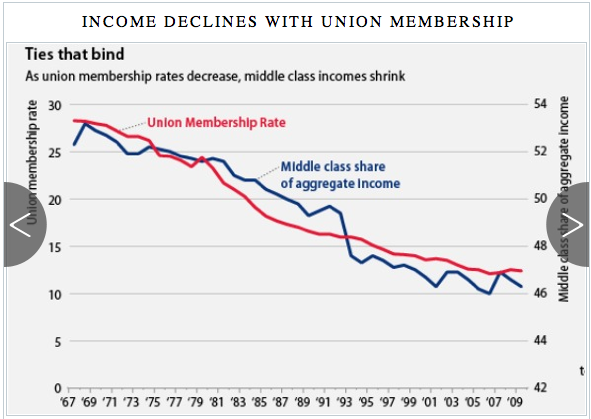
The problem with debating minimum wage with conservatives and especially republican conservatives is the issue is not about fairness or morality, it is rather about ideology and opposition involving perceived assumptions about who would get the raise. Underlying the opposition is economic agitprop from corporations whose only concern is next quarter earnings, and the Pavlovian response to anything that helps all Americans. It is part of a mindset created by business for over sixty years. The conservatives are well trained and facts have no place when the idea is an embedded belief. Tell them Clinton raised the rate and all went well and you have sufficiently countered them, but they still follow, as again it is not about rationality but rather about opposition based on ideology. Belief systems run deep for some. See book at bottom.
'Nearly 3 years, and counting:
Minimum wage increase helps working families and the economy'
Nearly 3 years, and counting: Minimum wage increase helps working families and the economy
Raising the Minimum Wage to $12 by 2020 Would Lift Wages for 35 Million American Workers
"It turns out that the
Wall Street bonus pool in 2014 was roughly twice the total annual earnings of all Americans working full time at the federal minimum wage."
http://www.nytimes.com/2015/05/03/opinion/sunday/nicholas-kristof-inequality-is-a-choice.html
"And yet over the course of the decade the old skepticism toward business that had been born in the Great Depression and reawakened for a new generation in the Vietnam era finally began to disappear. The economic transformations of the decade would be interpreted through the framework of the free market vision. The 1970s campaigns to revive the image of capitalism among college students bore fruit in the 1980s. Universities created new centers for the study of business themes such as entrepreneurship. Students in Free Enterprise, a group started in 1975 to bring students together to "discuss what they might do to counteract the stultifying criticism of American business," thrived on small college campuses, funded by companies like Coors, Dow Chemical, and Walmart (as well as the Business Roundtable). The group organized battles of the bands, at which prizes would be doled out to the best pro-business rock anthems, helped silkscreen T-shirts with pro-capitalist messages, and created skits based on Milton Friedman's writings, which college students would perform in local elementary schools.
In the workplace, the decline of the old manufacturing cities of [he North and Midwest and the rise of the sprawling suburbs of the Sunbelt metropolises marked the rise of a new economic culture, dominated by companies such as Walmart and Home Depot and Barnes & Noble." Kim Phillips-Fein ('Invisible Hands')